
2027-10-31 00:00:00 Sun ET
stock market technology facebook covid-19 apple microsoft google amazon data platform network scale artificial intelligence antitrust alpha patent model tech titan tesla global macro outlook machine software algorithm alphabet meta
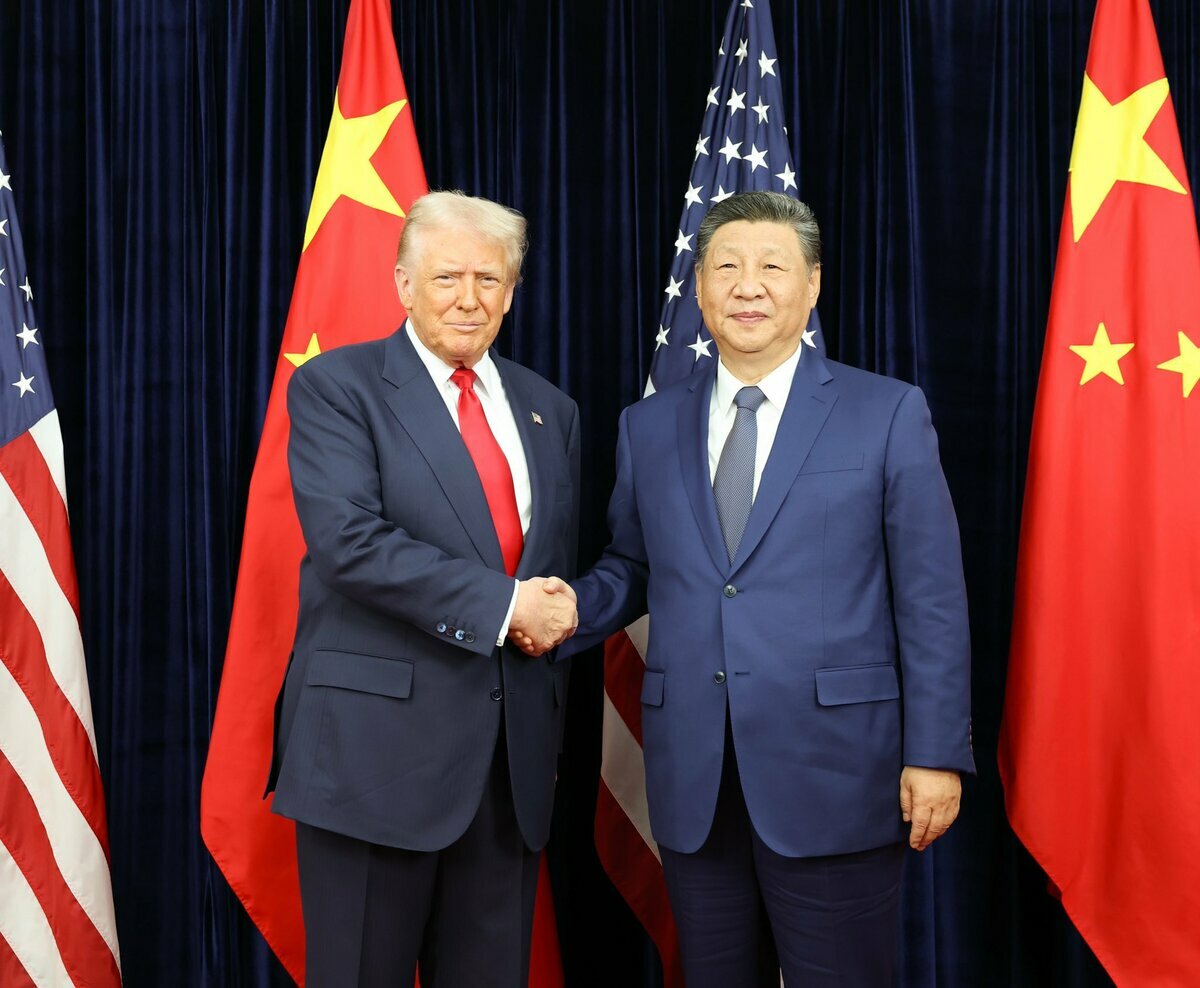
We describe, discuss, and delve into many different aspects of the current technological race between the U.S. and China. Although the U.S. and China have reached a new landmark trade deal on the basis of the Geneva consensus in recent years, their new fierce technological race remains as intense as ever. Both countries pursue policies to develop self-sufficient technological stacks, hardware specifications, and smart software solutions worldwide. Today, the U.S. leads in some strategic sectors such as generative artificial intelligence (Gen AI) large language models (LLM), graphics cards, online platforms, cloud services, and even quantum computers etc, whereas, China catches up and sometimes even leads in several other areas such as the global supply chains for rare earths and green energy resources. For practical purposes of our current assessments, we explain the intricate chokepoints, bottlenecks, and shortages of the 2 major global supply chains for rare earths and semiconductor microchips in the broader context of the current delicate balance of power between the U.S. and China. Indeed, it is entirely possible that neither the U.S. nor China can emerge as the outright solo victor in the technological race toward artificial general intelligence (AGI). In light of the recent geopolitical risks, threats, and tensions between the U.S. and China, we can envision a brave new world where the U.S. leads in developing the built-in best-in-class AI-driven technological advances, whereas, China catches up and even leads in AI-driven drones, robots, machines, installations, and several other hardware applications. For the foreseeable future, it is valid and reasonable for the U.S. to reduce reliance on China for rare earths and green energy resources such as nuclear, hydrogen, and geothermal power plants, solar panels, and even wind turbines. By the same token, China seeks to further reduces reliance on the U.S. for AI-driven technological advances, graphics cards, semiconductor microchips, online platforms, cloud services, smart software solutions, autonomous robotaxis (AR), virtual reality (VR) headsets, and even quantum computers. In this broader geoeconomic context, we would witness some specific sort of strategic interdependence between the U.S. and China in macro-finance, trade, and technology across several different global supply chains worldwide. In the current global race toward AGI between both the U.S. and China, global supply-chain success is often not a straight line. We believe both countries would likely still strategically depend on each other in several strategic sectors in the next few years.
In recent years, the major U.S. policymakers combine the post-war and Cold War playbooks to take an increasingly vital role in some strategic sectors. Specifically, these strategic sectors span Gen AI-driven technological advances such as large language models (LLM), graphics cards (GPU/TPU), several other application-specific integrative circuits (ASIC), online platforms, cloud services, and even quantum computers. At the same time, the U.S. government now continues to rely on both foreign imports and offshore operations in some sensitive sectors. These sensitive sectors span rare earths; green energy resources such as nuclear, hydrogen, geothermal power plants, solar panels, and wind turbines; and AI-driven drones, robots, models, machines, installations, and several other hardware applications etc. In stark contrast to the major U.S. policymakers, the Chinese policymakers adopt a holistic approach to supporting state-of-the-art technological advances with better mainland fiscal-monetary policy coordination. In essence, this holistic approach involves systemic 5-year plans, workstreams, significant financial incentives, and new facilitative laws, rules, and regulations for Chinese tech titans and Internet companies to flourish for the foreseeable future. Further, this holistic approach supports state-of-the-art technological advances with AI-driven talent development, robot automation, and even land acquisition in many metropolitan cities across Mainland China, Hong Kong, and Macao etc. From Baidu, Tencent, and Alibaba to ByteDance, DJI, and DeepSeek etc, these major mainstream Chinese tech titans and Internet companies continue to further secure the global supply chains for rare earths, high-performance graphics cards, some other ASIC semiconductor microchips, and some specific sorts of AI-driven drones, robots, models, machines, agents, and systems etc.
We describe, discuss, and delve into a new fundamental explanation for the key intricate chokepoints, bottlenecks, and shortages of the global supply chain for semiconductor microchips. Although Nvidia, AMD, Google, and several other cloud operators such as Meta, Microsoft, Amazon, Oracle, and Cisco dominate the global markets for high-performance graphics processing units (GPU), tensor processing units (TPU), and several other application-specific integrative circuits (ASIC) worldwide, these U.S. tech titans continue to rely heavily on TSMC, MediaTek, ASML, Samsung, and many other foreign microchip manufacturers, designers, and assemblers in Taiwan, Japan, and South Korea because these foreign companies continue to control bleeding-edge advances in lithography. Despite China’s recent attempts to catch up in the global supply chain for semiconductor microchips, the U.S. continues to lead in fabless microchip design at the global scale. Today, the vast AI-driven talent resources, technical hurdles, and financial flows pose new competitive challenges for both Chinese companies to catch up in this new space. In the next couple of decades, we would expect several Chinese tech titans, specifically Huawei, Baidu, Alibaba, and Tencent, to develop their own homegrown semiconductor microchips, disruptive innovations, and AI-driven drones, robots, models, machines, agents, systems, and so forth. In time, these Herculean efforts help close the gap between China and the U.S. in the global supply chain for high-performance graphics cards, microchips, and other application-specific integrative circuits (ASIC). In the meantime, the modern Chinese tech titans Alibaba, Baidu, Tencent, ByteDance, and DeepSeek remake, reshape, refine, and reinforce their open-source Gen AI foundational models, agents, and systems to power the homegrown drones, robots, and machines. Today, the major mainstream Chinese AI large language models (LLM) include Alibaba Qwen, ByteDance Doubao, DeepSeek, Manus, Moonshot Kimi, WuDao, and Zhipu ChatGLM.
Meanwhile, China continues to control the global supply chain for rare earths. These rare earths are especially vital for defense, military warfare, and some strategic sectors such as green energy and high-performance computation for sustainable economic development worldwide. In recent decades, the major U.S. policymakers often tend to refrain from investing in the right talents, companies, and technological advances as part of the global supply chain for rare earths. Despite American dependence on Chinese rare earths, the U.S. demand for rare earths is relatively small. At the same time, there are acceptable substitutes from several East Asian countries such as Vietnam, India, Indonesia, Malaysia, and the Philippines. However, China combines its dual dominance in rare earths and electric power resources to create new competitive advantages for the middle kingdom to further engage in the global race toward AGI. In effect, the new delicate balance of power between both countries sets the global stage for the energy-abundant Middle East and Europe to continue to play a vital role in the current technological race between the U.S. and China. In light of the global supply chains for rare earths, energy resources, and semiconductor microchips, it is difficult and almost impossible for both countries to serve as self-sufficient market players for the foreseeable future. For this reason, we should continue to see some specific sort of strategic interdependence between the U.S. and China in the current global race toward AGI.
Today, AI-driven technological advances not only emerge at the epicenter of China-U.S. rivalry, but these advances also serve as the central switchboard for smarter software solutions and hardware specifications across almost all aspects of human life experiences worldwide. Several strategic geoeconomic factors, metrics, and considerations affect whoever controls the global supply chains for AI-driven technological advances, massive cloud data centers, online platforms, high-performance graphics cards, semiconductor microchips, and several other application-specific integrative circuits (ASIC). In effect, these recent strategic geoeconomic factors, metrics, and considerations span military might, defense, economic clout, and even next-gen smart service provision as part of the new information revolution worldwide. At any pace, the current technological race between the U.S. and China continues to cause profound geoeconomic ripple effects on the global capital system. As the U.S. and China strive to win the current global race toward artificial general intelligence (AGI), we would witness more fierce technological competition, disruptive innovation, and rivalry between both countries across several strategic sectors. On the bright side of this current China-U.S. rivalry, we would likely expect to see faster, better, smarter, cheaper, more accurate, and more granular AI-driven technological advances per million tokens in the next few years. On the dark side of this current China-U.S. rivalry, however, we would prefer not to see any further escalation into a new Cold War. At any rate, we would probably not expect China to garner global expansionary ambitions for the communist policy agenda like the former Soviet Union in the Cold War. For the foreseeable future, hence, we would witness some specific sort of strategic interdependence between both countries in the current global race toward AGI.
It is important for us to appreciate the 6 major mainstream arenas in the current technological race between the U.S. and China. The 6 major mainstream arenas span: (1) AI-driven general-purpose transformers (GPT); (2) AI infrastructure networks such as worldwide cloud data centers and semiconductor microchips; (3) online platforms and several other smart software solutions; (4) rare earths; (5) AI-driven drones, robots, systems, models, machines, and agents for greater task automation and human productivity; and (6) green energy resources such as nuclear, hydrogen, geothermal power plants, lithium batteries, solar panels, and wind turbines for sustainable economic development worldwide. In recent years, the U.S. Magnificent 7 tech titans, cloud hyperscalers, graphics card designers, and their foreign upstream suppliers continue to dominate the former 3 major arenas; whereas, the Chinese tech titans and Internet companies continue to dominate the latter 3 major arenas. Specifically, China further catches up and sometimes even leads the U.S. in AI-driven drones, robots, systems, models, machines, and agents etc for both smarter and faster large-scale task operations in some major manufacturing processes. Also, the Chinese manufacturers often challenge some of the major U.S. market players in autonomous robotaxis (AR) (BYD, NIO, and Foxconn versus Tesla and Rivian); drones (DJI versus Skydio); and even next-gen quantum computers (Baidu, Huawei, and Origin Quantum versus Google, IBM, D-Wave, IonQ, and Microsoft).
In recent years, China continues to invest heavily in the global AI infrastructure networks, power plants, and hardware installations with a unique presence in many South East Asian countries such as Vietnam, India, Indonesia, Malaysia, and the Philippines etc. China’s Belt-and-Road programs further help bolster the essential digital networks in many different countries, regions, and jurisdictions around the world. In practice, these strategic moves mimic the American-driven capital investments in optic fiber networks worldwide from the mid-1990s to the early-2000s. Some recent mergers and acquisitions (M&A), R&D outlays, and public-private collaborative research endeavors seem to strengthen these new capital investments across almost all aspects of human life experiences.
For green energy storage, transfer, and generation, China has made significant strides toward technological self-sufficiency and therefore less reliance on western power through the dual mandate of green circulation. This dual mandate aims to provide substantially more incentives for both the Chinese tech titans and Internet companies to design their own homegrown high-performance graphics cards, semiconductor microchips, application-specific integrative circuits (ASIC), and next-gen quantum computers. Also, this dual mandate further aims to restrict domestic purchases of U.S. high-performance graphics cards and microchips such as Nvidia’s graphics processing units (GPU) and further Google’s tensor processing units (TPU) etc. In combination, these homeland policy measures continue to push for both Chinese technological independence and significantly less reliance on American technology. At the same time, China now maintains its vast domestic production capacity in lithium-ion batteries, rare earths, and critical minerals. In time, this capacity can help attract greater western dependence on China’s global supply chains. Even though the U.S. continues to dominate many AI-driven technological advances from foundational large language models (LLM) and online content generators to massive cloud data centers, online platforms, quantum computers, autonomous robotaxis (AR), virtual reality (VR) headsets, social media outlets, and metaverses, China now seeks to further close the gap with the U.S. in building out the global AI infrastructure networks, power plants, and hardware installations worldwide.
In combination, several rare earths serve as another critical input in the current technological race between the U.S. and China. From silicon and lithium to cerium, scandium, and neodymium etc, rare earths provide the critical minerals for many AI-driven technological advances such as high-performance graphics cards (GPU/TPU), application-specific integrative circuits (ASIC), several other semiconductor microchips, cloud data centers, quantum computers, lithium-ion batteries, Internet routers, smartphones, tablets, personal computers (PC), and many other electronic mobile machines, devices, and appliances etc. In effect, China’s recent export restrictions on rare earths pose a real threat to the current American long-term prospects for building out a truly independent global tech ecosystem. As part of the recent trade deal between both countries, China has granted the U.S. a one-year reprieve on these export restrictions. However, the U.S. remains vulnerable unless the western allies help rapidly expand American access to rare earths in many alternative countries, regions, and jurisdictions around the world. Specifically, the U.S. and its western allies should further diversify their exclusive access to rare earths from China to several South East Asian countries such as Vietnam, India, Indonesia, Malaysia, and the Philippines. In recent decades, the U.S. has been aware of this vulnerability for a long time; but the U.S. government has admired the problem substantially more than the U.S. government has taken both cautious and deliberate steps to address the problem. In recent years, the U.S. government wakes up to the vital importance of rare-earth exports as another real competitive threat from China. Meanwhile, the U.S. government begins to take steps in the right direction by building out several key rare-earth companies on American homeland. At any pace, the U.S. still remains a long way from achieving critical self-sufficiency and technological independence in the rare-earth space. True resilience depends on the next-gen American joint ventures on rare earths with western allies such as Australia, Britain, Canada, France, Germany, and so forth. In essence, these American joint ventures can help build out new, secure, and diverse global supply chains for rare earths. As a result, the U.S. and its western allies now seek to further reduce reliance on China’s exports via these substantially more robust, resilient, and flexible global supply chains for rare earths.
By diversifying the global supply chains for rare earths and many other critical minerals away from China, America should further move beyond its historically laissez-faire approach toward technology. Specifically, the U.S. government should encourage the Magnificent 7 tech titans, key cloud hyperscalers, and microchip manufacturers to invest heavily in AI-driven massive data centers, online platforms, social media outlets, cloud services, smart software solutions, strategic mergers and acquisitions (M&A) worldwide, R&D outlays, and even public-private collaborative research endeavors. The next-gen American talents should seek to enhance the major mainstream AI-driven large language models (LLM) with not only next-token probabilistic predictions but also true human-like perceptions in due course.
In addition, the U.S. government seeks to build out the key AI infrastructure networks and green energy resources. The key AI infrastructure networks include massive cloud data centers and online platforms across both coasts of American homeland. Also, the next-gen green energy resources span nuclear, hydrogen, and geothermal power plants, lithium-ion batteries, solar panels, and even wind turbines for fast and efficient electric power generation on American soil. Although China has gone far in securing green energy resources, particularly in renewable energy resources such as nuclear power plants, solar panels, and wind turbines in recent years, the U.S. approach has been rather inconsistent. Globally, the current shift toward fast and efficient nuclear power generation shows substantial promise. However, it can take many years for the American nuclear power generators to achieve the next-gen necessary massive economic scale in due course.
In recent years, U.S. government intervention continues to play a vital role as China seeks to dominate the current global supply chains for both rare earths and green energy resources worldwide. In some special cases, China even attempts to further reduce prices below the global market equilibrium level to squeeze out both new and extant rivals, competitors, and disruptive innovators in these global supply chains. In this broader context, the U.S. government should further invest in new strategic private-public partnerships to ensure that prices persist well above the global market equilibrium level for sustainable production on American homeland. In effect, these price guarantees remain essential for American companies and their respective western allies to build out the more diverse global supply chains for rare earths, green energy resources, and many other AI infrastructure networks. To the extent that the American tech titans rely heavily on the critical minerals for fast and efficient electric power consumption across massive data centers, online platforms, and high-performance cloud operations on both coasts of American homeland, the U.S. government should intervene the global supply chains at the bottom AI infrastructure level to allow the American tech titans to apply magic at the top AI-driven cloud software level and the middle online platform level. As of August 2025, the U.S. government takes a new 9.9% equity ownership stake of Intel for at least 2 strategic reasons. First, Intel continues to play a vital role as the sole American foundry of massive scale. Second, the Trump administration seeks to further attract massive foreign capital investments in American fabless microchip design from TSMC, Foxconn, ASML, Samsung, and so forth. Both these Herculean government efforts help maintain the American silicon shield in Taiwan, Japan, and South Korea among many other East Asian countries. We believe it is difficult and almost impossible for the U.S. government to provide financial support without political interference. From General Motors (GM) to Fannie Mae and Freddie Mac, the past American government ownership of private commercial enterprises has seldom delivered long-term economic benefits to retail consumers, taxpayers, and stock market investors worldwide.
Today, China seeks to further accelerate new AI-driven technological advances in the domestic strategic semiconductor sector. To this policy end, the Chinese government has begun to channel new massive capital investments into high-performance graphics cards (GPU/TPU), semiconductor microchips, and several other application-specific integrative circuits (ASIC) through the key Chinese tech titans such as Baidu, Tencent, Alibaba, ByteDance, Huawei, ZTE, and so forth. In the broader context of this domestic semiconductor production capacity, China now tends to prioritize long-term AI-driven disruptive innovations over short-term capital gains across the domestic strategic semiconductor sector. In addition, China seeks to further build mutual trust as another major mainstream economic policy priority. For many decades, China’s economic development model relies heavily on both central control and state capitalism. Therefore, most mainstream AI-driven Chinese frontier models, specifically Alibaba Qwen and DeepSeek, tend to lack interoperability across many massive online platforms, cloud data centers, and smart software solutions worldwide. As a result, we would witness substantially more difficulties for these AI-driven Chinese frontier models to cause positive network effects, high platform lock-in costs, information cascades, economic moats, and several other competitive advantages etc around the world. In the meantime, the current Chinese cybersecurity laws, rules, and regulations often require foreign tech titans to provide massive user data to both the central and local government agencies. All of these current policy hurdles, barriers, and impediments undermine mutual trust in some specific sorts of AI-driven Chinese technological advances. In practice, however, the current global race toward AGI is an economic battle for mutual trust in many ways. Today, the U.S. leads in this space in light of the long history of mutual trust, transparency, and interoperability across the American-driven global tech ecosystem. In essence, China has yet to ensure not only fast, high-end, efficient, and affordable AI-driven frontier models but also trustworthy open-source alternative market options to their respective American counterparts.
Although the U.S. and China have reached a new trade deal on the basis of the Geneva consensus as a result of the bilateral talks at the October 2025 APEC Summit, the current fierce technological race between both countries remains as intense as ever. This current global race toward AGI continues to drive the new complex triple interplay of national security concerns, economic interests, and geopolitical risks, threats, and tensions between the U.S. and China. In recent years, both countries continue to pursue policies to develop their own respective self-sufficient tech stacks. Whether these policies can provide the key proof of concept with richer investment opportunities remains an open question in the current global race toward AGI. In this broader context, we believe it is important to highlight several recent mega trends in the current technological race between the U.S. and China. First, the major Chinese tech titans have recently narrowed the current technological gap in AI-driven foundational models from many years to only 6 months in light of the recent progress in open-source alternative models such as Alibaba Qwen, ByteDance Doubao, DeepSeek, Manus, Moonshot Kimi, WuDao, and Zhipu ChatGLM. Second, the Chinese government promises new extraordinary policy measures for the next-gen AI-driven tech advances in homegrown high-performance graphics cards, semiconductor microchips, and R&D infrastructure networks. These policy measures represent significant parts of the 5-year economic policy agenda at the National People’s Congress (NPC). Third, the U.S. now considers requiring Nvidia, AMD, and even Google to get government approval before any major AI-driven microchip exports to China. Fourth, both the U.S. and China continue to pivot from Gen AI frontier model development to AI-driven industrial deployment. Specifically, both countries have begun to embed AI-driven technological advances into smart cities, ports, and major manufacturing processes at the global scale. These recent Herculean efforts can help turn AI-driven logic gates into real physical productivity gains in due course. For all these reasons, the current technological race between both countries no longer involves only rare earths, critical minerals, high-performance graphics cards, and some specific semiconductor microchips; but this tech race rapidly evolves into the new global race toward AGI with the built-in best-in-class technological advances in massive AI infrastructure networks, frontier models, quantum computers, and neuro-symbolic biotechnological disruptive innovations. We believe these recent global economic developments can turn the tide for the next-gen reversal of fortune worldwide.
Geopolitical alignment often remakes, reshapes, and reinforces asset market fragmentation in the broader context of financial deglobalization. Indeed, the geopolitical alignment of other countries can prove to be pivotal for us to assess the major outcome of the current global race toward AGI. In recent decades, China has been aggressively targeting several South East Asian countries such as Vietnam, India, Indonesia, Malaysia, and the Philippines etc. In combination, these countries provide comprehensive cashless AI-driven digitization packages, massive cloud service contracts, and vast user data treasure troves. In turn, these new AI-driven investment opportunities empower China to train their major mainstream AI frontier models with substantially more powerful product insights and service improvements. As a result, these AI-driven Chinese frontier models, user preferences, product insights, and service improvements combine to further reinforce China’s current unique presence in these South East Asian countries. By contrast, the U.S. has not matched China’s government efforts in these South East Asian countries. For this reason, the U.S. now runs the risk of ceding both economic clout and technological dominance in these markets. In recent years, China now seeks to strategically position itself to digitally sync up at least 75% of global landmass. In time, this new geopolitical alignment remakes, reshapes, and reinforces current asset market fragmentation in the broader context of financial deglobalization. For China, this new geopolitical alignment can structurally shift away from American interests. In practice, the U.S. now might need to reconsider matching China’s AI-driven thumb on the massive data scale in these South East Asian countries.
With their abundant natural energy resources, the Gulf countries continue to play a vital role in the new global race toward AGI between both the U.S. and China. In recent years, both countries seek to establish their unique presence, economic clout, and geopolitical influence in the Middle East. Specifically, both the U.S. and China attempt to acquire preferential access to vast energy resources in the Middle East. For both countries, these Middle East energy resources can help power their respective AI-driven technological advances, economic moats, disruptive innovations, competitive advantages, and other dynamic capabilities. Geopolitically, the U.S. should fully embrace the Gulf. Alternatively, China may fill the void in due course.
U.S. policymakers have drawn parallels between the current China-U.S. tech race toward AGI and good examples of past tech rivalry in global human history. Good examples of past tech rivalry span both the U.S. industrial and scientific human endeavors in the World War II years from 1939 to 1945 as well as the Soviet-U.S. space tech competition in the Cold War from March 1947 (Truman Doctrine) to December 1991 (the complete ultimate dissolution of the former Soviet Union). During both these 2 major historic periods, intense technological competition led the U.S. government to organize high-priority scientific research programs in several strategic sectors such as nuclear fission, aerospace, naval cruise missile deployment, and so forth. By contrast, the vast majority of the new AI-driven technological advances are commercial in nature as part of the current global race toward AGI between the U.S. and China today. Although most of the novel, non-obvious, and useful AI-driven public-private research programs can possibly lead to new strategic uses for better homeland defense, warfare, and some other military deployment, we would witness exponential user adoption across the massive global markets for AI-driven large language models (LLM); general-purpose transformers (GPT); mainstream high-performance graphics cards (GPU/TPU), semiconductor microchips, and application-specific integrative circuits (ASIC); online platforms; cloud data centers; smart software solutions; nuclear, hydrogen, geothermal power plants, lithium-ion batteries, solar panels, and wind turbines; and even next-gen quantum computers. Today, the status quo presents a new challenge to the U.S. government because many Magnificent 7 tech titans, cloud hyperscalers, and microchip manufacturers seek to secure their respective first-mover advantages, economic moats, network effects, and other competitive advantages in many different countries, regions, and jurisdictions around the world. In practice, this new challenge goes well beyond scaling up hefty public R&D outlays in new AI-driven technological advances today with arguably greater parallels to the more recent Japan-U.S. economic rivalry in several strategic sectors such as semiconductor microchips, personal computers (PC), and electronic appliances etc in both the 1970s and 1980s.
In recent years, the current U.S. homeland industrial policies follow both greater government intervention and global market capitalism via new bilateral free trade deals, strategic partnerships, and mutual agreements. On the one hand, the U.S. government applies reciprocal tariffs to attract foreign manufacturers to build out their new AI-driven foundries, factories, and even power plants on American soil. These foreign enterprises include the major global microchip manufacturers such as TSMC, Foxconn, Samsung, and SoftBank; the major global automakers such as Honda, Nissan, Hyundai, BMW, Stellantis, and so forth; and the major global pharmaceutical companies Roche, AstraZeneca (AZN), GlaxoSmithKline (GSK), and Bristol-Myers Squibb (BMY). On the other hand, the U.S. government offers greater, better, and more generous financial incentives for global users, buyers, merchants, and consumers worldwide to purchase American products, services, and even new business model monetization opportunities. These incentives tend to target high-performance GPU and TPU clusters and some other ASIC market options from Nvidia, AMD, Broadcom, Qualcomm, and Google; online platforms such as Amazon, Apple, Google, and Meta; cloud services and smart software solutions from Amazon, Google, Meta, Cisco, Oracle, IBM, and Microsoft; Gen AI large language models (LLM) and general-purpose transformers (GPT) from Google, Meta, Amazon, Microsoft, OpenAI, Anthropic, and SpaceX-Twitter-xAI; and even next-gen quantum computers from IonQ, D-Wave, and Microsoft. Indeed, we believe these strategic sectors can benefit substantially from the current AI-driven tech rivalry between the U.S. and China as both countries strive to achieve AGI in the next few years.
Today, the Trump administration seeks to prioritize Gen AI-driven tech advances, next-gen quantum computers, nuclear power plants, renewable energy solutions, and biotechnological breakthroughs in treatments, therapies, and medications. Moreover, the Trump administration now seeks to further reduce reliance on China by better diversifying the current strategic partnerships, western trade alliances, and global supply chains for rare earths, critical minerals, green energy sources, and semiconductor microchips worldwide. For both military and commercial uses, the Trump administration further focuses on AI-driven drones, robots, machines, ships, airplanes, and even aircraft carriers. These latter uses are less central as the previous policy priorities under the Trump administration.
The Trump administration has 4 major policy levers to invest in several strategic sectors. The 4 major policy levers span the CHIPS and Science Act grants, new financial incentives for AI-driven technological advances from the recent One Big Beautiful Bill Act, U.S. government stock ownership stakes in strategic ventures, and trade partner investment pledges. First, the U.S. Commerce Department continues to deploy public funds from the CHIPS and Science Act of 2022 to subsidize new foundries, factories, and power plants on American homeland. These public funds amount to $50 billion for the next few years. The Commerce Department can use some of these funds to acquire 5% to 15% golden-share equity stakes in key strategic partners such as Intel (semiconductor microchips), MP Materials (rare earths), Trilogy Metals (critical minerals), Lithium Americas (lithium-ion batteries), Lockheed Martin (military weapons), and Palantir (smart software platforms for national defense and intelligence government agencies).
Second, the One Big Beautiful Bill Act of 2025 renews and expands the Section 48D investment credits for AI-driven technological advances and manufacturing production processes on American homeland. These investment credits target specifically semiconductor microchip foundries, factories, and power plants from foreign tech titans such as TSMC, Foxconn, Samsung, and SoftBank. Also, the One Big Beautiful Bill Act preserves the Section 45X subsidies for U.S. domestic renewable energy resources such as lithium-ion batteries, solar panels, and wind turbines under the Inflation Reduction Act of 2022. The One Big Beautiful Bill Act further provides broader financial incentives for the immediate R&D expenses for microchip foundries and renewable energy power plants.
Third, the Trump administration further invests $10 billion in major golden-share equity ownership stakes in several strategic sectors such as rare earths, critical minerals, next-gen nuclear power plants, and steel sectors etc. It is vital for us to highlight the fact that Intel accounts for almost $9 billion of this U.S. government golden-share arrangement. Although some of these strategic investments involve equity stakes, the other financial commitments consist of mainly bank loans and many other debt capital instruments. Through the Defense Department Office of Strategic Capital, the One Big Beautiful Bill Act expands both the economic scale and scope of these debt-driven programs from $1.5 billion to $200 billion in the next few years. In time, these debt-driven programs would likely result in low-cost long-term bank loans to some specific market players in some strategic sectors. In addition, the One Big Beautiful Bill Act further grants $2 billion to the Defense Innovation Unit for new AI-driven military tech advances and defense use cases. Moreover, the One Big Beautiful Bill Act injects another $10 billion into new trade partnerships and strategic investments for further building out the next-gen American-driven global supply chains for rare earths and critical minerals.
Fourth, the Trump administration enters into new free trade agreements with the major U.S. trade partners, and these trade deals involve massive trade partner investment pledges. As part of these trade deals, the European Union, Japan, South Korea, and Switzerland seek to further invest $600 billion, $550 billion, $350 billion, and $200 billion respectively in American AI infrastructure networks, massive cloud data centers, online platforms, semiconductor microchips, and even next-gen quantum computers. From Taiwan, TSMC alone agrees to invest another $165 billion to $250 billion in building out new semiconductor foundries, factories, and power plants etc on American homeland over the next few years. Specifically, these strategic investment pledges might involve some small equity ownership components and a series of low-cost bank loans. Again, these foreign trade investment pledges today tend to target several strategic sectors such as semiconductor microchip foundries, factories, next-gen nuclear power plants, green energy storage solutions, cross-coast cloud data centers, and natural gas infrastructure networks on American homeland.
The Trump administration uses, applies, and leverages 6 major U.S. policies to help reduce reliance on Chinese AI-driven drones, robots, machines, systems, frontier models, rare earths, critical minerals, high-performance graphics cards, energy resources, and pharmaceutical treatments, therapies, and medications. First, the Trump administration imposes almost 20% to 27% reciprocal tariffs on foreign imports from Mainland China, Hong Kong, and Macao as part of the new bilateral trade deal made in October 2025. Also, the Trump administration today strategically places a pause on AI-driven export restrictions on China in return for the Chinese government’s 12-month reprieve of almost all export restrictions on rare earths and critical minerals. For the foreseeable future, we would expect the reciprocal tariffs to persist at the current level.
Second, the Trump administration have begun to launch new national security investigations into Chinese imports of rare earths, critical minerals, AI-driven drones, robots, industrial machines, solar panels, wind turbines, poly-silicon products, semiconductor microchips, pharmaceutical medications, and medical devices under Section 232 of the Trade Expansion Act of 1962. We believe some of these additional tariffs can be highly controversial ahead of the U.S. midterm elections in November 2026. Specifically, these additional tariffs would raise the foreign costs and even U.S. retail prices of consumer electronic products across the board. Although these additional tariffs may have inflationary ripple effects across the American real economy, the Trump administration continues to use tariffs to protect several strategic sectors, especially the Magnificent 7 tech titans, cloud hyperscalers, microchip manufacturers, and pharmaceutical companies on American homeland. In combination, these policies can help insulate these U.S. strategic market players from intense price competition from Chinese AI-driven drone manufacturers, high-performance graphics-card and other ASIC microchip manufacturers, cloud service providers, Internet platforms, electric automakers, and pharmaceutical companies.
Third, the Trump administration seeks to bar U.S. federal government agencies from contracting with Chinese companies of concern under the new biosecure amendment Section 2296 to the National Defense Authorization Act of 1961 as of October 2025. In effect, this new provision reflects the clear intent of American policymakers to further reduce reliance on the Chinese global supply chains for pharmaceutical treatments, therapies, and medications. To the extent that U.S. policymakers seek to accelerate the next wave of biotechnological breakthroughs ahead of foreign competition, the Senate adds these biosecure concerns against China to the next-gen post-pandemic AI-driven pharmaceutical medications and healthcare service improvements such as AlphaFold from Google DeepMind.
Fourth, the U.S. government continues to strategically impose export controls on some specific AI-driven technological advances in relation to high-performance graphics cards (GPU/TPU), ASIC microchips, data centers, and cloud platforms. In recent years, the U.S. Commerce Department continues to expand the current list of Chinese companies of concern from Huawei, ZTE, and ByteDance to GMC Semiconductor Technology and the non-profit Beijing Academy of Artificial Intelligence (BAAI) under a new rule as of September 2025. In effect, this new rule restricts these Chinese companies of concern from buying U.S. AI-driven high-performance GPU and TPU clusters from Nvidia, AMD, Broadcom, Qualcomm, and Google; Gen AI large language models (LLM) and general-purpose transformers (GPT) from Google, Amazon, Microsoft, OpenAI, Anthropic, and SpaceX-Twitter-xAI; and even next-gen quantum computers from D-Wave, IonQ, and Microsoft. In the next few years, we believe the U.S. government would introduce new laws, rules, and regulations to impose further export controls on China. In effect, these export controls complement reciprocal tariffs for the U.S. government to further protect some specific strategic sectors on American homeland in the current global race toward AGI.
Fifth, the U.S. government imposes new restrictions on American outbound capital investments in Chinese companies of concern in relation to AI-driven drones, robots, machines, models, and frontier large language models (LLM). Specifically, these models span Alibaba Qwen, ByteDance Doubao, DeepSeek, Manus, Moonshot Kimi, WuDao, and Zhipu ChatGLM. In recent years, the U.S. government seeks to expand both the scale and scope of the National Defense Authorization Act of 1961 via several new amendments, rules, and regulations. The White House continues to signal its clear intent to codify new laws, rules, and regulations for further restricting American outbound capital investments in Chinese military defense, aerospace, and even biotechnology.
Sixth, the U.S. government further requires all the major microchip manufacturers to retain a sufficient portion of high-performance capacity from AI-driven graphic cards and GPU/TPU clusters to other ASIC microchips for American users. Specifically, these microchip manufacturers include Nvidia, AMD, Broadcom, Qualcomm, Google, Intel, Micron, Oracle, and so on. At the same time, the U.S. government strictly limits these strategic exports to some specific western allies. As of early-2026, the U.S. government continues to ban exporting the current state-of-the-art AI-driven high-performance graphics cards, GPU/TPU clusters, and several other ASIC microchips to China.
For the foreseeable future, we believe the U.S. government efforts tend to focus more on American homeland trade-offs, tax breaks, incentives, and subsidies, rather than further restrictions on AI-driven drones, robots, systems, machines, and frontier large language models (LLM) in China. As part of the October 2025 trade deal made between both countries, the Trump administration strategically places a pause on most AI-driven export restrictions on China in return for the Chinese government’s 12-month reprieve of almost all export restrictions on rare earths and critical minerals. We believe the U.S. government can continue to impose hefty tariffs on China in the next few years. Today, it seems unlikely for the White House to take any further steps to destabilize the new delicate balance of power between the U.S. and China in the current global race toward AGI.
Over many recent decades, the Chinese government has strategically focused on the long-term importance of both science and technology. This strategic focus continues to intensify dramatically as the current global race toward AGI between the U.S. and China heats up in recent years. Indeed, China has implemented several major policies to advance AI-driven drones, robots, industrial machines, disruptive innovations, and frontier open-source large language models (LLM). These major policies span a new Central Science and Technology Commission (CSTC) as part of the Chinese Communist Party and State Institution Reform over the next few years until 2035. Also, these major policies further involve restructuring the incumbent Ministry of Science and Technology to optimize the Chinese government’s drive for technological independence, self-sufficiency, and less reliance on foreign technology. With these new major policies, the Chinese government can apply better fiscal-monetary policy coordination to finance the next-gen tax breaks, state subsidies, and several other incentives for AI-driven technological advances across the mainstream software, hardware, and even business model monetization opportunities worldwide.
Today, the Chinese leadership now regards the current global race toward AGI between both the U.S. and China as a result of long-term strategic competition. At any pace, the Chinese government seeks to prevent itself from falling into the New Cold War and specifically the Thucydides trap with America in recent years. Through its various Herculean efforts, the Chinese government now views both technological independence and self-sufficiency as key long-run strategic assets for China’s economic development and even national security. In recent years, the Chinese government now seeks some specific economic policy reforms in accordance with the pervasive global situations in many countries, regions, and jurisdictions around the world. Specifically, these recent global situations include the Covid pandemic crisis of 2020-2022; the Russian invasion of Ukraine; the subsequent western economic sanctions on Russia; strict U.S. semiconductor export controls on China; hefty U.S. tariffs on Chinese imports; as well as the relentless military warfare between Israel and Iran, Lebanon, Hamas, and the Palestinians in the Middle East. Against the global macro backdrop, China further strengthens industrial machinery, maintains manufacturing competitiveness, and enhances domestic capacity for next-gen AI-driven technological advancement.
In recent years, the Chinese government’s general approach to technological advancement shows both economic policy continuity and geopolitical evolution. The prior plan focuses on almost all kinds of products, services, and business models made in China by 2025. Also, this prior plan spans primary economic development priorities for AI-driven drones, robots, electric vehicles (EV), and other green energy resources such as solar panels and wind turbines; aerospace components; ships and naval components; nuclear, hydrogen, and geothermal power plants; renewable energy storage solutions such as lithium-ion batteries; new materials such as poly-silicon products, rare earths, and critical minerals; pharmaceutical medications and medical devices; and key agricultural machines. Since then, China has made remarkable progress in these strategic sectors. Today, China further seeks to secure its dominant position in the global markets for AI-driven drones, robots, electric vehicles (EV), autonomous robotaxis (AR), green energy resources, and even quantum computers.
For both better economic development and national security, China outlines 3 key strategic policy priorities in the next couple of decades. First, China focuses on chokehold technological advances. In essence, these chokehold technological advances span AI-driven drones, robots, machines, large language models (LLM), graphic cards (GPU/TPU), application-specific integrative circuits (ASIC), other semiconductor microchips, industrial machines, high-end instruments, new materials such as poly-silicon products, biotechnological breakthroughs, and smart software solutions. Across all of these strategic sectors, China now seeks to achieve both technological independence and self-sufficiency in due course. With these novel, non-obvious, and useful AI-driven technological advances, the Chinese economy can become more robust against American aggression, strategic competition, and other external pressure. On the global stage, the Chinese government seeks to slightly tip the current balance of power between both the U.S. and China. In time, these strategic Chinese government efforts can probably translate into new preferential treatments, privileges, economic moats, and competitive advantages for the mainstream Chinese tech titans and Internet companies worldwide.
Second, China seeks to further develop several strategic sectors in support of the next-gen AI-driven advances, online platforms, and disruptive innovations. For the foreseeable future, the Chinese government provides new tax breaks, state subsidies, and many other capital investment credits for sustainable energy resources from highly efficient nuclear power plants to lithium-ion batteries and renewable energy storage solutions; new materials such as poly-silicon products, rare earths, critical minerals, and precious metals; pharmaceutical medications; and next-gen smart city solutions for better urban air mobility, pollution control, and low-altitude aerospace services. These strategic sectors would likely attract both substantial domestic and foreign investments as the Chinese government seeks to make these new capital investments the key drivers of economic growth across Mainland China, Hong Kong, and Macao over the next couple of decades.
Third, China seeks to further develop several strategic sectors in support of the future global markets for high-performance neural processing units (NPU), quantum computers, industrial machines, man-machine neural interfaces, hydrogen power plants, integrative AI robots, 6G telecom networks, and even biotechnological breakthroughs. These strategic sectors and global markets are still largely in the early stages of both technological advancement and economic development. Many Chinese policymakers regard these strategic sectors and global markets as new potential game changers over the next couple of decades. In time, these new potential game changers can redefine global technological leadership in light of the current global race toward AGI between both the U.S. and China. In recent years, the Chinese governments has begun to finance the major public-private research programs for these strategic sectors. As a result, the mainstream Chinese tech titans and Internet companies remain at the new forefront of scientific research in these bleeding-edge fields. In due course, the Chinese subject matter experts can be the most vital strategic assets for these new strategic sectors and global markets, even though there is no clear path today toward widespread commercialization over the next couple of decades.
Through the new National Development and Reform Commission (NDRC), the Chinese government continues to finance the major 5-year plans, catalogs, and state subsidies for several strategic sectors, partnerships, public-private research programs, and some specific Herculean efforts such as the new Belt-and-Road infrastructure networks and green energy resources worldwide. In recent years, China has established more than 2,000 NDRC funds for AI-driven research collaborations among the major Chinese tech titans and Internet companies, and these NDRC funds total almost RMB$13 trillion today. Specifically, these NDRC funds support AI-driven drones, robots, machines, large language models (LLM), online platforms, cloud data centers, next-gen quantum computers, and even hydrogen power plants. Beyond the direct capital investments, research grants, and state subsidies, the Chinese Ministry of Finance continues to provide both tax breaks and many other investment credits to the major Chinese tech titans and Internet companies. Also, the Chinese central bank, the People’s Bank of China (PBOC), continues to run massive bank loans specifically for these major strategic partners, tech titans, and Internet companies in Mainland China, Hong Kong, and Macao. As a result, these Chinese strategic sectors receive far more state subsidies, tax breaks, investment credits, and other financial incentives than their global rivals, competitors, and other counterparts in many different countries, regions, and jurisdictions around the world.
However, China’s repetitive investment and industrial overcapacity issues seem to serve as the deep roots of the current political system. In China, many local governors tend to be eager to demonstrate their loyalty and competence to the Chinese Communist Party. As a consequence, these local governors often focus their policy resources on the key AI-driven strategic sectors and policy priorities set by the Chinese central government. We believe this state incentive structure would not likely change for the foreseeable future. For this reason, we would expect to see another major acceleration in local state investments specifically for these key strategic sectors in the next few years. In this broader context, we would likely expect to see overcapacity as one of the major, modern, unique, and long prevalent features of the Chinese economy over the next couple of decades.
In essence, China has increasingly relied on 2 key competitive advantages in the current American-driven global race toward AGI. The first advantage pertains to the Chinese dominance in several strategic sectors, global supply chains, and global markets for AI-driven drones, robots, industrial machines, open-source large language models (LLM), electric vehicles (EV), autonomous robotaxis (AR), next-gen quantum computers, as well as lithium-ion batteries, solar panels, nuclear power plants, and several other green energy storage solutions etc. Also, the second advantage pertains to the Chinese economic ties with several South East Asian countries such as Vietnam, India, Indonesia, Malaysia, and the Philippines. Further, China seeks to strengthen these major economic moats and competitive advantages through the Belt-and-Road infrastructure networks, state investments, and strategic partnerships worldwide. Given the vital importance of rare earths in high-performance cloud data centers, graphics cards (GPU/TPU), ASIC microchips, and many other parts of the global AI infrastructure networks, the Chinese government has the rare unique power to impose rare-earth export restrictions to disrupt the global supply chains across several strategic sectors. We believe the Trump administration strategically places a pause on AI-driven export restrictions on China in return for the Chinese government’s 12-month reprieve of almost all export restrictions on rare earths and critical minerals. Global supply-chain success is often not a straight line. Further, we would expect the reciprocal tariffs to persist at the current level. Today, it seems unlikely for the White House to take any further steps to destabilize the new delicate balance of power between the U.S. and China. Neither the U.S. nor China can emerge as the outright solo victor in the current global race toward AGI. In light of the recent geopolitical risks, threats, and tensions between the U.S. and China, we can envision a brave new world where the U.S. leads in developing many built-in best-in-class AI-driven tech advances, whereas, China catches up and even leads in AI-driven drones, robots, machines, installations, and many other hardware applications. It is valid and reasonable for the U.S. to reduce reliance on China for rare earths and green energy resources from nuclear, thermal, and hydrogen power plants to solar panels and wind turbines. By the same token, China further reduces reliance on the U.S. for AI-driven technological advances, graphics cards, many other ASIC microchips, online platforms, cloud services, smart software solutions, autonomous robotaxis (AR), virtual reality (VR) headsets, and even quantum computers. In this broader geoeconomic context, we would witness some specific sort of strategic interdependence between China and the U.S. in macro-finance, trade, and technology etc across several different global supply chains worldwide.
With U.S. fintech patent approval, accreditation, and protection for 20 years, our AYA fintech network platform provides proprietary alpha stock signals and personal finance tools for stock market investors worldwide.
We build, design, and delve into our new and non-obvious proprietary algorithmic system for smart asset return prediction and fintech network platform automation. Unlike our fintech rivals and competitors who chose to keep their proprietary algorithms in a black box, we open the black box by providing the free and complete disclosure of our U.S. fintech patent publication. In this rare unique fashion, we help stock market investors ferret out informative alpha stock signals in order to enrich their own stock market investment portfolios. With no need to crunch data over an extensive period of time, our freemium members pick and choose their own alpha stock signals for profitable investment opportunities in the U.S. stock market.
Smart investors can consult our proprietary alpha stock signals to ferret out rare opportunities for transient stock market undervaluation. Our analytic reports help many stock market investors better understand global macro trends in trade, finance, technology, and so forth. Most investors can combine our proprietary alpha stock signals with broader and deeper macro financial knowledge to win in the stock market.
Through our proprietary alpha stock signals and personal finance tools, we can help stock market investors achieve their near-term and longer-term financial goals. High-quality stock market investment decisions can help investors attain the near-term goals of buying a smartphone, a car, a house, good health care, and many more. Also, these high-quality stock market investment decisions can further help investors attain the longer-term goals of saving for travel, passive income, retirement, self-employment, and college education for children. Our AYA fintech network platform empowers stock market investors through better social integration, education, and technology.
Andy Yeh
Online brief biography of Andy Yeh
https://ayafintech.network/blog/a-brief-biography-of-andy-yeh/
Co-Chair
AYA fintech network platform
Brass Ring International Density Enterprise ©
President Trump refreshes American fiscal fears and sovereign debt concerns through the One Big Beautiful Bill Act.
Podcast: https://bit.ly/4eSEU1w
President Trump poses new threats to Fed Chair monetary policy independence again.
Podcast: https://bit.ly/4ebeoQH
What are the mainstream legal origins of President Trump’s tariff policies?
Podcast: https://bit.ly/3ZnNMG7
Article: https://ayafintech.network/blog/mainstream-legal-origins-of-recent-trump-tariffs/
American exceptionalism often turns out to be the heuristic rule of thumb for better economic growth, low and stable inflation, full employment, and macro-financial stability.
Podcast: https://bit.ly/4iuWuJ9
In the broader modern monetary policy context, central banks learn to weigh the trade-offs between output and inflation expectations and macro-financial stress conditions.
Podcast: https://bit.ly/42SwrXG
Is higher stock market concentration good or bad for Corporate America?
Podcast: https://bit.ly/3F1fpgN
Geopolitical alignment often reshapes and reinforces asset market fragmentation in the broader context of financial deglobalization.
Podcast: https://bit.ly/3ZpGMcD
The global cloud infrastructure helps accelerate the next high-tech revolutions in electric vehicles (EV), virtual reality (VR) headsets, artificial intelligence (AI) online services, and the metaverse.
Podcast: https://bit.ly/47pDk3z
How can generative AI tools and LLMs help enhance human productivity?
Podcast: https://bit.ly/4elAFKv
Both BYD and Tesla have become serious global manufacturers of electric vehicles (EV) worldwide.
Podcast: https://bit.ly/3BgL0sL
Article: https://ayafintech.network/blog/mainstream-technological-advances-in-the-global-auto-industry/
Stock Synopsis: With a new Python program, we use, adapt, apply, and leverage each of the mainstream Gemini Gen AI models to conduct this comprehensive fundamental analysis of Meta Platforms (U.S. stock symbol: $META).
Podcast: https://bit.ly/3Vt1Sng
Article: https://ayafintech.network/blog/gen-ai-fundamental-analysis-of-meta-platforms-meta/
Stock Synopsis: With a new Python program, we use, adapt, apply, and leverage each of the mainstream Gemini Gen AI models to conduct this comprehensive fundamental analysis of Alphabet Google (U.S. stock symbol: $GOOG).
Podcast: https://bit.ly/46yuX5T
Article: https://ayafintech.network/blog/gen-ai-fundamental-analysis-of-alphabet-google-goog/
Stock Synopsis: With a new Python program, we use, adapt, apply, and leverage each of the mainstream Gemini Gen AI models to conduct this comprehensive fundamental analysis of Nvidia (U.S. stock symbol: $NVDA).
Podcast: https://bit.ly/3Kh8Qta
Article: https://ayafintech.network/blog/gen-ai-fundamental-analysis-of-nvidia-nvda/
Stock Synopsis: With a new Python program, we use, adapt, apply, and leverage each of the mainstream Gemini Gen AI models to conduct this comprehensive fundamental analysis of Tesla (U.S. stock symbol: $TSLA).
Podcast: https://bit.ly/4nRGLqy
Article: https://ayafintech.network/blog/gen-ai-fundamental-analysis-of-tesla-tsla/
Stock Synopsis: With a new Python program, we use, adapt, apply, and leverage each of the mainstream Gemini Gen AI models to conduct this comprehensive fundamental analysis of Apple (U.S. stock symbol: $AAPL).
Podcast: https://bit.ly/4ndXt3K
Article: https://ayafintech.network/blog/gen-ai-fundamental-analysis-of-apple-aapl/
Stock Synopsis: With a new Python program, we use, adapt, apply, and leverage each of the mainstream Gemini Gen AI models to conduct this comprehensive fundamental analysis of Amazon (U.S. stock symbol: $AMZN).
Podcast: https://bit.ly/46fUWQE
Article: https://ayafintech.network/blog/gen-ai-fundamental-analysis-of-amazon-amzn/
Stock Synopsis: With a new Python program, we use, adapt, apply, and leverage each of the mainstream Gemini Gen AI models to conduct this comprehensive fundamental analysis of Microsoft (U.S. stock symbol: $MSFT).
Podcast: https://bit.ly/46biKoG
Article: https://ayafintech.network/blog/gen-ai-fundamental-analysis-of-microsoft-msft/
Stock Synopsis: With a new Python program, we use, adapt, apply, and leverage each of the mainstream Gemini Gen AI models to conduct this comprehensive fundamental analysis of IonQ (U.S. stock symbol: $IONQ).
Podcast: https://bit.ly/3IXfnss
Article: https://ayafintech.network/blog/gen-ai-fundamental-analysis-of-ionq-ionq/
Stock Synopsis: With a new Python program, we use, adapt, apply, and leverage each of the mainstream Gemini Gen AI models to conduct this comprehensive fundamental analysis of Oracle (U.S. stock symbol: $ORCL).
Podcast: https://bit.ly/47fF94u
Article: https://ayafintech.network/blog/gen-ai-fundamental-analysis-of-oracle-orcl/
Stock Synopsis: With a new Python program, we use, adapt, apply, and leverage each of the mainstream Gemini Gen AI models to conduct this comprehensive fundamental analysis of Netflix (U.S. stock symbol: $NFLX).
Podcast: https://bit.ly/4q7cTss
Article: https://ayafintech.network/blog/gen-ai-fundamental-analysis-of-netflix-nflx/
Stock Synopsis: With a new Python program, we use, adapt, apply, and leverage each of the mainstream Gemini Gen AI models to conduct this comprehensive fundamental analysis of Palantir (U.S. stock symbol: $PLTR).
Podcast: https://bit.ly/4gZTiWO
Article: https://ayafintech.network/blog/gen-ai-fundamental-analysis-of-palantir-pltr/
Stock Synopsis: With a new Python program, we use, adapt, apply, and leverage each of the mainstream Gemini Gen AI models to conduct this comprehensive fundamental analysis of AT&T (U.S. stock symbol: $T).
Podcast: https://bit.ly/4q2VfG4
Article: https://ayafintech.network/blog/gen-ai-fundamental-analysis-of-att-t/
Stock Synopsis: With a new Python program, we use, adapt, apply, and leverage each of the mainstream Gemini Gen AI models to conduct this comprehensive fundamental analysis of T-Mobile (U.S. stock symbol: $TMUS).
Podcast: https://bit.ly/4mV2ays
Article: https://ayafintech.network/blog/gen-ai-fundamental-analysis-of-t-mobile-tmus/
Stock Synopsis: With a new Python program, we use, adapt, apply, and leverage each of the mainstream Gemini Gen AI models to conduct this comprehensive fundamental analysis of Cisco Systems (U.S. stock symbol: $CSCO).
Podcast: https://bit.ly/48gGjxM
Article: https://ayafintech.network/blog/gen-ai-fundamental-analysis-of-cisco-systems-csco/
Stock Synopsis: With a new Python program, we use, adapt, apply, and leverage each of the mainstream Gemini Gen AI models to conduct this comprehensive fundamental analysis of AMD (U.S. stock symbol: $AMD).
Podcast: https://bit.ly/470BoPm
Article: https://ayafintech.network/blog/gen-ai-fundamental-analysis-of-amd-amd/
Stock Synopsis: With a new Python program, we use, adapt, apply, and leverage each of the mainstream Gemini Gen AI models to conduct this comprehensive fundamental analysis of Salesforce (U.S. stock symbol: $CRM).
Podcast: https://bit.ly/46LpXvZ
Article: https://ayafintech.network/blog/gen-ai-fundamental-analysis-of-salesforce-crm/
Stock Synopsis: With a new Python program, we use, adapt, apply, and leverage each of the mainstream Gemini Gen AI models to conduct this comprehensive fundamental analysis of Uber Technologies (U.S. stock symbol: $UBER).
Podcast: https://bit.ly/4nOTVFm
Article: https://ayafintech.network/blog/gen-ai-fundamental-analysis-of-uber-technologies-uber/
Stock Synopsis: With a new Python program, we use, adapt, apply, and leverage each of the mainstream Gemini Gen AI models to conduct this comprehensive fundamental analysis of IBM (International Business Machines) (U.S. stock symbol: $IBM).
Podcast: https://bit.ly/4ohozqT
Article: https://ayafintech.network/blog/gen-ai-fundamental-analysis-of-ibm-ibm/
Stock Synopsis: With a new Python program, we use, adapt, apply, and leverage each of the mainstream Gemini Gen AI models to conduct this comprehensive fundamental analysis of Intuit (U.S. stock symbol: $INTU).
Podcast: https://bit.ly/4ohAKUE
Article: https://ayafintech.network/blog/gen-ai-fundamental-analysis-of-intuit-intu/
Stock Synopsis: With a new Python program, we use, adapt, apply, and leverage each of the mainstream Gemini Gen AI models to conduct this comprehensive fundamental analysis of Texas Instruments (U.S. stock symbol: $TXN).
Podcast: https://bit.ly/4nVq0Ly
Article: https://ayafintech.network/blog/gen-ai-fundamental-analysis-of-texas-instruments-txn/
Industry Analysis
AYA ebook hyperlink: https://bit.ly/4hxvrwy
AYA ebook length: 283 pages (21 chapters and 122,241 words).
Stock Synopses for the Top 20 Tech Titans
AYA ebook hyperlink: https://bit.ly/3VR7Ka5
AYA ebook length: 449 pages (20 chapters and 168,639 words).
Top-Tier Self-Improvement Book Reviews
AYA ebook hyperlink: https://bit.ly/46Iqkrc
AYA ebook length: 133 pages (10 chapters and 54,529 words).
Bidenomics
AYA ebook hyperlink: https://bit.ly/44CdDu7
AYA ebook length: 206 pages (18 chapters and 90,405 words)
Trump Economic Reforms
AYA ebook hyperlink: https://bit.ly/2ZwYfiE
AYA ebook length: 507 pages (21 chapters and 97,854 words)
Modern management macro themes, insights, and worldviews
AYA ebook hyperlink: https://bit.ly/2IezdQh
AYA ebook length: 225 pages (top 40 recent management book reviews)
Economic science macro themes, insights, and worldviews
AYA ebook hyperlink: https://bit.ly/3FaegyI
AYA ebook length: 220 pages (top 40 recent economic science book reviews).
If any of our AYA Analytica financial health memos (FHM), blog posts, ebooks, newsletters, and notifications etc, or any other form of online content curation, involves potential copyright concerns, please feel free to contact us at service@ayafintech.network so that we can remove relevant content in response to any such request within a reasonable time frame.
2018-09-19 12:38:00 Wednesday ET
The Trump administration imposes 10% tariffs on $200 billion Chinese imports and expects to raise these tariffs to 25% additional duties toward the end of t
2020-04-10 11:33:00 Friday ET

Elon Musk envisions a bold fantastic future with his professional trifecta of lean startup enterprises SolarCity, SpaceX, and Tesla. Ashlee Vance (2015)
2019-09-21 09:25:00 Saturday ET
President Trump praises great unity and progress at the G7 summit with respect to Sino-U.S. trade conflict resolution, global climate change, containment fo
2019-05-30 16:44:00 Thursday ET

AYA Analytica finbuzz podcast channel on YouTube May 2019 In this podcast, we discuss several topical issues as of May 2019: (1) Our proprietary alp
2019-07-29 11:33:00 Monday ET
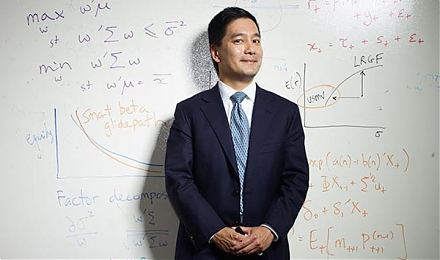
Blackrock asset research director Andrew Ang shares his economic insights into fundamental factors for global asset management. As Ang indicates in an inter
2018-01-17 05:30:00 Wednesday ET

European Union antitrust regulators impose a fine on Qualcomm for advancing its key exclusive microchip deal with Apple to block out rivals such as Intel an