
2018-01-17 05:30:00 Wed ET
technology antitrust competition bilateral trade free trade fair trade trade agreement trade surplus trade deficit multilateralism neoliberalism world trade organization regulation public utility current account compliance

European Union antitrust regulators impose a fine on Qualcomm for advancing its key exclusive microchip deal with Apple to block out rivals such as Intel and TSMC. The European Commission takes into account Qualcomm's multi-year dominance in the LTE microchip market with rapid mobile broadband connections. In recent times, Qualcomm attempts to force Apple and its Asian upstream suppliers to use its trademark microchips exclusively in return for lower licensing fees.
Qualcomm can thus unfairly cut out intense competition in the LTE chipset market. In fact, Qualcomm pays billions of U.S. dollars to Apple such that it would not buy from other microchip producers.
These payments represent not just price reductions, but the primary condition that Apple would exclusively use Qualcomm's baseband chipsets in all its iPhones and iPads. Several other smart phone rivals such as Lenovo, OPPO, Vivo, and Xiaomi express an active interest in buying $2 billion Qualcomm chipsets over 3 years. No microchip rivals would be able to effectively challenge Qualcomm in this particular market regardless of product quality improvements.
The European Commission thus has to penalize Qualcomm for its anti-competitive market behavior. This E.U. regulatory decision has deep economic implications for Apple and other mobile device suppliers and manufacturers worldwide.
If any of our AYA Analytica financial health memos (FHM), blog posts, ebooks, newsletters, and notifications etc, or any other form of online content curation, involves potential copyright concerns, please feel free to contact us at service@ayafintech.network so that we can remove relevant content in response to any such request within a reasonable time frame.
2016-11-08 00:00:00 Tuesday ET
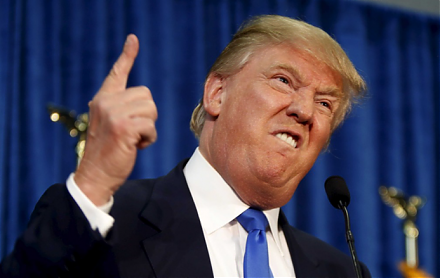
Donald Trump defies the odds to become the new U.S. president. He wants to make America great again. He seeks to repeal Obamacare. He has zero tole
2019-06-03 11:31:00 Monday ET
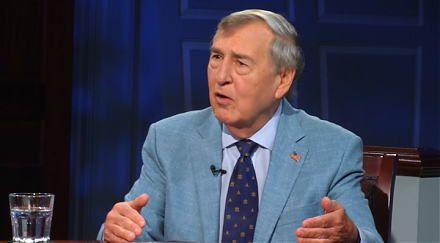
The Sino-U.S. trade war may be the Thucydides trap or a clash of Caucasian and non-Caucasian civilizations. The proverbial Thucydides trap refers to the his
2019-02-06 10:36:49 Wednesday ET
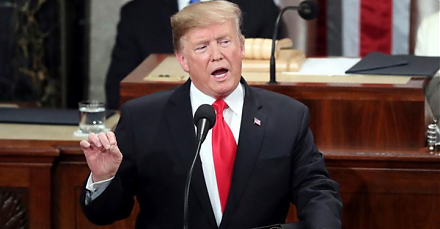
President Trump delivers his second state-of-the-union address to U.S. Congress. Several key themes emerge from this presidential address. First, President
2025-03-03 04:11:06 Monday ET

Is higher stock market concentration good or bad for Corporate America? In recent years, S&P 500 stock market returns exhibit spectacular concentrati
2019-08-03 09:28:00 Saturday ET
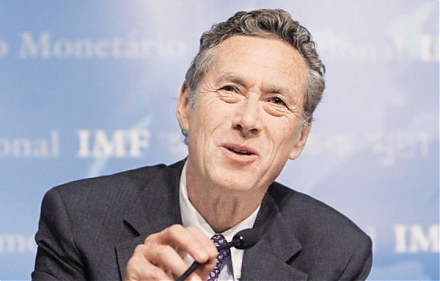
U.S. inflation has become sustainably less than the 2% policy target in recent years. As Harvard macro economist Robert Barro indicates, U.S. inflation has
2019-03-07 12:39:00 Thursday ET
A physicist derives a mathematical formula that success equates the product of both personal quality and the potential value of a random idea. As a Northeas