
2019-06-19 09:27:00 Wed ET
federal reserve monetary policy treasury dollar employment inflation interest rate exchange rate macrofinance recession systemic risk economic growth central bank fomc greenback forward guidance euro capital global financial cycle credit cycle yield curve

San Francisco Fed CEO Mary Daly suggests that trade escalation is not the only risk in the global economy. Due to the current Sino-U.S. trade tension, the global economy seems to slow down quite a bit. Some other global economic issues call for resolution too. For instance, Brexit may result in negative consequences for Eurozone trade and financial capital exodus. Daly indicates that the U.S. economy may experience unforeseen challenges if business sentiment and economic data get out of sync. If business sentiment turns out to be negative, this negativity may become a self-fulfilling prophecy that may inadvertently lead to major fluctuations in real economic output.
Nevertheless, Daly reiterates that the U.S. economy operates near the long-term efficient level with 3.6% unemployment as inflation rises toward the 2% target. In the current macroeconomic scenario, the federal funds rate remains neutral. This outcome accords with the Federal Reserve dual mandate of both price stability and maximum sustainable employment.
The recent interest rate hikes help dampen extreme asset price gyrations and so contribute to financial market stabilization. At any rate, Daly emphasizes that it is important for the Federal Reserve to remain patient before the FOMC members consider the next interest rate adjustments.
If any of our AYA Analytica financial health memos (FHM), blog posts, ebooks, newsletters, and notifications etc, or any other form of online content curation, involves potential copyright concerns, please feel free to contact us at service@ayafintech.network so that we can remove relevant content in response to any such request within a reasonable time frame.
2018-01-09 08:33:00 Tuesday ET
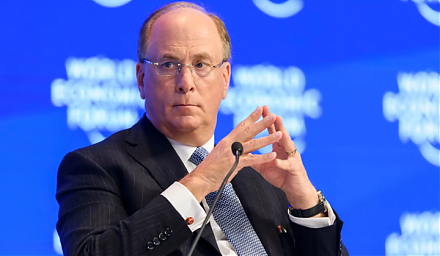
BlackRock CEO Larry Fink emphasizes his key conviction that public corporations should make a positive contribution to society apart from boosting the botto
2018-08-05 12:34:00 Sunday ET
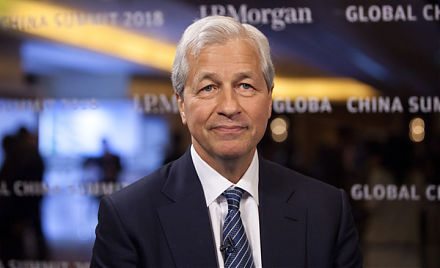
JPMorgan Chase CEO Jamie Dimon sees great potential for 10-year government bond yields to rise to 5% in contrast to the current 3% 10-year Treasury bond yie
2019-02-02 11:36:00 Saturday ET

The Trump administration teams up with western allies to bar HuaWei and other Chinese tech firms from building the 5G high-speed infrastructure due to natio
2019-07-21 09:37:00 Sunday ET

Facebook introduces a new cryptocurrency Libra as a fresh medium of exchange for e-commerce. Libra will be available to all the 2 billion active users on Fa
2019-09-13 10:37:00 Friday ET
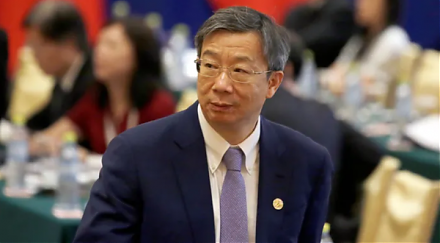
China allows its renminbi currency to slide below the key psychologically important threshold of 7-yuan per U.S. dollar. A currency dispute between the U.S.
2018-08-01 11:43:00 Wednesday ET
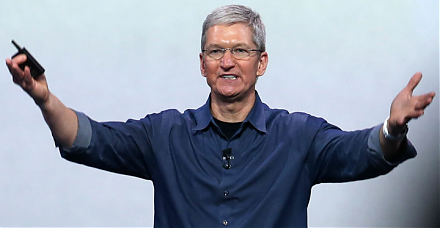
Apple becomes the first company to hit $1 trillion stock market valuation. The tech titan sells about the same number of smart phones or 41 million iPhones