
2018-10-17 12:33:00 Wed ET
federal reserve monetary policy treasury dollar employment inflation interest rate exchange rate macrofinance recession systemic risk economic growth central bank fomc greenback forward guidance euro capital global financial cycle credit cycle yield curve
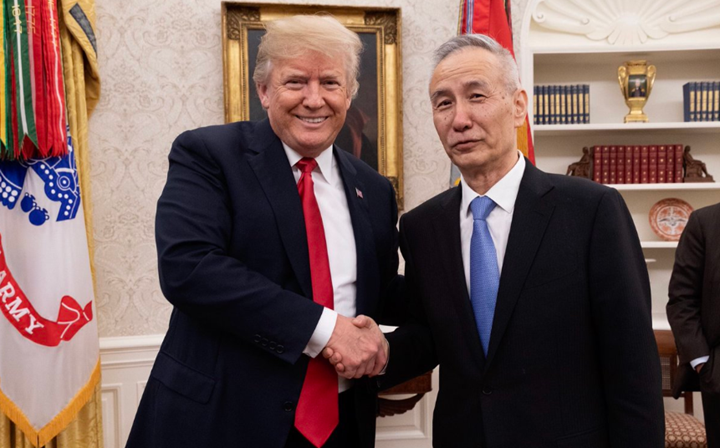
The Trump administration blames China for egregious currency misalignment, but this criticism cannot confirm *currency manipulation* on the part of the Chinese Xi administration. As President Trump remains eager to continue the Sino-U.S. trade war, the U.S. Treasury releases its biennial currency exchange report that criticizes the Chinese trade and currency practices. However, this report cannot conclude that the Chinese government improperly devalues its renminbi currency in order to improve competitive export prices.
If U.S. Treasury categorizes China as a currency manipulator, this decision would inadvertently ratchet up substantial trade tension between America and China. For technical reasons, the status quo remains the same. As the Chinese government continues to constrain its direct intervention in the foreign exchange market, there is minimal evidence of currency manipulation in China. At best, the recent Chinese renminbi devaluation amounts to transient currency misalignment.
On the other hand, the Trump administration begins to conduct bilateral trade pacts with former Trans-Pacific Partnership (TPP) members in order to contain China's economic prowess. As the Trump administration revives trade talks with 11 Asian countries, Britain, and European Union, this bilateral tactic better prepares for the next round of Sino-American trade negotiations soon after the mid-term elections.
If any of our AYA Analytica financial health memos (FHM), blog posts, ebooks, newsletters, and notifications etc, or any other form of online content curation, involves potential copyright concerns, please feel free to contact us at service@ayafintech.network so that we can remove relevant content in response to any such request within a reasonable time frame.
2022-03-15 10:32:00 Tuesday ET

Capital structure theory and practice The genesis of modern capital structure theory traces back to the seminal work of Modigliani and Miller (1958
2018-07-05 13:40:00 Thursday ET

U.S. trading partners such as the European Union, Canada, China, Japan, Mexico, and Russia voice their concern at the World Trade Organization (WTO) in ligh
2018-11-15 12:35:00 Thursday ET

Warren Buffett approves Berkshire Hathaway to implement new meaningful stock repurchases. Buffett sends a positive signal to the stock market with the Berks
2020-08-26 10:33:00 Wednesday ET

Through purposeful leadership, senior managers inspire teams to reach heights of both innovation and profitability with great brand identity and customer lo
2019-11-09 16:38:00 Saturday ET
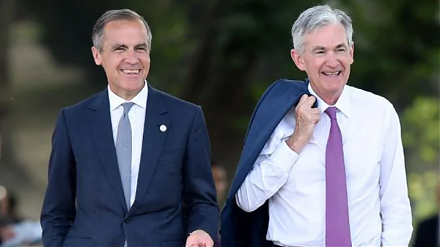
Federal Reserve Chairman Jerome Powell indicates that the central bank would resume Treasury purchases to avoid turmoil in money markets. Powell indicates t
2018-03-29 14:28:00 Thursday ET

Share prices tumble for technology stocks due to Trump's criticism of Amazon's tax avoidance, Facebook user data breach of trust, and Tesla autopilo