Builders FirstSource Inc. Common Stock (NASDAQ:BLDR)

Real-time price: | Most recent change:0.00%

Builders FirstSource is a leading supplier and manufacturer of structural and related building products for residential new construction in the United States. Manufacturing facilities include plants that manufacture roof and floor trusses, wall panels, stairs, aluminum and vinyl windows, custom millwork and pre-hung doors. Builders FirstSource also distributes windows, interior and exterior doors, dimensional lumber and lumber sheet goods, millwork and other building products....

+See More


Here we provide our AYA proprietary alpha stock signals for all premium members on our AYA fintech network platform. Specifically, a high Fama-French multi-factor dynamic conditional alpha suggests that the stock is likely to consistently outperform the broader stock market benchmarks such as S&P 500, Dow Jones, Nasdaq, Russell 3000, MSCI USA, and MSCI World etc. Since March 2023, our proprietary alpha stock signals retain U.S. Patent and Trademark Office (USPTO) fintech patent protection, approval, and accreditation for 20 years. Our homepage and blog articles provide more details on this proprietary alpha stock market investment model with robust long-term historical backtest evidence.

Sharpe-Lintner-Black CAPM alpha (Premium Members Only) Fama-French (1993) 3-factor alpha (Premium Members Only) Fama-French-Carhart 4-factor alpha (Premium Members Only) Fama-French (2015) 5-factor alpha (Premium Members Only) Fama-French-Carhart 6-factor alpha (Premium Members Only) Dynamic conditional 6-factor alpha (Premium Members Only) Last update: Saturday 6 June 2026

Blog+More

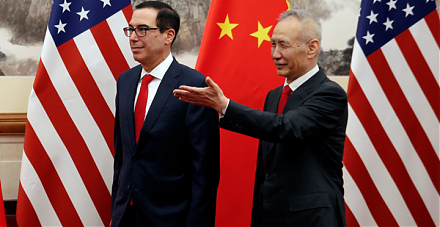
St Louis Federal Reserve President James Bullard indicates that his ideal baseline scenario remains a mutually beneficial China-U.S. trade deal.

Charlene Vos

2019-06-09 11:29:00 Sunday ET

St Louis Federal Reserve President James Bullard indicates that his ideal baseline scenario remains a mutually beneficial China-U.S. trade deal.

St Louis Federal Reserve President James Bullard indicates that his ideal baseline scenario remains a mutually beneficial China-U.S. trade deal. Bullard ind

+See More

Thomas Piketty empirically shows that the top 1% cohort rakes in 20%+ of U.S. national income.

Daisy Harvey

2018-09-01 07:34:00 Saturday ET

Thomas Piketty empirically shows that the top 1% cohort rakes in 20%+ of U.S. national income.

As the French economist who studies global economic inequality in his recent book *Capital in the New Century*, Thomas Piketty co-authors with John Bates Cl

+See More

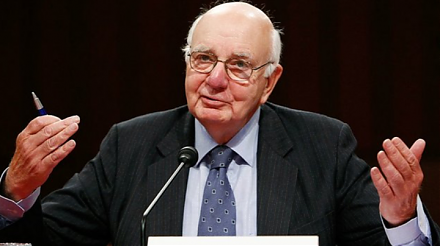
Former Fed Chair Paul Volcker releases his memoir, talks about American public governance, and worries about plutocracy in America.

Apple Boston

2018-10-23 12:36:00 Tuesday ET

Former Fed Chair Paul Volcker releases his memoir, talks about American public governance, and worries about plutocracy in America.

Former Fed Chair Paul Volcker releases his memoir, talks about American public governance, and worries about plutocracy in America. Volcker suggests that pu

+See More

Our proprietary alpha investment model outperforms most stock market indexes from 2017 to 2026.

Olivia London

2026-02-02 12:30:00 Monday ET

Our proprietary alpha investment model outperforms most stock market indexes from 2017 to 2026.

With U.S. fintech patent approval, accreditation, and protection for 20 years, our proprietary alpha investment model outperforms most stock market indexes

+See More

Peter Schuck analyzes U.S. government failures and structural problems in light of both institutions and incentives.

Dan Rochefort

2023-04-28 16:38:00 Friday ET

Peter Schuck analyzes U.S. government failures and structural problems in light of both institutions and incentives.

Peter Schuck analyzes U.S. government failures and structural problems in light of both institutions and incentives. Peter Schuck (2015)   Why

+See More

U.S. economic inequality increases to pre-Great-Depression levels.

Fiona Sydney

2019-02-17 14:40:00 Sunday ET

U.S. economic inequality increases to pre-Great-Depression levels.

U.S. economic inequality increases to pre-Great-Depression levels. U.C. Berkeley economics professor Gabriel Zucman empirically finds that the top 0.1% rich

+See More