
2018-08-13 12:39:00 Mon ET
federal reserve monetary policy treasury dollar employment inflation interest rate exchange rate macrofinance recession systemic risk economic growth central bank fomc greenback forward guidance euro capital global financial cycle credit cycle yield curve
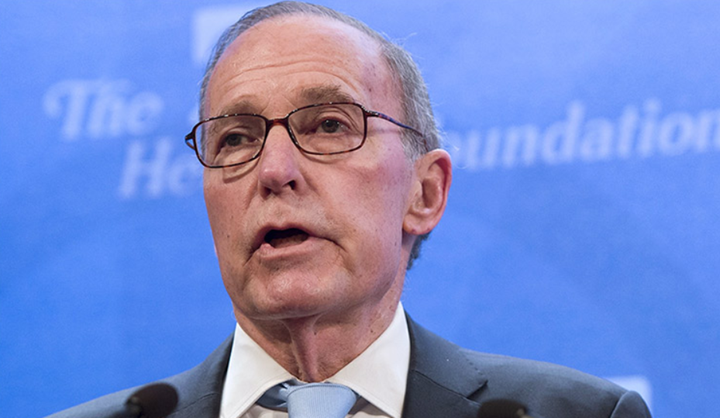
White House chief economic adviser Larry Kudlow points out that the recent U.S. dollar strength shows a clear sign of investor confidence and optimism. Greenback appreciation reflects the fact that international capital continues to flow into the U.S. economy as the Federal Reserve accelerates its interest rate hike. Meanwhile, this dollar appreciation helps dampen commodity prices within healthy and reasonable bounds.
However, President Trump suggests in an earlier tweet that the strong dollar may put America at a competitive disadvantage. In fact, greenback strength can render U.S. export prices less competitive and so may exacerbate future trade deficits in the current account. In addition to these recent exchange rate gyrations, the Trump administration gradually reveals the precautionary motive behind the current trade war against China. This major trade dispute and its attendant measures shine light on the U.S. grand strategy that seeks to thwart China's economic rise as a global superpower.
It is plausible for the Trump administration to view China as an aggressive currency manipulator. As the Chinese renminbi continues to depreciate at a gradual pace, Chinese low-cost imports become more affordable to most American households. For these strategic reasons, the Trump administration needs to re-engage Chinese diplomats and economists in the next round of bilateral trade negotiations.
If any of our AYA Analytica financial health memos (FHM), blog posts, ebooks, newsletters, and notifications etc, or any other form of online content curation, involves potential copyright concerns, please feel free to contact us at service@ayafintech.network so that we can remove relevant content in response to any such request within a reasonable time frame.
2018-01-08 10:37:00 Monday ET

Spotify considers directly selling its shares to the retail public with no underwriter involvement. The music-streaming company plans a direct list on NYSE
2019-02-02 11:36:00 Saturday ET

The Trump administration teams up with western allies to bar HuaWei and other Chinese tech firms from building the 5G high-speed infrastructure due to natio
2019-03-09 12:43:00 Saturday ET

Pinterest files a $12 billion IPO due in mid-2019. This tech unicorn allows users to pin-and-browse images through its social media app and website. Pintere
2019-04-15 08:37:00 Monday ET
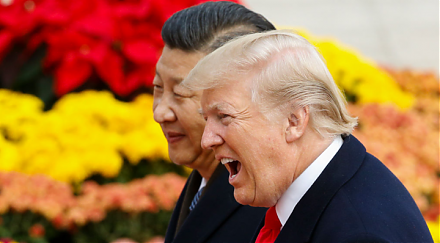
Chinese Belt-and-Road funds large international infrastructure investment projects primarily in East Asia, Central Asia, North Africa, and Italy. Chinese Be
2018-12-23 13:39:00 Sunday ET
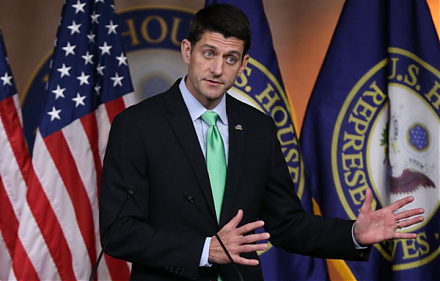
The House of Representatives considers a government expenditure bill with border wall finance and therefore sets up a shutdown stalemate with Senate. As fre
2019-04-25 09:35:00 Thursday ET
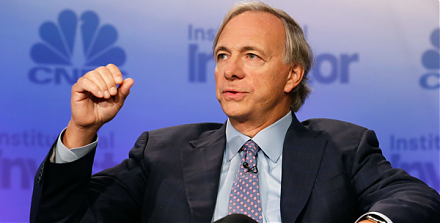
Bridgewater hedge fund founder Ray Dalio suggests that the current state of U.S. capitalism poses an existential threat for many Americans. Dalio deems the