
2019-04-29 08:35:00 Mon ET
federal reserve monetary policy treasury dollar employment inflation interest rate exchange rate macrofinance recession systemic risk economic growth central bank fomc greenback forward guidance euro capital global financial cycle credit cycle yield curve

IMF chief economist Gita Gopinath predicts no global recession with key downside risks at this delicate moment. First, trade tensions remain one of the key downside risks to the global economy, especially in the car and aircraft sectors. Trump trade envoys need to reach mutual agreement with the Chinese Xi administration with respect to U.S. bilateral trade deficit eradication and intellectual property protection and enforcement. Second, slower economic growth poses another major threat to continental economies such as China and Europe. These economies turn out to be the biggest victims of American tariffs that the Trump administration unilaterally decides to impose due to U.S. trade protectionism. Third, a deterioration in stock market investor sentiment may rapidly tighten financial constraints and conditions in the broader context of perennial public debt accumulation in the U.S. and several other OECD countries. This deterioration may inadvertently exacerbate sovereign bank doom-loop default risks.
Federal Reserve has to halt the current interest rate hike to reinvigorate a smooth global financial cycle as the Chinese, European, and Japanese central banks and fiscal authorities coordinate their next macroeconomic stimulus programs. Global monetary policy coordination continues to help maintain stock market momentum and economic growth via dovish monetary expansion and fiscal stimulus worldwide.
If any of our AYA Analytica financial health memos (FHM), blog posts, ebooks, newsletters, and notifications etc, or any other form of online content curation, involves potential copyright concerns, please feel free to contact us at service@ayafintech.network so that we can remove relevant content in response to any such request within a reasonable time frame.
2023-12-08 08:28:00 Friday ET

Tax policy pluralism for addressing special interests Economists often praise as pluralism the interplay of special interest groups in public policy. In
2018-09-23 08:37:00 Sunday ET
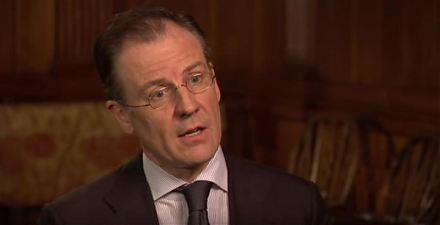
Bank of America Merrill Lynch's chief investment strategist Michael Hartnett points out that U.S. corporate debt (not household credit supply or bank ca
2018-11-21 11:36:00 Wednesday ET
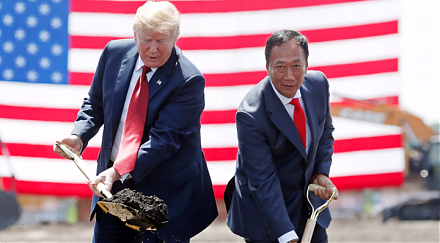
Apple upstream suppliers from Foxconn and Pegatron to Radiance and Lumentum experience sharp share price declines during the Christmas 2017 holiday quarter.
2017-11-05 09:45:00 Sunday ET
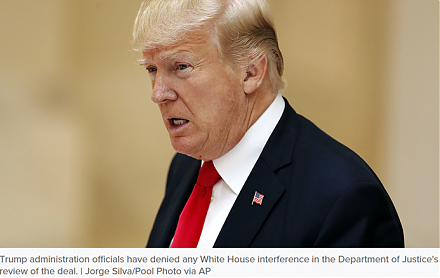
President Trump criticizes the potential media merger between AT&T and Time Warner, the latter of which owns the anti-Trump media network CNN. President
2022-11-25 09:29:00 Friday ET

Uniform field theory of corporate finance While the agency and precautionary-motive stories are complementary, these stories can be nested as special cas
2017-10-27 06:35:00 Friday ET
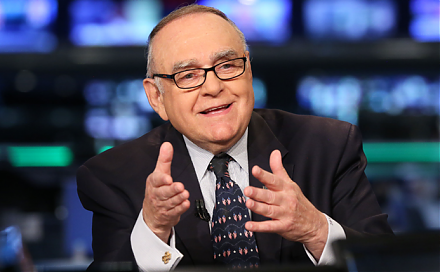
Leon Cooperman, Chairman and CEO of Omega Advisors, points out that the current Trump stock market rally now approaches normalization. The U.S. stock market