
2019-10-07 12:35:00 Mon ET
federal reserve monetary policy treasury dollar employment inflation interest rate exchange rate macrofinance recession systemic risk economic growth central bank fomc greenback forward guidance euro capital global financial cycle credit cycle yield curve
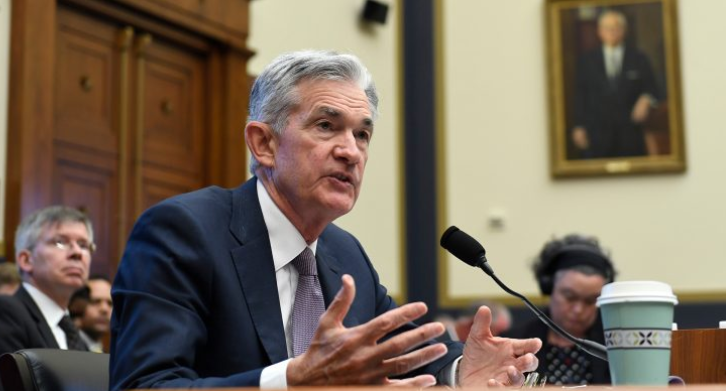
Federal Reserve reduces the interest rate by another key quarter point to the target range of 1.75%-2% in September 2019. In accordance with the Federal Reserve dot plot of interest rate expectations, 5 FOMC members favor the prior status quo of 2% to 2.25%.
The same flagship dot plot suggests that 5 FOMC members support a quarter point cut with no more rate cuts through the remainder of the current calendar year. The dot plot further indicates that 7 FOMC members support at least one more interest rate cut in late-2019. The U.S. monetary policy committee cites the implications of global trade frictions and other regional clouds of both fiscal policy uncertainty and asset price normalization for the current economic outlook. Low inflation remains the root cause of the second interest rate cut. The recent dovish monetary policy stance accords with the Federal Reserve dual mandate of maximum sustainable employment and price stability.
Federal Reserve Chair Jerome Powell indicates that it may be essential for most market participants to raise the bar for any further interest rate reductions due to tighter financial constraints in the foreseeable future. Data dictate future moderate moves in the monetary policy space.
If any of our AYA Analytica financial health memos (FHM), blog posts, ebooks, newsletters, and notifications etc, or any other form of online content curation, involves potential copyright concerns, please feel free to contact us at service@ayafintech.network so that we can remove relevant content in response to any such request within a reasonable time frame.
2019-10-01 11:33:00 Tuesday ET

The Trump administration postpones increasing 25% to 30% tariffs on $250 billion Chinese imports after China extends an olive branch to de-escalate Sino-Ame
2022-04-15 10:32:00 Friday ET

Corporate investment management This review of corporate investment literature focuses on some recent empirical studies of M&A, capital investm
2018-03-03 11:37:00 Saturday ET

President Xi seeks Chinese congressional approval and constitutional amendment for abolishing his term limits of strongman rule with more favorable trade de
2020-09-11 10:22:00 Friday ET

AYA fintech network platform provides proprietary alpha stock signals and personal finance tools. In recent times, we have completed our fresh website up
2018-09-21 09:41:00 Friday ET

Former World Bank and IMF chief advisor Anne Krueger explains why the Trump administration's current tariff tactics undermine the multilateral global tr
2019-10-11 13:40:00 Friday ET

Apple CEO Tim Cook maintains a frugal low-key lifestyle. With $625 million public wealth, Cook leads the $1 trillion tech titan Apple in the post-Jobs era.