
2018-10-17 12:33:00 Wed ET
federal reserve monetary policy treasury dollar employment inflation interest rate exchange rate macrofinance recession systemic risk economic growth central bank fomc greenback forward guidance euro capital global financial cycle credit cycle yield curve
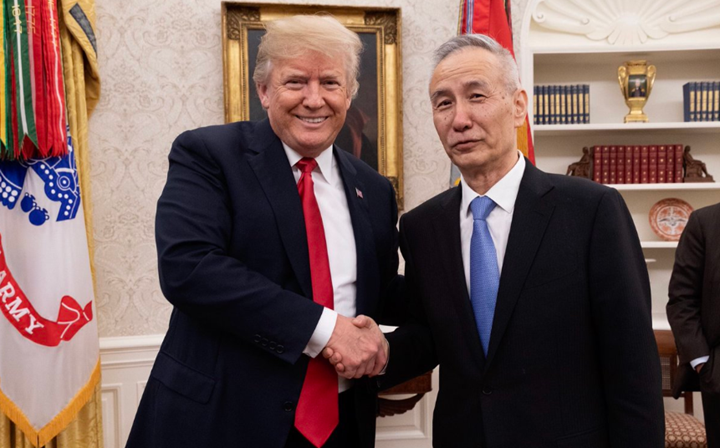
The Trump administration blames China for egregious currency misalignment, but this criticism cannot confirm *currency manipulation* on the part of the Chinese Xi administration. As President Trump remains eager to continue the Sino-U.S. trade war, the U.S. Treasury releases its biennial currency exchange report that criticizes the Chinese trade and currency practices. However, this report cannot conclude that the Chinese government improperly devalues its renminbi currency in order to improve competitive export prices.
If U.S. Treasury categorizes China as a currency manipulator, this decision would inadvertently ratchet up substantial trade tension between America and China. For technical reasons, the status quo remains the same. As the Chinese government continues to constrain its direct intervention in the foreign exchange market, there is minimal evidence of currency manipulation in China. At best, the recent Chinese renminbi devaluation amounts to transient currency misalignment.
On the other hand, the Trump administration begins to conduct bilateral trade pacts with former Trans-Pacific Partnership (TPP) members in order to contain China's economic prowess. As the Trump administration revives trade talks with 11 Asian countries, Britain, and European Union, this bilateral tactic better prepares for the next round of Sino-American trade negotiations soon after the mid-term elections.
If any of our AYA Analytica financial health memos (FHM), blog posts, ebooks, newsletters, and notifications etc, or any other form of online content curation, involves potential copyright concerns, please feel free to contact us at service@ayafintech.network so that we can remove relevant content in response to any such request within a reasonable time frame.
2020-11-10 07:25:00 Tuesday ET

The McKinsey edge reflects the collective wisdom of key success principles in business management consultancy. Shu Hattori (2015) The McKins
2025-07-12 11:35:00 Saturday ET

Mitch Anthony explains why it is now more important for top sales leaders to apply social skills and emotional competences to fulfill customer needs, wants,
2020-11-01 11:21:00 Sunday ET

Artificial intelligence continues to push boundaries for several tech titans to sustain their central disruptive innovations, competitive moats, and first-m
2019-08-24 14:38:00 Saturday ET

Warren Buffett warns that the current cap ratio of U.S. stock market capitalization to real GDP seems to be much higher than the long-run average benchmark.
2019-12-13 09:32:00 Friday ET

Saudi Aramco aims to initiate its fresh IPO in December 2019. Several investment banks indicate to the Saudi government that most investors may value the mi
2018-06-11 07:44:00 Monday ET
Facebook, Apple, Amazon, Netflix, and Google (FAANG) have been the motor of the S&P 500 stock market index. Several economic media commentators contend