
2017-12-14 12:41:00 Thu ET
federal reserve monetary policy treasury dollar employment inflation interest rate exchange rate macrofinance recession systemic risk economic growth central bank fomc greenback forward guidance euro capital global financial cycle credit cycle yield curve
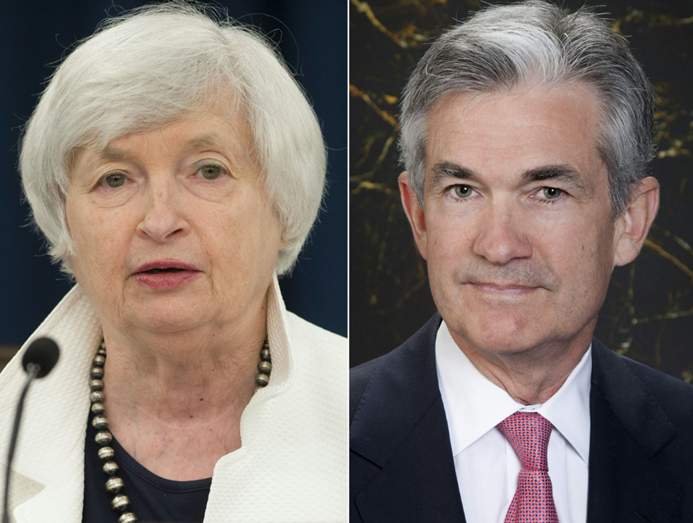
Federal Reserve raises the interest rate by 25 basis points to the target range of 1.25% to 1.5% as FOMC members revise up their GDP estimate from 2% to 2.5%. These relevant monetary policy events unravel in response to the Yellen legacy and the Trump administration's accommodative fiscal stimulus. Although U.S. inflation gets a modest boost from 1.6% to 1.7%, this current forecast for 2018 remains below the 2% neutral target. Furthermore, FOMC members note that the labor market continues to improve near full employment. This upgrade suggests that most state-specific job conditions will further strengthen in 2018.
As Fed Chair Janet Yellen confirms with her successor Jerome Powell the final interest rate hike in December 2017, she has left a key monetary policy legacy in U.S. history. She has successfully steered the U.S. economy out of the global financial crisis of 2008-2009, and has applied her dovish acumen to normalize U.S. monetary policy post-QE to attain full employment, low inflation, and sound financial stability. Powell should thank Yellen for this benign inheritance at the Federal Reserve.
If any of our AYA Analytica financial health memos (FHM), blog posts, ebooks, newsletters, and notifications etc, or any other form of online content curation, involves potential copyright concerns, please feel free to contact us at service@ayafintech.network so that we can remove relevant content in response to any such request within a reasonable time frame.
2025-01-31 09:26:00 Friday ET

The current homeland industrial policy stance worldwide seeks to embed the new notion of global resilience into economic statecraft. In the broader cont
2018-08-11 14:35:00 Saturday ET

The Trump administration imposes 20%-50% tariffs on Turkish imports due to a recent spat over the detention of an American pastor, Andrew Brunson, in Turkey
2025-09-21 12:32:00 Sunday ET

Stock Synopsis: With a new Python program, we use, adapt, apply, and leverage each of the mainstream Gemini Gen AI models to conduct this comprehensive fund
2018-09-27 11:41:00 Thursday ET

Michael Kors pays $2.3 billion to acquire the Italian elite fashion brand Versace. In accordance with Michael Kors's 5-year plan, the joint company grow
2018-12-05 09:38:00 Wednesday ET
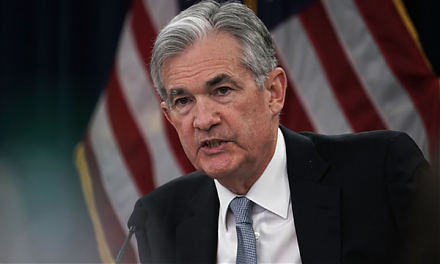
Federal Reserve publishes its inaugural flagship financial stability report. Fed Chair Jerome Powell applauds both low inflation (2%) and low unemployment (
2025-10-06 10:27:00 Monday ET
Stock Synopsis: With a new Python program, we use, adapt, apply, and leverage each of the mainstream Gemini Gen AI models to conduct this comprehensive fund