Berkshire Hills Bancorp Inc. Common Stock (NYSE:BHLB)

Real-time price: | Most recent change:0.00%

Berkshire Hills Bancorp, Inc. is a bank holding company. Through its subsidiaries, the company is engaged as a community bank that accepts retail deposits from the general public in the areas surrounding its full-service banking offices and uses those funds,together with funds generated from operations and borrowings, to originate residential mortgage loans, commercial business and real estate loans and consumer loans, primarily indirect automobile loans....

+See More


Here we provide our AYA proprietary alpha stock signals for all premium members on our AYA fintech network platform. Specifically, a high Fama-French multi-factor dynamic conditional alpha suggests that the stock is likely to consistently outperform the broader stock market benchmarks such as S&P 500, Dow Jones, Nasdaq, Russell 3000, MSCI USA, and MSCI World etc. Since March 2023, our proprietary alpha stock signals retain U.S. Patent and Trademark Office (USPTO) fintech patent protection, approval, and accreditation for 20 years. Our homepage and blog articles provide more details on this proprietary alpha stock market investment model with robust long-term historical backtest evidence.

Sharpe-Lintner-Black CAPM alpha (Premium Members Only) Fama-French (1993) 3-factor alpha (Premium Members Only) Fama-French-Carhart 4-factor alpha (Premium Members Only) Fama-French (2015) 5-factor alpha (Premium Members Only) Fama-French-Carhart 6-factor alpha (Premium Members Only) Dynamic conditional 6-factor alpha (Premium Members Only) Last update: Saturday 16 May 2026

Blog+More

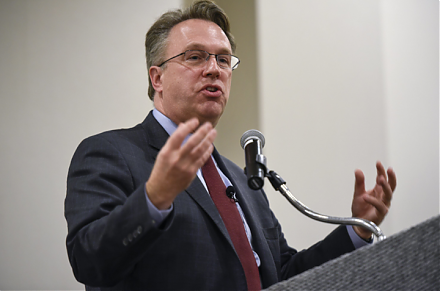
Dallas Federal Reserve Bank President Robert Kaplan expects the U.S. economy to grow at 2.2%-2.5% in 2019-2020.

Becky Berkman

2019-06-11 12:33:00 Tuesday ET

Dallas Federal Reserve Bank President Robert Kaplan expects the U.S. economy to grow at 2.2%-2.5% in 2019-2020.

Dallas Federal Reserve Bank President Robert Kaplan expects the U.S. economy to grow at 2.2%-2.5% in 2019-2020 as inflation rises a bit. In an interview wit

+See More

Lean enterprises often try to incubate disruptive innovations with iterative continuous improvements and inventions over time.

Joseph Corr

2020-06-03 09:31:00 Wednesday ET

Lean enterprises often try to incubate disruptive innovations with iterative continuous improvements and inventions over time.

Lean enterprises often try to incubate disruptive innovations with iterative continuous improvements and inventions over time. Trevor Owens and Obie Fern

+See More

Several feasible near-term reforms can substantially narrow the scope for global tax avoidance by closing information loopholes.

Apple Boston

2023-03-14 16:43:00 Tuesday ET

Several feasible near-term reforms can substantially narrow the scope for global tax avoidance by closing information loopholes.

Several feasible near-term reforms can substantially narrow the scope for global tax avoidance by closing information loopholes. Thomas Pogge and Krishen

+See More

Public sentiment turns quite a bit against Facebook in light of the public issues around fake news.

Apple Boston

2017-12-03 08:37:00 Sunday ET

Public sentiment turns quite a bit against Facebook in light of the public issues around fake news.

Sean Parker, Napster founder and a former investor in Facebook, has become a "conscientious objector" on Facebook. Parker says Facebook explo

+See More

The Trump fiscal trifecta of lower income taxation, new infrastructure, and deregulation has yet to run its natural course.

Becky Berkman

2017-04-25 06:35:00 Tuesday ET

The Trump fiscal trifecta of lower income taxation, new infrastructure, and deregulation has yet to run its natural course.

This nice and clear infographic visualization helps us better decipher the main memes and themes of President Donald Trump's first 100 days in office.

+See More

U.S. economic inequality increases to pre-Great-Depression levels.

Fiona Sydney

2019-02-17 14:40:00 Sunday ET

U.S. economic inequality increases to pre-Great-Depression levels.

U.S. economic inequality increases to pre-Great-Depression levels. U.C. Berkeley economics professor Gabriel Zucman empirically finds that the top 0.1% rich

+See More