Athena Technology Acquisition Corp. II Class A Common Stock (NYSE:ATEK)

Real-time price: | Most recent change:0.00%

Athena Technology Acquisition Corp. II is a blank check company. It intends to effect a merger, capital stock exchange, asset acquisition, stock purchase, reorganization or related business combination with one or more businesses. Athena Technology Acquisition Corp. II is based in New York....

+See More


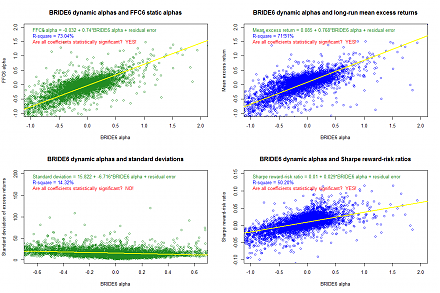
Here we provide our AYA proprietary alpha stock signals for all premium members on our AYA fintech network platform. Specifically, a high Fama-French multi-factor dynamic conditional alpha suggests that the stock is likely to consistently outperform the broader stock market benchmarks such as S&P 500, Dow Jones, Nasdaq, Russell 3000, MSCI USA, and MSCI World etc. Since March 2023, our proprietary alpha stock signals retain U.S. Patent and Trademark Office (USPTO) fintech patent protection, approval, and accreditation for 20 years. Our homepage and blog articles provide more details on this proprietary alpha stock market investment model with robust long-term historical backtest evidence.

Sharpe-Lintner-Black CAPM alpha (Premium Members Only) Fama-French (1993) 3-factor alpha (Premium Members Only) Fama-French-Carhart 4-factor alpha (Premium Members Only) Fama-French (2015) 5-factor alpha (Premium Members Only) Fama-French-Carhart 6-factor alpha (Premium Members Only) Dynamic conditional 6-factor alpha (Premium Members Only) Last update: Saturday 4 July 2026

Blog+More

Berkeley professor and economist Barry Eichengreen reconciles the nominal and real interest rates to argue in favor of greater fiscal deficits.

Joseph Corr

2019-05-23 10:33:00 Thursday ET

Berkeley professor and economist Barry Eichengreen reconciles the nominal and real interest rates to argue in favor of greater fiscal deficits.

Berkeley professor and economist Barry Eichengreen reconciles the nominal and real interest rates to argue in favor of greater fiscal deficits. French econo

+See More

The Economist interviews President Trump and spots the keyword *reciprocity* from trade to taxation.

Amy Hamilton

2017-07-01 08:40:00 Saturday ET

The Economist interviews President Trump and spots the keyword *reciprocity* from trade to taxation.

The Economist interviews President Donald Trump and spots the keyword *reciprocity* in many aspects of Trumponomics from trade and taxation to infrastructur

+See More

Harvard economic platform researcher Dipayan Ghosh proposes some alternative solutions to breaking up tech titans such as Facebook, Google, Apple, and Amazon.

Olivia London

2019-07-23 09:22:00 Tuesday ET

Harvard economic platform researcher Dipayan Ghosh proposes some alternative solutions to breaking up tech titans such as Facebook, Google, Apple, and Amazon.

Harvard economic platform researcher Dipayan Ghosh proposes some alternative solutions to breaking up tech titans such as Facebook, Google, Apple, and Amazo

+See More

Agile lean enterprises remain flexible and capable of reinvention in light of new megatrends such as digitization and servitization.

Amy Hamilton

2020-10-20 09:36:00 Tuesday ET

Agile lean enterprises remain flexible and capable of reinvention in light of new megatrends such as digitization and servitization.

Agile lean enterprises remain flexible and capable of reinvention in light of new megatrends such as digitization and servitization. Shane Cragun and Kat

+See More

Corporate cash management

Jacob Miramar

2022-03-25 09:34:00 Friday ET

Corporate cash management

Corporate cash management The empirical corporate finance literature suggests four primary motives for firms to hold cash. These motives include the tra

+See More

Business leaders often think from a systemic perspective, share bold visions, build great teams, and learn new business models.

Becky Berkman

2020-08-05 08:33:00 Wednesday ET

Business leaders often think from a systemic perspective, share bold visions, build great teams, and learn new business models.

Business leaders often think from a systemic perspective, share bold visions, build great teams, and learn new business models. Peter Senge (2006) &nb

+See More