
Amedisys Inc. provides home health and hospice services throughout the U.S. to the growing chronic, co-morbid, and aging American population. The company also offers clinically focused programs for chronic conditions and various diseases such as diabetes, coronary artery disease, congestive heart failure, orthopedics, complex wound care, geriatric surgical recovery, balance retraining, behavioral health and stroke recovery, as well as various rehabilitative programs. It provides hospice services to patients using an interdisciplinary care team comprising a physician, nurses, home health aides, social workers, therapists, dieticians, volunteers, counselors, chaplains and bereavement coordinators, when required. The company depends on reimbursement from Medicare (for chronic care) for a significant portion of its revenues on account of the age demographics of its patient base (average age of 81)....
+See MoreSharpe-Lintner-Black CAPM alpha (Premium Members Only) Fama-French (1993) 3-factor alpha (Premium Members Only) Fama-French-Carhart 4-factor alpha (Premium Members Only) Fama-French (2015) 5-factor alpha (Premium Members Only) Fama-French-Carhart 6-factor alpha (Premium Members Only) Dynamic conditional 6-factor alpha (Premium Members Only) Last update: Saturday 17 October 2026
2017-11-29 07:42:00 Wednesday ET
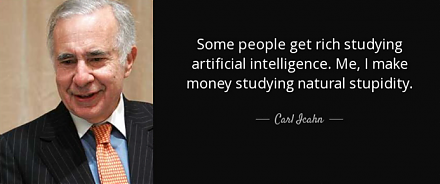
The octogenarian billionaire and activist investor Carl Icahn mulls over steps to shake up the board of SandRidge Energy after the oil-and-gas company adopt
2025-09-16 09:27:00 Tuesday ET

Stock Synopsis: With a new Python program, we use, adapt, apply, and leverage each of the mainstream Gemini Gen AI models to conduct this comprehensive fund
2019-01-02 06:28:00 Wednesday ET

New York Fed CEO John Williams listens to sharp share price declines as part of the data-dependent interest rate policy. The Federal Reserve can respond to
2023-12-05 09:25:00 Tuesday ET

Better corporate ownership governance through worldwide convergence toward Berle-Means stock ownership dispersion Abstract We design a model
2018-01-12 07:37:00 Friday ET

The Economist delves into the modern perils of tech titans such as Apple, Amazon, Facebook, and Google. These key tech titans often receive plaudits for mak
2019-02-09 08:33:00 Saturday ET
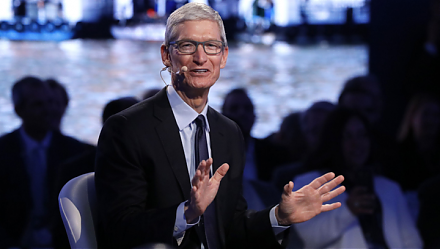
Apple provides positive forward guidance on both revenue and profit forecasts for iPhones, iPads, and MacBooks. In the Christmas 2018 festive season, MacBoo
 Reports
 Metrics
 Events
 AI Stock Synopses