
RLI Corp. is a specialty property-casualty underwriter that caters primarily to niche markets through its main operating subsidiary, RLI Insurance Company. Other subsidiaries include Mt. Hawley Insurance Company and RLI Indemnity Company. RLI Corp. classifies its operations into three distinct segments - Casualty, Property, and Surety. Casualty segment comprises general liability, personal umbrella, transportation, executive products, commercial umbrella, multi-peril program business, and other specialty coverage. Property segment provides commercial property coverage, including excess and surplus lines and specialty insurance such as fire, earthquake, flood and inland marine. Surety segment specializes in writing small-to-large commercial and small contract surety coverage, as well as those for the energy , petrochemical and refining industries. RLI Corp. distributes its products through branch offices to wholesale and retail brokers, independent agents and e-commerce channels....
+See More2020-11-24 09:30:00 Tuesday ET

Many analytic business competitors can apply smart data science to support their distinctive capabilities and strategic advantages. Thomas Davenport and
2019-02-25 12:41:00 Monday ET

Chicago financial economist Raghuram Rajan views communities as the third pillar of liberal democracy in addition to open markets and states. Rajan suggests
2025-08-09 11:31:00 Saturday ET

Wharton e-commerce entrepreneurship professor Dr Karl Ulrich explains that many top-notch universities now provide massive open online courses (MOOCs) for m
2023-05-21 12:26:00 Sunday ET

Amy Chua and Jed Rubenfeld suggest that relatively successful ethnic groups exhibit common cultural traits in America. Amy Chua and Jed Rubenfeld (2015)
2020-07-05 11:31:00 Sunday ET

Business entrepreneurs dare to dream, remain true and authentic to themselves, and try to make a great social impact in the world. Alex Malley (2014)
2017-10-21 08:45:00 Saturday ET
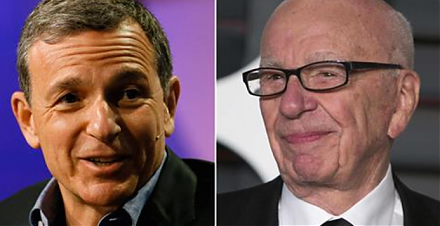
Netflix stares at higher content costs as Disney and Fox hold merger talks. Disney has held talks to acquire most of 21st Century Fox's business equity.