
2019-05-03 11:29:00 Fri ET
technology antitrust competition bilateral trade free trade fair trade trade agreement trade surplus trade deficit multilateralism neoliberalism world trade organization regulation public utility current account compliance

Key tech unicorns blitzscale business niches for better scale economies from Uber and Lyft to Pinterest, Slack, and Zoom. LinkedIn cofounder and serial entrepreneur Reid Hoffman explains in his recent book that tech unicorns rapidly scale up core functions to reap network effects despite substantial uncertainty. Network effects often manifest in the form of freemium users (Dropbox, Facebook, and LinkedIn), cloud services (Amazon and Zoom), and online subscriptions (Apple and Netflix). About 2 decades ago, the last IPO boom brought to the stock market a boatload of profitless dotcom companies. Many of these dotcom companies never had the opportunity to blitzscale their core operations with gargantuan losses.
In accordance with the Hoffman zeitgeist of Silicon Valley, the current IPO game focuses on how tech unicorns become big before substantial economic uncertainty strikes hard. Beyond the singularity point, these tech unicorns start to worry about net profits and other socioeconomic bottomline metrics. This competitive strategy works well for tech titans such as Facebook, Amazon, Microsoft, Google, Apple, Nvidia, and Twitter (FAMGANT). Nevertheless, the same strategy may turn out to be less effective for Airbnb, Uber, Lyft, Netflix, Slack, and Zoom as they experience competitive bottlenecks in lieu of both scale economies and network effects.
If any of our AYA Analytica financial health memos (FHM), blog posts, ebooks, newsletters, and notifications etc, or any other form of online content curation, involves potential copyright concerns, please feel free to contact us at service@ayafintech.network so that we can remove relevant content in response to any such request within a reasonable time frame.
2018-09-11 18:36:00 Tuesday ET
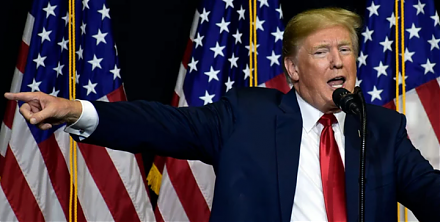
President Trump tweets that Apple can avoid tariff consequences by shifting its primary supply chain from China to America. These Trump tariffs on another $
2018-10-25 10:36:00 Thursday ET
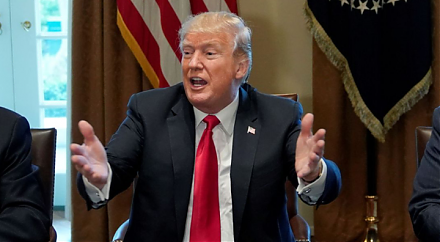
Trump tariffs begin to bite U.S. corporate profits from Ford and Harley-Davidson to Caterpillar and Walmart etc. U.S. corporate profit growth remains high a
2018-07-19 18:38:00 Thursday ET

Goldman Sachs chief economist Jan Hatzius proposes designing a new Financial Conditions Index (FCI) to be a weighted-average of interest rates, exchange rat
2019-10-05 07:27:00 Saturday ET
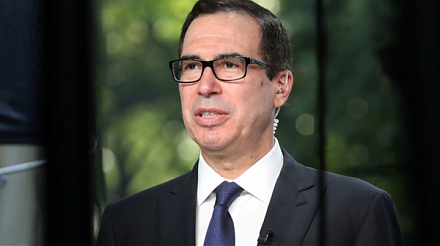
Treasury Secretary Steven Mnuchin indicates that there is a good conceptual trade agreement between China and the U.S. in regard to intellectual property pr
2019-08-02 17:39:00 Friday ET
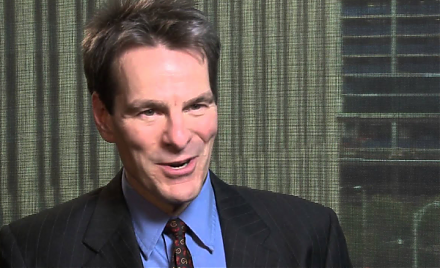
The Phillips curve becomes the Phillips cloud with no inexorable trade-off between inflation and unemployment. Stanford finance professor John Cochrane disa
2019-05-02 13:30:00 Thursday ET

Netflix has an unsustainable business model in the meantime. Netflix maintains a small premium membership fee of $9-$14 per month for its unique collection