
2019-12-13 09:32:00 Fri ET
stock market gold oil stock return s&p 500 asset market stabilization asset price fluctuations stocks bonds currencies commodities funds term spreads credit spreads fair value spreads asset investments
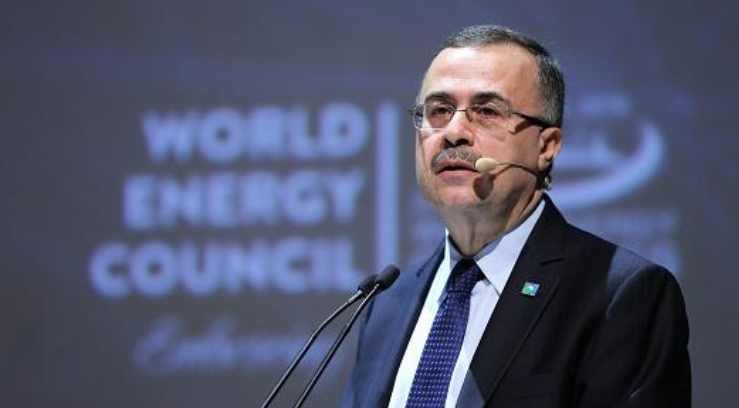
Saudi Aramco aims to initiate its fresh IPO in December 2019. Several investment banks indicate to the Saudi government that most investors may value the middle-east oil company at the target range of $1.5 trillion to $1.7 trillion. This current stock market valuation falls shorts of the prior $2 trillion benchmark that the crown prince Mohammed bin Salman anticipated in his first Saudi Aramco IPO announcement back in 2016.
As the most profitable state oil enterprise, Saudi Aramco is worth almost twice the equity valuation of Apple (which leads almost all U.S. public corporations in terms of stock market capitalization). Further, Saudi Aramco earns more than the overall net income of the other top international oil companies (ExxonMobil, Royal Dutch Shell, BP, and Chevron).
The prince expects to funnel the Saudi Aramco IPO proceeds into a new sovereign wealth fund that helps the middle-east kingdom wean the fragile Saudi economy off its long-run reliance on oil production. The sovereign wealth fund can empower Saudi Arabia to diversify across numerous new industries such as Internet search, mobile pay, artificial intelligence, robotic automation, semiconductor technology, and cloud computation etc. This diversification helps minimize the primary national security threat to Saudi Arabia.
If any of our AYA Analytica financial health memos (FHM), blog posts, ebooks, newsletters, and notifications etc, or any other form of online content curation, involves potential copyright concerns, please feel free to contact us at service@ayafintech.network so that we can remove relevant content in response to any such request within a reasonable time frame.
2019-05-07 09:30:00 Tuesday ET
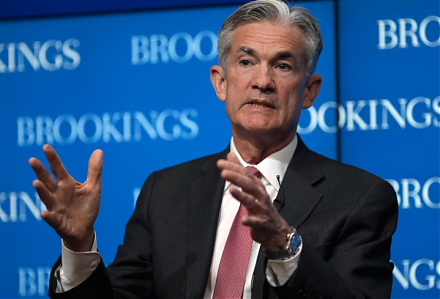
The Trump team receives a 3.2% first-quarter GDP boost as Fed Chair Jay Powell halts the next interest rate hike in early-May 2019. This smooth upward econo
2020-02-02 10:31:00 Sunday ET
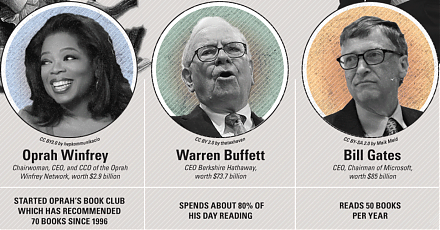
Our proprietary alpha investment model outperforms the major stock market benchmarks such as S&P 500, MSCI, Dow Jones, and Nasdaq. We implement
2018-08-09 16:36:00 Thursday ET
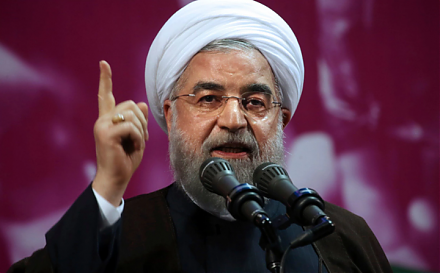
President Trump applies an increasingly bellicose stance toward the Iranian leader Hassan Rouhani as he rejects a global agreement to curb Iran's nuclea
2022-11-15 10:30:00 Tuesday ET

Stock market misvaluation and corporate investment payout The behavioral catering theory suggests that stock market misvaluation can have a first-order
2018-05-07 07:32:00 Monday ET

President Trump seeks to honor his campaign promise of lower U.S. medical costs by forcing higher big-pharma prices in foreign countries such as Canada, Bri
2023-02-14 09:31:00 Tuesday ET

Eric Posner and Glen Weyl propose radical reforms to resolve key market design problems for better democracy and globalization. Eric Posner and Glen Weyl