
2018-11-13 12:30:00 Tue ET
technology antitrust competition bilateral trade free trade fair trade trade agreement trade surplus trade deficit multilateralism neoliberalism world trade organization regulation public utility current account compliance

President Trump promises a great trade deal with China as Americans mull over mid-term elections. President Trump wants to reach a trade accord with Chinese President Xi Jin-Ping at the G20 summit in Argentina later in November 2018. Also, President Trump asks key Cabinet secretaries to draft a potential trade deal to halt escalating the current trade conflict with the Chinese Xi administration. If President Trump can achieve an accord on trade with President Xi, the Trump administration would refrain from imposing tariffs and other economic sanctions on another $267 billion Chinese imports. These economic sanctions focus on the perennial shady Chinese practices of intellectual property theft. These shady practices often entail requiring foreign companies to establish data centers and IT theme parks in China such that both proprietary data and techniques transfer to Chinese tech firms.
Several e-commerce giants such as Amazon and Alibaba express grave concerns about U.S. domestic job creation in the wake of tariffs, quotas, and other retaliatory trade barriers. For instance, Alibaba executive vice chairman Joe Tsai reiterates that his boss Jack Ma has promised the creation of 1 million small business jobs on the premise of few Sino-U.S. trade barriers. His conservative tone departs from the previous promise by Alibaba executive chairman Jack Ma (who now withdraws his earlier claim of ubiquitous U.S. job creation in a low-key fashion).
If any of our AYA Analytica financial health memos (FHM), blog posts, ebooks, newsletters, and notifications etc, or any other form of online content curation, involves potential copyright concerns, please feel free to contact us at service@ayafintech.network so that we can remove relevant content in response to any such request within a reasonable time frame.
2022-04-15 10:32:00 Friday ET

Corporate investment management This review of corporate investment literature focuses on some recent empirical studies of M&A, capital investm
2018-05-23 09:41:00 Wednesday ET

Many U.S. large public corporations spend their tax cuts on new dividend payout and share buyback but not on new job creation and R&D innovation. These
2019-08-20 07:33:00 Tuesday ET
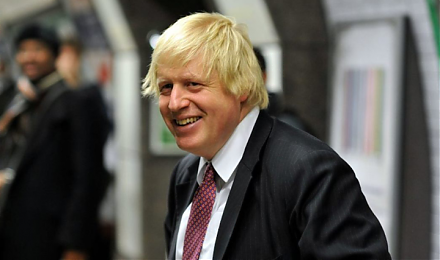
The recent British pound depreciation is a big Brexit barometer. Britain appoints former London mayor and Foreign Secretary Boris Johnson as the prime minis
2019-09-23 12:25:00 Monday ET
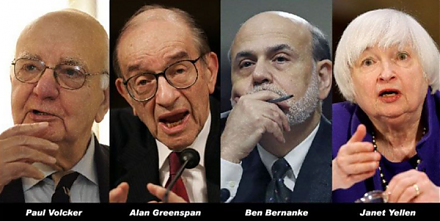
Volcker, Greenspan, Bernanke, and Yellen contribute to a Wall Street Journal op-ed on monetary policy independence. These former Federal Reserve chiefs unit
2018-05-07 07:32:00 Monday ET
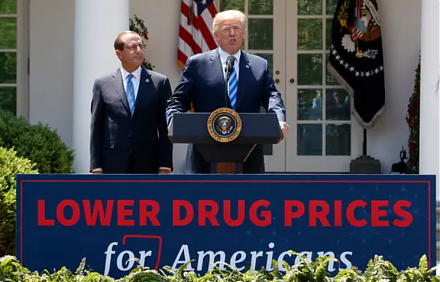
President Trump seeks to honor his campaign promise of lower U.S. medical costs by forcing higher big-pharma prices in foreign countries such as Canada, Bri
2019-04-21 10:07:54 Sunday ET

Central bank independence remains important for core inflation containment in the current age of political populism. In accordance with the dual mandate of