
2017-05-19 09:39:00 Fri ET
stock market gold oil stock return s&p 500 asset market stabilization asset price fluctuations stocks bonds currencies commodities funds term spreads credit spreads fair value spreads asset investments
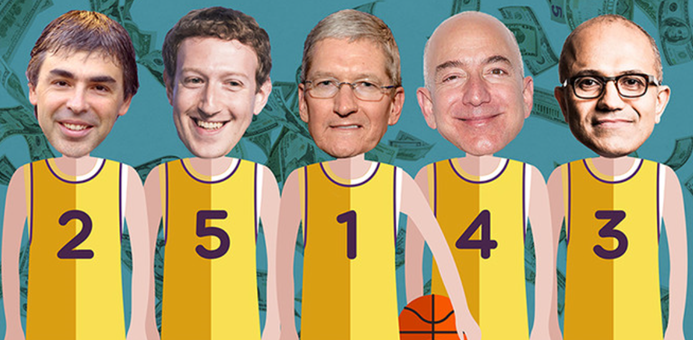
FAMGA stands for Facebook, Apple, Microsoft, Google, and Amazon. These tech giants account for more than 15% of market capitalization of the American stock market (NYSE, NASDAQ, and AMEX). Facebook's recent acquisitions of WhatsApp, Instagram, and Oculus have expanded the social media network to encapsulate more than 2 billion active users worldwide. At present, Google still beats Facebook in terms of average revenue per user (ARPU) (about $45 vis-à-vis $20) and dominates the global Internet search and advertisement market.
Microsoft heralds its latest Windows 10 operating system updates and Office 365 suites for better user experience and word-of-mouth proliferation. Moreover, Amazon introduces Retail 2.0 or the Internet of Everything (IoE) in lieu of typical e-commerce with its recent acquisition of Whole Foods to better compete with Wal-Mart, Best Buy, Macy's, Neiman Marcus, JC Penny, and so on.
Apple brings about its iPhone X with AMOLED curvy touch screen and wireless charging functions to celebrate the 10th anniversary of its revolutionary smart phone launch. Many upstream international iPhone suppliers experience hefty stock market gains in recent times. We expect FAMGA to continue to dominate in social media, IoE, software, Internet search and advertisement, and mobile technology with their *competitive moats* from rare and inimitable patents and new proprietary technologies to increasingly inclusive and powerful platforms, networks, and algorithms.
If any of our AYA Analytica financial health memos (FHM), blog posts, ebooks, newsletters, and notifications etc, or any other form of online content curation, involves potential copyright concerns, please feel free to contact us at service@ayafintech.network so that we can remove relevant content in response to any such request within a reasonable time frame.
2018-10-03 11:37:00 Wednesday ET
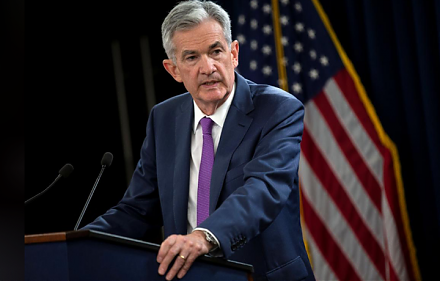
Fed Chair Jerome Powell sees a remarkably positive outlook for the U.S. economy right after the recent interest rate hike as of September 2018. He humbly su
2019-07-29 11:33:00 Monday ET

Blackrock asset research director Andrew Ang shares his economic insights into fundamental factors for global asset management. As Ang indicates in an inter
2018-08-03 07:33:00 Friday ET
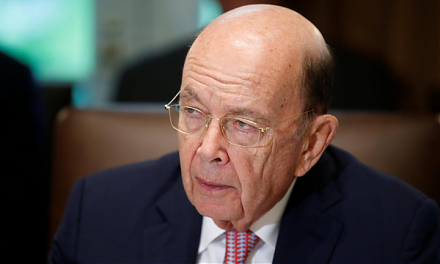
President Trump escalates the current Sino-American trade war by imposing 25% tariffs on $200 billion Chinese imports. These tariffs encompass chemical prod
2019-09-09 20:38:00 Monday ET
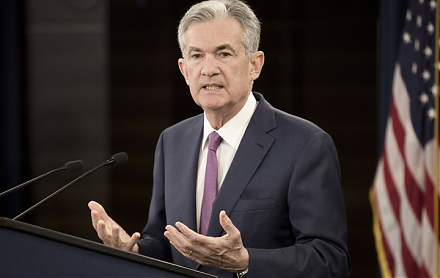
Harvard macrofinance professor Robert Barro sees no good reasons for the recent sudden reversal of U.S. monetary policy normalization. As Federal Reserve Ch
2018-11-30 12:42:00 Friday ET

Andy Yeh Alpha (AYA) AYA Analytica financial health memo (FHM) podcast channel on YouTube November 2018 AYA Analytica is our online regular podcast and news
2023-10-07 10:24:00 Saturday ET

Thomas Philippon draws attention to greater antitrust scrutiny in light of the rise of market power and its economic ripple effects. Thomas Philippon (20