
2019-03-15 13:36:00 Fri ET
stock market gold oil stock return s&p 500 asset market stabilization asset price fluctuations stocks bonds currencies commodities funds term spreads credit spreads fair value spreads asset investments
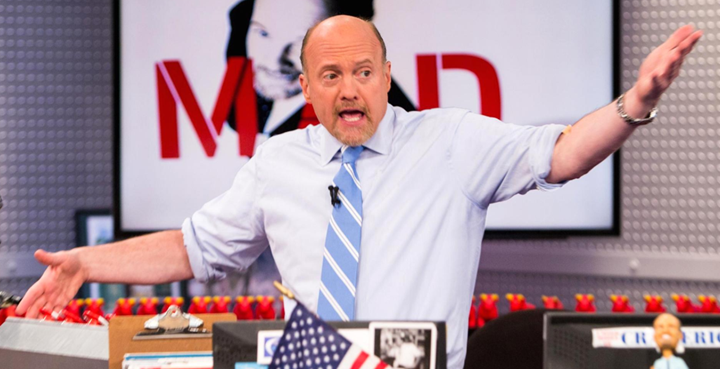
CNBC stock host Jim Cramer recommends both Caterpillar and Home Depot as the U.S. bull market is likely to continue in light of the recent Fed Chair comments. Fed Chair Jerome Powell reaffirms a patient approach to interest rate adjustments. In his biennial congressional testimony, Powell wisely observes that there are both economic crosscurrents and headwinds in the U.S. economy. Although the U.S. economic outlook remains solid, these crosscurrents and headwinds (such as the Sino-U.S. trade and Brexit negotiations) may conflict with the Federal Reserve dual mandate of maximum employment and price stability. Economic policy uncertainty revolves around optimal Treasury debt positions, U.S. budget decisions, and near-term political considerations.
Specifically, Powell reiterates the current Federal Reserve plan for balance sheet shrinkage with at least $1 trillion bank reserves through the real business cycle. In response, CNBC stock host Jim Cramer recommends well-known stocks such as Caterpillar and Home Depot in light of the patient Federal Reserve monetary policy stance. These public companies tend to lose hefty stock market valuation over the Christmas season. As the Federal Reserve now switches from a hawkish monetary policy stance to a dovish one, the current U.S. bull market can elevate asset prices in stocks, bonds, and real estate properties.
If any of our AYA Analytica financial health memos (FHM), blog posts, ebooks, newsletters, and notifications etc, or any other form of online content curation, involves potential copyright concerns, please feel free to contact us at service@ayafintech.network so that we can remove relevant content in response to any such request within a reasonable time frame.
2019-07-19 18:40:00 Friday ET

We can decipher valuable lessons from the annual letters to shareholders written by Amazon CEO Jeff Bezos. Amazon is highly customer-centric because the wor
2018-11-07 08:30:00 Wednesday ET

PwC releases a new study of top innovators worldwide as of November 2018. This study assesses the top 1,000 global companies that spend the most on R&D
2019-12-25 19:46:00 Wednesday ET

Former White House chief economic advisor Nouriel Roubini discusses the major limits of central-bank-driven fiscal deficits. The International Monetary Fund
2020-03-26 10:31:00 Thursday ET

The unique controversial management style of Steve Jobs helps translate his business acumen into smart product development. Jay Elliot (2012) Leading
2019-01-06 08:39:00 Sunday ET

President Trump signs an executive order to freeze federal employee pay in early-2019. Federal employees face furlough or work without pay due to the govern
2017-12-07 08:31:00 Thursday ET

Large multinational tech firms such as Facebook, Apple, Microsoft, Google, and Amazon can benefit much from the G.O.P. tax reform. A recent stock research r