
Walmart Inc. helps people around the world save money and live better by providing the opportunity to shop in both retail stores and through eCommerce, and to access its other service offerings. Through innovation, it strives to continuously improve a customer-centric experience that seamlessly integrates its eCommerce and retail stores in an omni-channel offering that saves time for customers. By leading on price, it earns the trust of customers every day by providing a broad assortment of quality merchandise and services at everyday low prices (EDLP). EDLP is the company's pricing philosophy under which it prices items at a low price every day. Everyday low cost (EDLC) is the company's commitment to control expenses so its cost savings can be passed along to customers. It has 3 reportable segments: Walmart U.S., Walmart International and Sam's Club. It maintains principal offices in Bentonville, Arkansas....
+See MoreSharpe-Lintner-Black CAPM alpha (Premium Members Only) Fama-French (1993) 3-factor alpha (Premium Members Only) Fama-French-Carhart 4-factor alpha (Premium Members Only) Fama-French (2015) 5-factor alpha (Premium Members Only) Fama-French-Carhart 6-factor alpha (Premium Members Only) Dynamic conditional 6-factor alpha (Premium Members Only) Last update: Saturday 17 October 2026
2021-08-01 07:26:00 Sunday ET

The Biden administration launches economic reforms in fiscal and monetary stimulus, global trade, finance, and technology. President Joe Biden proposes s
2018-01-29 07:38:00 Monday ET
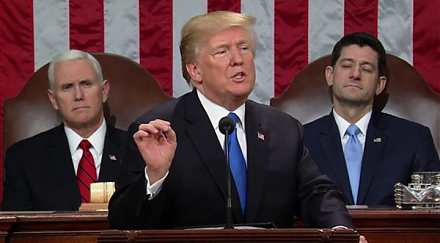
President Donald Trump delivers his first state-of-the-union address. Several key highlights touch on economic issues from fiscal stimulus and trade protect
2017-10-27 06:35:00 Friday ET
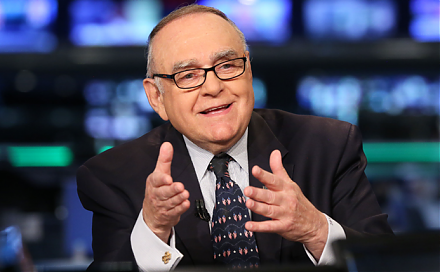
Leon Cooperman, Chairman and CEO of Omega Advisors, points out that the current Trump stock market rally now approaches normalization. The U.S. stock market
2019-04-29 08:35:00 Monday ET

IMF chief economist Gita Gopinath predicts no global recession with key downside risks at this delicate moment. First, trade tensions remain one of the key
2020-06-03 09:31:00 Wednesday ET
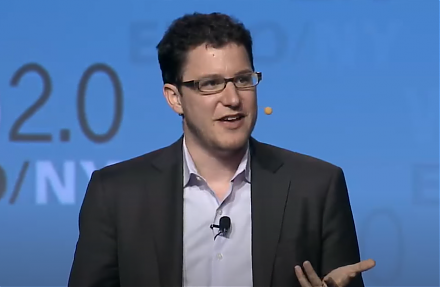
Lean enterprises often try to incubate disruptive innovations with iterative continuous improvements and inventions over time. Trevor Owens and Obie Fern
2017-04-01 06:40:00 Saturday ET
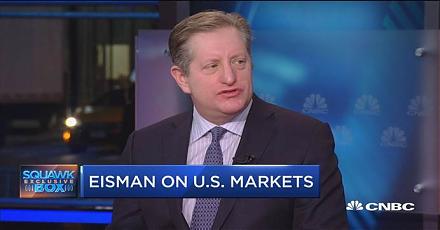
With the current interest rate hike, large banks and insurance companies are likely to benefit from higher equity risk premiums and interest rate spreads.
 Reports
 Metrics
 Events
 AI Stock Synopses