First Community Corporation Common Stock (NASDAQ:FCCO)

Real-time price: | Most recent change:0.00%

First Community Corp presently engages in no business other than owning and managing the First Community Bank. The bank is engaged in a general commercial and retail banking business, emphasizing the needs of small-to-medium sized businesses, professional concerns and individuals, primarily in Richland and Lexington counties of South Carolina and the surrounding area....

+See More


Here we provide our AYA proprietary alpha stock signals for all premium members on our AYA fintech network platform. Specifically, a high Fama-French multi-factor dynamic conditional alpha suggests that the stock is likely to consistently outperform the broader stock market benchmarks such as S&P 500, Dow Jones, Nasdaq, Russell 3000, MSCI USA, and MSCI World etc. Since March 2023, our proprietary alpha stock signals retain U.S. Patent and Trademark Office (USPTO) fintech patent protection, approval, and accreditation for 20 years. Our homepage and blog articles provide more details on this proprietary alpha stock market investment model with robust long-term historical backtest evidence.

Sharpe-Lintner-Black CAPM alpha (Premium Members Only) Fama-French (1993) 3-factor alpha (Premium Members Only) Fama-French-Carhart 4-factor alpha (Premium Members Only) Fama-French (2015) 5-factor alpha (Premium Members Only) Fama-French-Carhart 6-factor alpha (Premium Members Only) Dynamic conditional 6-factor alpha (Premium Members Only) Last update: Saturday 3 October 2026

Blog+More

Global climate change can cause an adverse impact on long-term real GDP economic growth.

Dan Rochefort

2019-10-27 17:37:00 Sunday ET

Global climate change can cause an adverse impact on long-term real GDP economic growth.

International climate change can cause an adverse impact on long-term real GDP economic growth. USC climate change economist Hashem Pesaran and his co-autho

+See More

William Easterly critiques several economic development policies and then indicates that bottom-up solutions often result in macro policy success in spite of nation states.

John Fourier

2023-05-07 10:27:00 Sunday ET

William Easterly critiques several economic development policies and then indicates that bottom-up solutions often result in macro policy success in spite of nation states.

William Easterly critiques several economic development policies and then indicates that bottom-up solutions often result in macro policy success in spite o

+See More

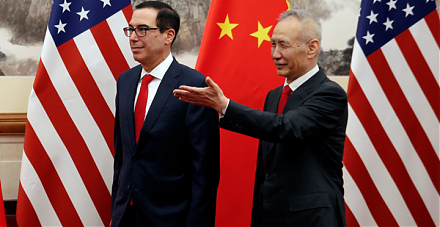
China continues to sell U.S. Treasury bonds amid Sino-U.S. trade truce uncertainty.

Chanel Holden

2019-08-05 13:30:00 Monday ET

China continues to sell U.S. Treasury bonds amid Sino-U.S. trade truce uncertainty.

China continues to sell U.S. Treasury bonds amid Sino-U.S. trade truce uncertainty. In mid-2019, China reduces its U.S. Treasury bond positions by $20.5 bil

+See More

Federal Reserve raises the interest rate to the target range of 2.25% to 2.5% as of December 2018.

Charlene Vos

2018-12-22 14:38:00 Saturday ET

Federal Reserve raises the interest rate to the target range of 2.25% to 2.5% as of December 2018.

Federal Reserve raises the interest rate to the target range of 2.25% to 2.5% as of December 2018. Fed Chair Jerome Powell highlights the dovish interest ra

+See More

Platforms benefit from positive network effects, scale economies, and information cascades.

Rose Prince

2019-07-25 16:42:00 Thursday ET

Platforms benefit from positive network effects, scale economies, and information cascades.

Platforms benefit from positive network effects, scale economies, and information cascades. There are at least 2 major types of highly valuable platforms: i

+See More

David Colander and Craig Freedman argue that economics went wrong when there was no neoclassical firewall between economic theories and policy reforms.

Becky Berkman

2023-11-28 11:35:00 Tuesday ET

David Colander and Craig Freedman argue that economics went wrong when there was no neoclassical firewall between economic theories and policy reforms.

David Colander and Craig Freedman argue that economics went wrong when there was no neoclassical firewall between economic theories and policy reforms. D

+See More