
Armata Pharmaceuticals Inc. is a biotechnology company. It is focused on the development of bacteriophage therapeutics for antibiotic-resistant infections using its proprietary bacteriophage-based technology. The company's principal product candidate consist AP-SA01, targets Staphylococcus aureus including multidrug-resistant strains. It is also developing and advancing a pipeline of synthetic phage candidates, including a synthetic phage for Pseudomonas aeruginosa. Armata Pharmaceuticals Inc., formerly known as AmpliPhi Biosciences Corporation, is based in Marina del Rey, California....
+See MoreSharpe-Lintner-Black CAPM alpha (Premium Members Only) Fama-French (1993) 3-factor alpha (Premium Members Only) Fama-French-Carhart 4-factor alpha (Premium Members Only) Fama-French (2015) 5-factor alpha (Premium Members Only) Fama-French-Carhart 6-factor alpha (Premium Members Only) Dynamic conditional 6-factor alpha (Premium Members Only) Last update: Saturday 17 October 2026
2018-08-27 09:35:00 Monday ET

President Trump and his Republican senators and supporters praise the recent economic revival of most American counties. The Economist highlights a trifecta
2019-08-01 11:33:00 Thursday ET

Many young and mid-career Americans fall into the financial distress trap in rural communities. A recent analysis of 25,800 zip codes for 99% of the U.S. po
2019-09-09 20:38:00 Monday ET

Harvard macrofinance professor Robert Barro sees no good reasons for the recent sudden reversal of U.S. monetary policy normalization. As Federal Reserve Ch
2019-07-01 12:35:00 Monday ET

Apple releases the new iOS 13 smartphone features. These features include Dark Mode, Audio Share, Memoji, better privacy protection, smart photo collection,
2019-03-27 11:28:00 Wednesday ET
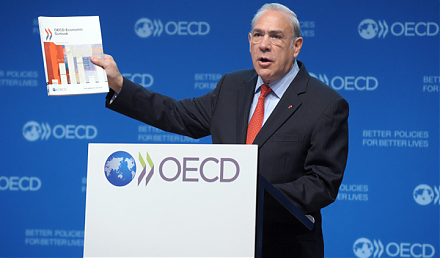
OECD cuts the global economic growth forecast from 3.5% to 3.3% for the current fiscal year 2019-2020. The global economy suffers from economic protraction
2019-01-09 07:33:00 Wednesday ET

Apple revises down its global sales revenue estimate to $83 billion due to subpar smartphone sales in China. Apple CEO Tim Cook points out the fact that he
 Reports
 Metrics
 Events
 AI Stock Synopses