
Ares Capital Corporation is a specialty finance company, which primarily invests in U.S. middle-market companies. The company offers customized financing solutions, ranging from senior-debt instruments to equity capital, with a focus on senior secured debt. Other major investment areas were commercial & professional services, diversified financials, and insurance services. Ares Capital is structured as a non-diversified closed-end management investment company, regulated as a business development company under the Investment Company Act of 1940. It is treated as a regulated investment company ('RIC') for income-tax purposes. To maintain its RIC status, Ares Capital must distribute the majority of its investment income....
+See MoreSharpe-Lintner-Black CAPM alpha (Premium Members Only) Fama-French (1993) 3-factor alpha (Premium Members Only) Fama-French-Carhart 4-factor alpha (Premium Members Only) Fama-French (2015) 5-factor alpha (Premium Members Only) Fama-French-Carhart 6-factor alpha (Premium Members Only) Dynamic conditional 6-factor alpha (Premium Members Only) Last update: Saturday 17 October 2026
2019-01-04 11:41:00 Friday ET

Chinese President Xi JingPing calls President Trump to reach Sino-American trade conflict resolution. Xi sends a congratulatory message to mark 40 years sin
2018-10-21 14:40:00 Sunday ET

President Trump floats generous 10% tax cuts for the U.S. middle class ahead of the November 2018 mid-term elections. Republican senators, congressmen, and
2018-01-06 07:32:00 Saturday ET

Subsequent to the Trump tax cuts for Christmas in December 2017, the one-year-old Trump presidency now aims to make progress on health care, infrastructure,
2019-04-25 09:35:00 Thursday ET
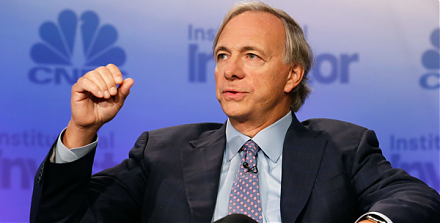
Bridgewater hedge fund founder Ray Dalio suggests that the current state of U.S. capitalism poses an existential threat for many Americans. Dalio deems the
2018-05-08 13:39:00 Tuesday ET
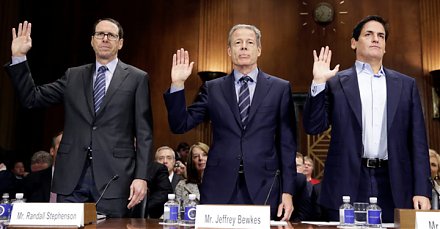
The Trump administration weighs the pros and cons of a potential mega merger between AT&T and Time Warner. Recent stock prices show favorable trends for
2018-01-01 06:30:00 Monday ET

As former chairman of the British Financial Services Authority and former director of the London School of Economics, Howard Davies shares his ingenious ins
 Reports
 Metrics
 Events
 AI Stock Synopses