
AmeriGas Partners, L.P., incorporated on November 2, 1994, is a holding company. The Company is a retail propane distributor in the United States. It serves approximately two million residential, commercial, industrial, agricultural, wholesale and motor fuel customers in all 50 states from approximately 2,000 propane distribution locations. It operates through the segment that engages in the distribution of propane and related equipment and supplies. The Company conducts its business through its subsidiary, AmeriGas Propane, L.P. (AmeriGas OLP or Operating Partnership). AmeriGas Propane, Inc. is the Company's general partner (the General Partner) and is responsible for managing its operations. ...
+See MoreSharpe-Lintner-Black CAPM alpha (Premium Members Only) Fama-French (1993) 3-factor alpha (Premium Members Only) Fama-French-Carhart 4-factor alpha (Premium Members Only) Fama-French (2015) 5-factor alpha (Premium Members Only) Fama-French-Carhart 6-factor alpha (Premium Members Only) Dynamic conditional 6-factor alpha (Premium Members Only) Last update: Saturday 17 October 2026
2017-11-25 06:34:00 Saturday ET

Mario Draghi, President of the European Central Bank, heads the international committee of financial supervisors and has declared their landmark agreement o
2019-08-09 18:35:00 Friday ET

Nobel Laureate Joseph Stiglitz maintains that globalization only works for a few elite groups; whereas, the government should now reassert itself in terms o
2019-01-04 11:41:00 Friday ET
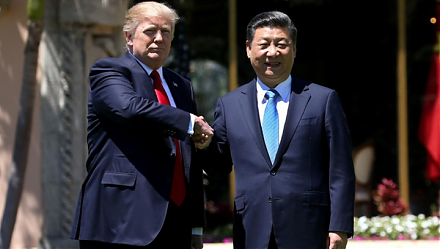
Chinese President Xi JingPing calls President Trump to reach Sino-American trade conflict resolution. Xi sends a congratulatory message to mark 40 years sin
2018-07-19 18:38:00 Thursday ET

Goldman Sachs chief economist Jan Hatzius proposes designing a new Financial Conditions Index (FCI) to be a weighted-average of interest rates, exchange rat
2022-04-05 17:39:00 Tuesday ET

Corporate diversification theory and evidence A recent strand of corporate diversification literature spans at least three generations. The first generat
2019-04-15 08:37:00 Monday ET
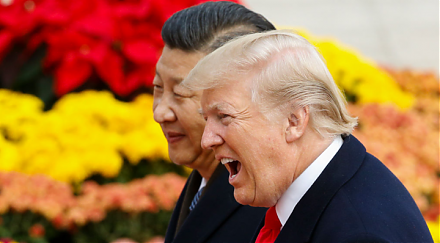
Chinese Belt-and-Road funds large international infrastructure investment projects primarily in East Asia, Central Asia, North Africa, and Italy. Chinese Be
 Reports
 Metrics
 Events
 AI Stock Synopses