
Nasdaq Inc. is a leading provider of trading, clearing, marketplace technology, regulatory, securities listing, information and public and private company services. The company's global offerings are diverse and include trading and clearing across multiple asset classes, trade management services, data products, financial indexes, capital formation solutions, corporate solutions, and market technology products and services. Its technology powers markets across the globe, supporting equity derivative trading, clearing and settlement, cash equity trading, fixed income trading, trading surveillance and many other functions. In the United States., the company operates The Nasdaq Stock Market, while in Europe, it operates exchanges in Sweden, Denmark, Finland, and Iceland as Nasdaq Nordic, and exchanges in Estonia, Latvia and Lithuania as Nasdaq Baltic. Nasdaq manages, operates and provides products/services in 4 business segments: Market Services, Corporate Services, Information Services and Market Technology....
+See More2023-05-14 12:31:00 Sunday ET

Paul Samuelson defines the mathematical evolution of economic price theory and thereby influences many economists in business cycle theory and macro asset m
2019-01-11 10:33:00 Friday ET
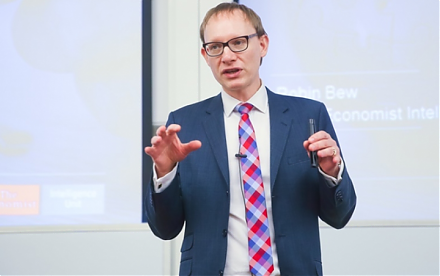
The Economist Intelligence Unit (EIU) continues to track major business risks in light of volatile stock markets, elections, and geopolitics. EIU monitors g
2020-09-10 08:31:00 Thursday ET

Most business organizations should continue to create new value in order to achieve long-run success and sustainable profitability. Todd Zenger (2016)
2020-10-13 08:27:00 Tuesday ET

Agile lean enterprises strive to design radical business models to remain competitive in the face of nimble startups and megatrends. Carsten Linz, Gunter
2018-10-19 13:37:00 Friday ET
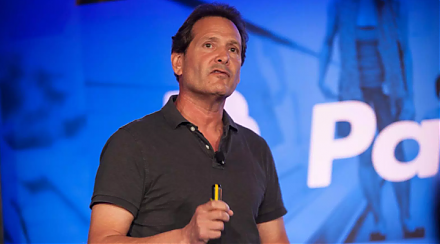
PayPal earns great fintech reputation from its massive worldwide network of 250+ million active users. As PayPal beats the revenue and profit expectations o
2023-10-07 10:24:00 Saturday ET

Thomas Philippon draws attention to greater antitrust scrutiny in light of the rise of market power and its economic ripple effects. Thomas Philippon (20