
Manulife Financial Corporation one of the dominant life insurers. Manulife reports earnings through six divisions and has five major operating divisions - Asia, Canada, U.S. Insurance and U.S. Wealth Management and Corporate. The Global Wealth and Asset Management offers a broad range of personal and family-oriented wealth management products and services focused on individuals and business markets. The segment has three core business lines - John Hancock Wealth Asset Management, John Hancock Variable Annuities and John Hancock Fixed Products. Corporate and Other is comprised of the earnings on assets backing capital. The Canadian division offers a diverse portfolio of products, services and distribution channels. The segment also markets life, health and specialty products, such as travel insurance, to consumers through a number of alternative distribution channels. Through Manulife Bank, the segment offers a variety of lending products including fixed and variable rate mortgages....
+See More2017-11-07 09:38:00 Tuesday ET
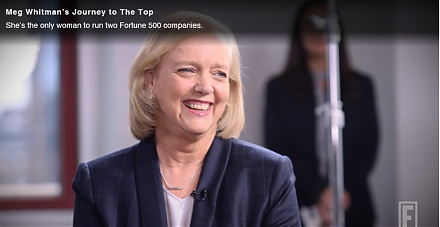
HPE CEO Meg Whitman has run both eBay and Hewlett Packard within Fortune 500 and now has decided to step down after her 6-year stint at the technology giant
2022-05-15 10:29:00 Sunday ET

Innovative investment theory and practice Corporate investment can be in the form of real tangible investment or intangible investment. The former conce
2018-05-29 11:40:00 Tuesday ET
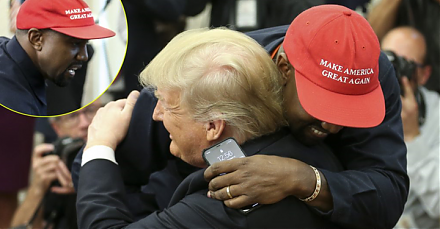
America and China, the modern world's most powerful nations may stumble into a **Thucydides trap** that Harvard professor and political scientist Graham
2019-11-23 08:33:00 Saturday ET
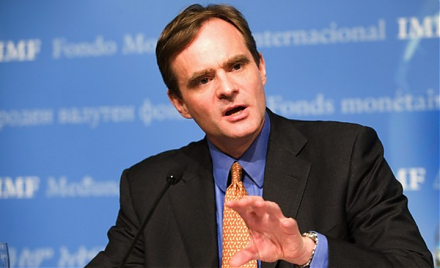
MIT financial economist Simon Johnson rethinks capitalism with better key market incentives. Johnson refers to the recent Business Roundtable CEO statement
2019-12-28 09:36:00 Saturday ET

Global debt surges to $250 trillion in the fiscal year 2019. The International Institute of Finance analytic report shows that both China and the U.S. accou
2019-11-01 12:31:00 Friday ET

Kourtney Kardashian shares the best money advice from her father. This advice reminds her that money just cannot buy happiness. As the eldest of the Kardash