
Blackrock New York Municipal Income Trust II is a non-diversified, closed-end municipal bond fund. The Trust's investment objective is to provide current income exempt from regular federal income tax and New York State and New York City personal income taxes. The Trust seeks to achieve its investment objective by investing in municipal bonds exempt from federal income taxes and New York State and New York City personal income taxes. It invests at least 80% of its assets in municipal bonds that are investment grade quality at the time of investment or, if unrated, determined to be of comparable quality by the Trust's investment advisor. It may invest directly in securities or synthetically through the use of derivatives. It invests in various sectors, including county/city/special district/school district, transportation, education, utilities, health, state tax-backed, housing, corporate, local tax-backed and tobacco. BlackRock Advisors, LLC is the investment advisor of the Trust. » Full Overview of BFY ...
+See More2019-04-21 10:07:54 Sunday ET

Central bank independence remains important for core inflation containment in the current age of political populism. In accordance with the dual mandate of
2020-04-03 09:28:00 Friday ET
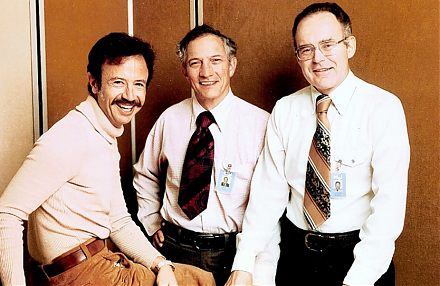
The Intel trinity of Robert Noyce, Gordon Moore, and Andy Grove establishes the primary semiconductor tech titan in Silicon Valley. Michael Malone (2014)
2019-01-02 06:28:00 Wednesday ET

New York Fed CEO John Williams listens to sharp share price declines as part of the data-dependent interest rate policy. The Federal Reserve can respond to
2020-07-12 08:30:00 Sunday ET

The lean CEO encourages iterative continuous improvements and collaborative teams to innovate around core value streams. Jacob Stoller (2015)
2025-08-09 11:31:00 Saturday ET

Wharton e-commerce entrepreneurship professor Dr Karl Ulrich explains that many top-notch universities now provide massive open online courses (MOOCs) for m
2019-07-19 18:40:00 Friday ET

We can decipher valuable lessons from the annual letters to shareholders written by Amazon CEO Jeff Bezos. Amazon is highly customer-centric because the wor