Home > Library > Bidenomics
Author Andy Yeh Alpha
This AYA analytic ebook delves into the macroeconomic and technological aspects of Bidenomics from mid-2020 to present. This ebook comprises 3 main parts. The first part explains the pre-Biden Trump economic policy reforms in trade, taxation, and technology in accordance with anti-China investor sentiment and neo-liberal public choice. The second and third parts discuss the central foundations of Biden economic policy reforms in fiscal and monetary policy coordination, climate change, and the Inflation Reduction Act. Through these latter analytic reports, Bidenomics focuses on the recent technological advances and their broader policy implications for environmental, social, and governance (ESG) stock market investment strategies etc. This macro trend has profound public policy implications for U.S. tech titans Meta, Apple, Microsoft, Google, Amazon, Nvidia, and Tesla etc (MAMGANT).
Description:
This AYA analytic ebook delves into the macroeconomic and technological aspects of Bidenomics from mid-2020 to present. This ebook comprises 3 main parts. The first part explains the pre-Biden Trump economic policy reforms in trade, taxation, and technology in accordance with anti-China investor sentiment and neo-liberal public choice. The second and third parts discuss the central foundations of Biden economic policy reforms in fiscal and monetary policy coordination, climate change, and the Inflation Reduction Act. Through these latter analytic reports, Bidenomics focuses on the recent technological advances and their broader policy implications for environmental, social, and governance (ESG) stock market investment strategies etc. This macro trend has profound public policy implications for U.S. tech titans Meta, Apple, Microsoft, Google, Amazon, Nvidia, and Tesla etc (MAMGANT).
Part 1: pre-Biden Trump economic policy reforms in trade, taxation and technology.
The global economy faces a paradigm shift toward pervasive peculiar phenomena due to Sino-U.S. fair trade and Brexit deals.
Technological advances, geopolitical risks, and pandemic outbreaks cannot shake investor confidence in the American dollar as the global reserve currency.
U.S. tech titans Facebook, Apple, Microsoft, Google, and Amazon enjoy platform advantages, competitive moats, positive network effects, and scale economies.
Artificial intelligence continues to push boundaries for several tech titans to sustain their disruptive innovations, competitive moats, and first-mover advantages.
Part 2: Biden economic reforms in fiscal and monetary policy coordination, climate change, and the Inflation Reduction Act.
The corona virus crisis helps reshape global trade, taxation, and technology.
The Biden administration launches economic policy reforms in fiscal and monetary stimulus, global trade, finance, and technology.
The global asset management industry is central to modern capitalism.
Banks must now compete with central bank digital currencies (CBDC) and fintech payment platforms in processing inter-bank and cross-border payments worldwide.
Part 3: Biden tech advances and their broader policy implications for environmental, social, and governance (ESG) stock market investment strategies.
Artificial intelligence, 5G, and virtual reality can help transform global trade, finance, and technology.
There are several structural antitrust issues and concerns in U.S. digital markets.
What are the major demand-supply factors and concerns in light of semiconductor microchip shortages and financial services?
Electrification can help substantially reduce global carbon emissions worldwide in accordance with the Paris climate agreement.
2023-11-21 11:32:00 Tuesday ET

Nobel Laureate Paul Milgrom explains the U.S. incentive auction of wireless spectrum allocation from TV broadcasters to telecoms. Paul Milgrom (2019)
2025-06-21 05:25:00 Saturday ET

President Trump refreshes American fiscal fears, worries, and concerns through the One Big Beautiful Bill Act. The Congressional Budget Office (CBO) estimat
2019-07-09 15:14:00 Tuesday ET

The Chinese new star board launches for tech firms to list at home. The Nasdaq-equivalent new star board serves as a key avenue for Chinese tech companies t
2019-11-07 14:36:00 Thursday ET
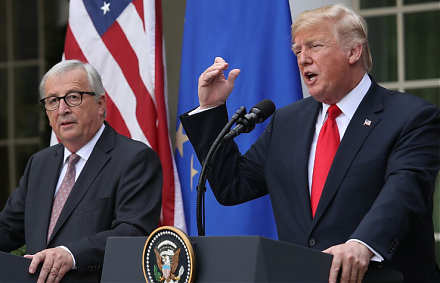
America expects to impose punitive tariffs on $7.5 billion European exports due to the recent WTO rule violation of illegal plane subsidies. World Trade Org
2023-09-21 09:26:00 Thursday ET

Jordi Gali delves into the science of the New Keynesian monetary policy framework with economic output and inflation stabilization. Jordi Gali (2015)
2017-04-25 06:35:00 Tuesday ET
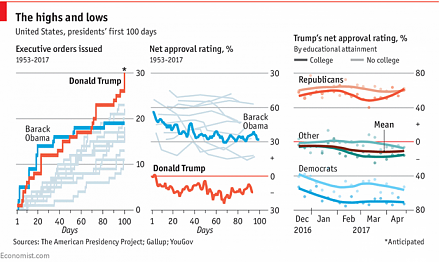
This nice and clear infographic visualization helps us better decipher the main memes and themes of President Donald Trump's first 100 days in office.