
2026-05-01 11:26:00 Fri ET
stock market technology platform network scale lean startup fifth discipline value creation flywheel perseverance resilience passion reinvention disruptive innovation purpose vision mission blue ocean personal finance grit self-help self improvement focus motivation personal growth
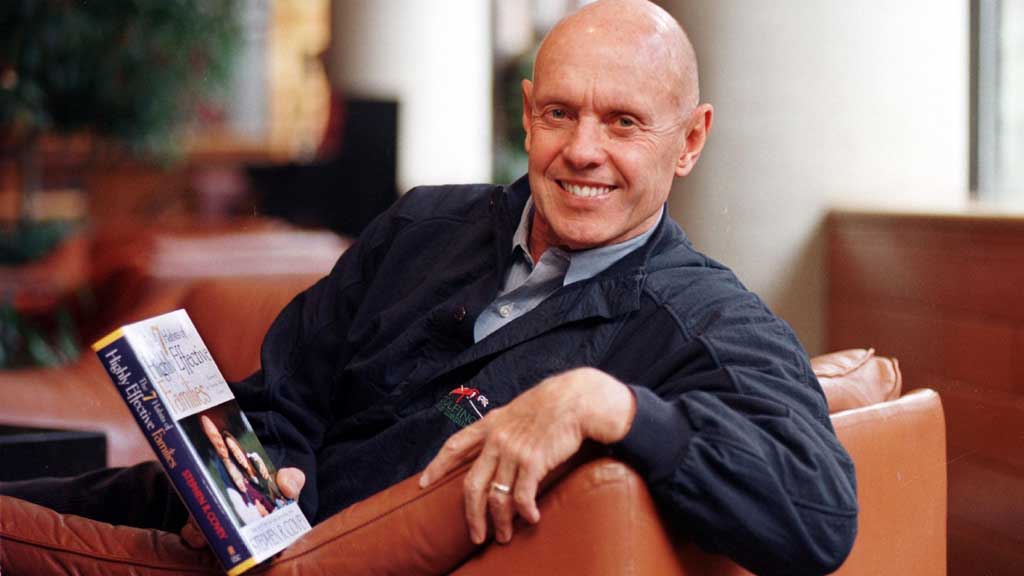
Stephen Covey (2020)
The 7 Habits of Highly Effective People by (30th Anniversary Edition)
The 7 Habits of Highly Effective People: 30th Anniversary Edition (May 2020) by Stephen Covey stands as a major classic book in self-improvement, personal growth, and professional efficacy. Today, this book continues to resonate with readers across many countries, generations, and professions. From the broader viewpoint of personal growth, grit, and self-improvement, we approach this 30th-anniversay edition not only as another self-help book but also the foundational wisdom in support of numerous human lives and organizational cultures worldwide. With new modern insights from Stephen Covey’s son, Sean Covey, this edition further enriches its timeless relevance. As these modern insights suggest in essence, the collective wisdom of Covey’s 7 key habits speaks to many contemporary risks, issues, challenges, and opportunities for personal mastery and professional growth.
At its core, the classic self-improvement book, The 7 Habits of Highly Effective People written by Stephen Covey, is not a collection of quick-fix techniques with superficial behavioral adjustments. This book serves as one major profound treatise on the Character Ethic. Covey advocates the rare unique inside-out view of both self-mastery and interpersonal relationship management. As Covey suggests, true happiness often tends to arise from aligning one's life with timeless life principles and universal values such as fairness, patience, integrity, honesty, and human dignity. In time, this new strategic alignment can help us better focus on the richer principle-centric life paradigm instead of personality traits and public perceptions. In combination, this principle-centric life paradigm grants this classic book its long prevalent power and influence apart from much of the transient self-help literature.
Covey’s central premise posits that our habits fundamentally shape our own character. With our consistent actions, behaviors, and subconscious patterns, we apply these habits on a recurrent basis. Consequently, these habits remake, reshape, and reinforce our self-mastery and professional efficacy. In essence, Covey defines each habit as the intersection of knowledge (what to do and why), skill (how to do), and desire (the motivation for what we do). For a life principle to become a recurrent habit, we should actively promote all of these 3 major elements of habit formation. This holistic definition underscores the intellectual depth of effective personal transformation. Moreover, this holistic definition moves beyond intellectual wisdom to heartfelt commitment, focus, and practical implementation in the broader social context.
The 30th-anniversary edition specifically remakes, reshapes, reiterates, and reinforces Covey’s original life philosophy. In addition, Sean Covey provides modern insights with additional context clues and contemporary examples. From a normative perspective, the 7 key habits and life principles should further apply to the fast digitally-driven world today. As these modern insights suggest, the foundational wisdom continues to be both relevant and actionable for the new millennial generations with unique risks, challenges, and further opportunities for personal growth and professional effectiveness.
Critical Acclaims and Global Social Impact:
This classic self-improvement book, The 7 Habits of Highly Effective People, has received widespread critical acclaims since its initial publication in 1989. This book has sold over 40 million copies in more than 50 languages with both global reach and universal appeal. Time Magazine recognized this book as one of the 25 Most Influential Business Management Books in 2011, and Chief Executive Magazine further recognized this book as one of the most influential business books of the 20th century. These accolades not only add to the book’s commercial success but also testify to Covey’s profound influence on global leaders, high achievers, parents, and educators from all walks of life. From Bill Clinton and Bill Gates to Elon Musk and Mark Zuckerberg, many presidents, CEOs, and other global leaders integrate Covey's 7 key habits into their daily lives. Globally, many avid readers describe this self-improvement book as one major life-changer and a rare unique personal guide to success, self-mastery, and personal fulfillment. In combination, these critical acclaims highlight the practical and transformative nature of the 7 key habits of highly effective people.
As many media commentators suggest, this book has become globally popular due to its clear and simple language. This language speaks plainly about many of the more complex philosophical questions with respect to life purpose, mission, personal growth, grit, love, and devotion. Specifically, Covey avoids pop psychology to focus on the timeless universal life principles because they remain relevant despite structural changes over several generations. In time, this focus serves as the major hallmark of Covey’s global influence because he emphasizes the pervasive principles rather than some transient quick fixes and many other self-help techniques. In life, there are often no quick fixes for personal growth and interpersonal effectiveness.
With meticulous focus, Covey structures the 7 key habits into some specific series of both private achievements (self-mastery and independence) and public accomplishments (social interdependence with others). As Covey suggests, highly effective people make iterative continuous improvements to enrich their own lives and the lives of others. This inside-out sequence is key. Specifically, this inside-out sequence suggests that we should first seek to achieve self-mastery before we attempt to engage with others in a more socially effective manner. In a global society, we establish, maintain, and further refresh our social connections with others not only for our own benefits but also for the greater benefits of others.
The first 3 key habits focus on developing one's character with independence. In effect, these 3 key habits are often vital for us to promote personal growth, grit, focus, and resilience. In combination, these 3 key habits often empower us to take charge of our own lives. In life, we serve as active, responsible, and independent contributors. In this unique fashion, we should direct our time, effort, and energy purposefully to achieve substantially more with fewer frictions in the broader social context.
This first habit serves as the major cornerstone of Covey's life philosophy. Through all walks of life, we should be proactive in driving the structural shift from an inevitable product of life circumstances to a new product of our own conscious life choices. When we are proactive, we are responsible for our own actions, behaviors, responses, and ultimately, personal achievements in life. When we apply this first habit, we recognize the freedom to choose our actions and behaviors in response to all kinds of circumstances. In essence, this first habit serves as the core principle in accordance with one of the deep roots of Viktor Frankl's classic work, Man’s Search for Meaning: we can find meaning in almost all kinds of life circumstances, even our worst pains and difficulties, by applying the unique freedom to choose our behavioral mindsets, attitudes, actions, and responses.
In the context of focus and grit, proactivity is paramount. Reactive people often allow the external forces and social perceptions to drive their actions, responses, and decisions. These reactive people often blame others for their own personal problems. Conversely, proactive people let internal values drive their next steps. Specifically, proactive people focus their efforts on their key Circle of Influence. In time, these proactive people tend to focus on what they can control. By concentrating on controllable factors, proactive people expand their broader social influence and then further channel their time and energy into productive actions instead of fears, worries, and complaints. In essence, this strategic focus is vital for iterative continuous improvements in all walks of life. With this deliberate focus, proactive people can find new solutions to their problems on the basis of what these people can control in due course. Over many years and even decades, this strategic focus can often help cultivate greater personal growth, grit, perseverance, and resilience even in rare times of fears, worries, concerns, setbacks, distractions, difficulties, and many other modern life obstacles. In time, this first habit formation can further expand our wider Circle of Influence to help enrich the lives of others. Our worst fears, worries, concerns, pains, and struggles often combine to empower us to better bring comfort, solace, and inspiration to others when they face and encounter similar life experiences.
Notable quotes in relation to proactivity:
"Until a person can say deeply and honestly, 'I am what I am today because of the choices I made yesterday,' that person cannot say, 'I choose otherwise.'"
"What happens to us often cannot hurt us; but instead, our response hurts us."
"I am not a natural product of my life circumstances. I am a natural product of my own decisions."
"Between stimulus and response is our greatest power. [This unique power] is the freedom to choose [our own mindsets, actions, behaviors, and decisions]."
Sean Covey's new insights emphasize the vital importance of self-awareness to proactivity. He highlights the essential need for us to stand apart from our own minds to acquire new perspectives. Proactive people take charge of their own lives. This self-awareness often serves as the first step in recognizing our freedom to choose our unique mindsets, actions, behaviors, and decisions in due course. As a result, this freedom of choice often helps build out the firm foundation for focus, personal growth, grit, and resilience. Without this new proactive mindset, any attempts at personal growth are likely to be shallow, short-term, and superficial because reactive people remain at the mercy of external forces.
This second habit urges us to define a clear vision of both our life goals and internal values before we take any actions. Covey famously observes that highly effective people create everything twice. Specifically, these highly effective people create the mental model first in the mind before they take actions to make this mental model another reality in life. This life principle involves imagining our funeral to reflect on what we would want others to say about our lives, mindsets, actions, decisions, and contributions. As a result, these imaginations often contact our deepest, highest, and most fundamental values and life goals.
The second habit leads to a personal mission statement. In time, this personal mission statement serves as a moral compass, shines new light on our actions, and then ensures better alignment between our actions and ultimate life goals. Without a clear end in mind, our efforts can scatter in divergent directions; and we become reactive and ultimately ineffective. Highly effective people are often able to articulate the long-term life goals and social purposes. In effect, these long-term life goals and social purposes help bolster a powerful internal anchor for us to resist distractions in all walks of life. When we face new risks, threats, and challenges, a strong sense of purpose provides the motivation for us to persevere in rare times of fears, worries, setbacks, and other obstacles. At any rate, we should learn to begin with the end in mind for greater, faster, better, and smarter self-mastery, personal growth, grit, and resilience.
Notable quotes in relation to beginning with the end in mind:
"Highly effective people often create everything twice [first in the mind and then in reality]."
"Highly effective people often start with the end in mind."
"If you carefully consider what you want to be said of you in the funeral, you will find your definition of success."
This second habit encourages us to move beyond basic existence to the key purposeful design of each of our own lives. This habit demands both clarity and intentionality, forces each one of us to confront his or her core values, and then often shines new light on what truly matters in life. In time, many highly effective people invest in both the intellectual steps and emotional strides in personal growth, grit, focus, and resilience. All these baby steps combine to enrich our more meaningful existence in life.
This third habit involves the practical application of Habits 1 and 2. When we put first things first, we focus on effective self-mastery and therefore prioritize tasks on the basis of importance instead of urgency. Covey describes the major Eisenhower Time Management Matrix. This matrix sorts tasks into 4 major quadrants: Urgent/Important, Not Urgent/Important, Urgent/Not Important, and Not Urgent/Not Important. As Covey suggests, highly effective people spend most of their time in Quadrant II where they find important but not urgent tasks, missions, and activities. These tasks, missions, and activities span long-term plans, relationships, preventive actions, and proactive views of new opportunities.
This third habit is the tactical key to keeping focus, grit, and resilience. Often this prioritization requires discipline to say no to less important but urgent tasks, missions, and distractions. By consciously allocating time to tasks and missions in support of long-term self-realization (Habit 2), highly effective people focus most of their Herculean efforts on the most important tasks, missions, and activities. This strategic allocation of both time and energy prevents burnout, ensures consistent progress, and further develops personal growth, grit, and resilience. As Covey suggests, we should schedule priorities rather than prioritizing schedules. Over time, the normative view highlights the proactive nature of this habit. From time to time, our key priorities reflect our core values, mindsets, worldviews, life goals, and personal principles etc.
Notable quotes in relation to putting first things first:
"The key is not to prioritize what is on your schedule today; but the key is to schedule your priorities today."
"Most of us spend too much time on what is urgent, and most of us spend not enough time on what is truly important."
"You have to decide what your highest priorities are today. You should have the courage, pleasantly, smilingly, and non-apologetically, to say no to many other tasks, missions, and activities. You should maintain a much bigger yes inside your heart. Ironically, the enemy of the best is often the good."
When we master the first 3 habits, we achieve the private victory as another major triumph of self-discipline, clarify of purpose, and effective execution. This self-mastery builds personal growth, grit, focus, integrity, self-reliance, and resilience. These dynamic capabilities often serve as the prerequisites for successful social interactions in the interdependent social sphere of influence.
With the first 3 habits, highly effective people better achieve self-mastery and independence. The next 3 habits move into the interdependent social sphere of influence. These next 3 habits focus on successful social interactions and collaborations with others. In effect, strong self-mastery can often empower richer, better, smarter, and more effective interdependent social relationships.
This habit encourages seeking mutually beneficial solutions and agreements in all social interactions and relationships. As Covey suggests, it is not only a tactic for better negotiations to think win-win; instead, this mindset serves as a fundamental character-centric code for all kinds of human interactions and collaborations. This mindset reflects a positive abundance mindset. With this win-win mindset, highly effective people believe there is enough for everyone. This win-win mindset contrasts with the scarcity mindset in a zero-sum game where one person’s gain always comes at another’s expense.
For personal growth and self-improvement in our global society, this habit is key for us to shifts focus from competition to cooperation. In this process, we promote mutual trust and respect in both personal and professional spheres of influence. When we think win-win, we approach many kinds of social conflicts and negotiations with the desire to understand all perspectives. This wisdom often helps us find creative solutions to truly benefit all parties. This mindset enhances our social ability to collaborate in an effective way. Further, this new mindset builds strong social networks. As a result, we contribute to a positive collective social environment. All of these elements are vital for both personal growth and professional development. The win-win mindset promotes greater social empathy and consideration. These dynamic capabilities serve as the key aspects of emotional intelligence in the broader social context.
Notable quotes in relation to thinking win-win:
"Life is a cooperative arena, not a competitive one."
"Anything less than win-win is a poor second best. This suboptimal outcome has adverse impact on the long-term social relationship in an interdependent social reality."
"When the mutual trust account is high, social communication is easy, instant, and effective for all parties."
Sean Covey's insights remake, reshape, and reinforce the central theme that the win-win mindset is often the same as the growth mindset. This mindset empowers others and does not diminish ourselves. In the broader business context, this mindset often grows the entire organization as highly effective people further develop their self-mastery habits.
This social habit shines light on empathy. We should seek to understand another person's perspective before we attempt to communicate our own views, opinions, and judgments. As Covey suggests, most people listen with the intent to reply almost instantly, not with the deeper intent to understand another person’s perspective. This tendency often leads to miscommunication, frustration, and broken social relationships.
Social empathy often requires both humility and emotional intelligence. Highly effective people suspend their own biases, prejudices, and judgments to genuinely step into another's frame of reference. This deep wisdom builds trust, opens new pathways for social influence, and further allows for the genuine development of synergistic solutions. Highly effective people cultivate better social empathy to enhance their interpersonal skills for smarter conflict resolution, communication, and leadership. Social empathy demonstrates deeper personal maturity in the sense that we delay immediate gratification to prioritize better social relationships over self-centric demands. In essence, this social habit is arguably more relevant today because rapid-fire communication combines with ideological polarization to characterize our global society.
Notable quotes in relation to seeking first to understand others before they understand us:
"Many people listen with the intent to reply almost instantly, not the intent to truly understand others."
"People can see the same matter, can agree to disagree, and yet can still both be right. This social empathy is not logical but psychological."
Synergies often represent the optimal outcome of collaborative team efforts. In this special case, these collaborative efforts combine to exceed the sum of individual parts. Synergies tend to arise from valuing individual differences. In turn, these collaborators value, respect, and leverage their diverse expert views, opinions, judgments, and perspectives. As a result, these collaborators create superior solutions and sometimes even disruptive innovations. Instead of compromising to live with mediocre results, these creative collaborators seek synergies from the third alternative method. From time to time, the third alternative method turns out to be better than what any single team expert could have conceived alone.
As the individual team experts embrace synergies, these experts move beyond a purely self-reliant mindset to a new mindset in support of collective wisdom. In essence, these team experts recognize the immense power of both creative cooperation and collective intelligence. In practice, this new growth mindset promotes creative cooperation, humility, adaptability, flexibility, and sound team chemistry. Over time, these team experts often tend to openly share what they know in practice. Diverse expert views, opinions, judgments, and perspectives combine for these team players to learn from others. This new open organizational culture further develops good team interplay as each expert seeks synergies in creative solutions and even disruptive innovations. In turn, this social habit helps team experts further develop their own technical skills as part of wider team collaborations. In combination, these team skills, views, judgments, and collaborations often turn out to be valuable in almost all kinds of human endeavors. Synergies often tend to emerge from teamwork, mutual trust, and respect for better social inclusion and diversity. As a result, these team experts believe diverse views, opinions, and judgments can often help further enrich the next-gen creative solutions and sometimes even disruptive innovations.
Notable quotes in relation to teamwork synergies:
"The whole team is greater than the sum of its individual parts."
"Team strength often arises from diverse differences but not similarities."
The 3 major social habits for public accomplishments span thinking win-win, seeking first to understand others, and seeking synergies from key teamwork. These habits often combine to embody effective interdependence in the broader social context. These habits further empower team experts to develop stable social relationships. In turn, these team experts can help better resolve individual conflicts in a constructive manner. Over time, these team experts seek success as part of the greater team far beyond individual achievements. We agree to disagree in the lofty pursuit of both better team outcomes and public accomplishments.
The final habit focuses on iterative continuous improvements. By sharpening the saw, highly effective people renew their technical skills, strengths, and social habits. Emotionally intelligent team experts ensure that they work together to practice all the other 6 key habits for long-term team success.
This final habit emphasizes the vital importance of iterative continuous improvements in 4 fundamental dimensions of life: the physical, mental, spiritual, and social contexts. By sharpening the saw, we preserve and further enhance ourselves by engaging in tasks, missions, and activities to reshape iterative continuous improvements in our physical health, mental wellness, spiritual fulfillment, and social harmony. Emotionally intelligent people can often help others achieve greater personal growth, fulfillment, and happiness.
By sharpening the saw, we prevent burnout, sustain motivation, and allow for continual adaptation in response to new external forces, risks, threats, and other life circumstances. Our physical renewal involves caring for our own health through rest, nutrition, and exercise. A healthy body provides both the energy and stamina for us to focus on teamwork with greater grit, growth, and resilience. Also, mental renewal requires us to continuously learn new skills, strengths, and social habits from others. This dynamic capability often empowers us to read broadly with actionable plans, insights, worldviews, and creative solutions. We can learn from others through their new written works. All these efforts keep the mind sharp, expand the team knowledge base, and further refine many different kinds of critical thoughts, skills, strengths, and social habits. Over time, these Herculean efforts and baby steps further help us better navigate new external forces, risks, threats, challenges, and other life circumstances. With sharper focus, we can learn to perform under pressure.
Spiritual renewal relates to clarifying our internal values, life principles, and broader social purposes. Highly effective people often attain better spiritual renewal through daily prayers, meditations, and reconnections with nature. Today, the daily digital detox is often one vital and necessary requirement for better spiritual renewal. In practice, spiritual renewal remakes, reshapes, and reinforces the major life principle of beginning with the end in mind. In time, this spiritual renewal provides an internal compass to help further bolster our personal growth, grit, focus, motivation, and resilience.
Emotional renewal often involves building deep social relationships. We often apply our skills, serve others, and practice social empathy. In time, all of these dynamic capabilities supercharge team experts to better attain public team accomplishments. As part of the broader team, the individual experts belong to one another. As a result, these team experts can combine to better promote personal growth, grit, comfort, solace, motivation, and resilience. This team chemistry is specifically vital for team experts who might experience setbacks, fears, faults, failures, worries, distractions, difficulties, disappointments, and other major obstacles.
Covey explains the upward spiral model. In this model, good conscience guides consistent progress in these areas such as physical health, mental strength, spiritual fulfillment, emotional renewal, and social intelligence. From time to time, iterative continuous improvements support personal growth, fulfillment, and happiness not as the final destination because the broader life journey is more important than the destination. At each stage, these iterative continuous improvements require our intentional efforts to sustain dynamic capacity for both personal growth and interpersonal efficacy. Today, it is perhaps more vital and evidence for us to better attain self-renewal by sharpening the saw from week to week. Sometimes we even need to learn how we can reinvent the power saw. Iterative continuous improvements are substantially more important than simply sawing with a dull saw.
Notable quotes in relation to sharpening the saw:
"We preserve and enhance ourselves as the greatest assets today."
"We sow a thought to reap an action. Also, we sow an action to reap a habit. Further, we sow a habit to reap a character. Finally, we sow a character to reap an entire destiny."
"We become what we attempt to achieve in due course. For this reason, excellence is not only an act but also a good habit."
One of Covey's most significant contributions is his distinction between the Character Ethic and the Personality Ethic. Covey suggests that much of the prior self-help literature tends to fixate on the Personality Ethic with some specific techniques for superficial social lubrication. Specifically, many of these techniques require quick fixes and positive mental attitudes for greater social influence outcomes. Although these techniques can be useful for more effective social communication, Covey believes these techniques serve as only secondary personality traits. Highly effective people make iterative continuous improvements to build out the long prevalent foundation of deep integrity with several fundamental character strengths such as patience, fairness, courage, honesty, and social empathy. Without these fundamental character strengths, we may ultimately find all the quick fixes, social skills, habits, and techniques rather obsolete, ineffective, and sometimes even manipulative.
By comparison, the Character Ethic emphasizes first principles such as fairness, patience, courage, justice, integrity, humility, fidelity, temperance, simplicity, modesty, and the Golden Rule (Habit 5: Seek First to Understand). Covey believes true effectiveness and long-term success often tend to arise from the inside-out development of each of these core character traits in time. Positive changes and iterative continuous improvements start within the person’s heart. In time, these positive changes and iterative continuous improvements work their way outward to better influence the broader social relationships, responses, and behaviors. This inside-out approach is key to sustainable personal growth. Specifically, this inside-out approach can help build out a more robust internal framework for highly effective people to withstand external forces, risks, threats and peer pressures. At the same time, this inside-out approach leads to authentic positive changes and iterative continuous improvements in personal growth and professional advancement. With this inside-out Character Ethic, highly effective people better pivot, persist, and persevere in response to major setbacks and even epic failures.
Focus:
Habit 1 (Be Proactive): By focusing on the Circle of Influence, highly effective people direct their mental and physical energy toward what they can control. This focus can often help minimize distractions from external forces, risks, threats, and peer pressures. This deliberate use of energy serves as the essence of long-term sustainable focus.
Habit 2 (Begin with the End in Mind): A clear personal mission statement acts as a powerful filter. In turn, this filter helps highly effective people prioritize tasks, missions, and activities in accordance with the ultimate social goals and life purposes. As a result, this filter further sharpens their relentless focus on the key priorities and life principles in the broader social context.
Habit 3 (Put First Things First): The Quadrant II matrix serves as a direct tool for better focus and time management. By dedicating both time and energy to the important but not urgent tasks, missions, and activities, highly effective people proactively concentrate on high-leverage workflows. In time, these high-leverage workstreams move these highly effective people toward their ultimate life goals and social purposes. In effect, the high-leverage workflows can help avoid the common diversion of both time and energy toward the urgent but less important tasks, missions, and activities.
Habit 7 (Sharpen the Saw): Mental renewal directly enhances our capacity for better focus and time management. Lifelong learners often remake, reshape, and reinforce iterative continuous improvements, creative solutions, and sometimes even disruptive innovations. Highly effective people learn to maintain sharper focus by keeping the mind clear, open, agile, and adaptable to novel, non-obvious, and useful alternative options.
Grit:
Habit 1 (Be Proactive): With better personal growth, grit, and social maturity, highly effective people often learn to delay gratification in the lofty pursuit of greater human productivity in the long run. Lifelong learners proactively focus on new opportunities for iterative continuous improvements. In time, this new proactive focus allows highly effective people to take responsibility despite some major setbacks, failures, difficulties, distractions, and disappointments. These highly effective people pivot, persist, and persevere in response to these major setbacks and even epic failures. In essence, these highly effective people refuse to be victims of difficult life circumstances.
Habit 2 (Begin with the End in Mind): When highly effective people begin with the end in mind, they often see, reiterate, and remind themselves of the long-term vision. In effect, this long-term vision helps highly effective people sustain their Herculean efforts in response to both major setbacks and even epic failures over long time frames. Grit is not only about working hard, but also more importantly, working diligently toward the same higher-order goals over long stretches of time frames. Over time, this grit further supports the sustainable Herculean efforts toward the big, hairy, and audacious goals (BHAG) in the smart words of Jim Collins and Bill Lazier.
Habit 3 (Put First Things First): When highly effective people consistently keep their key priorities, this habit helps develop both self-discipline and perseverance. By constantly prioritizing important but not urgent tasks, missions, and activities, these highly effective people strengthen their agile dynamic capabilities for long-term sustainable Herculean efforts over many years and even many decades. In accordance with the former British prime minister Winston Churchill, success is not final, failure is not fatal; and it is the courage to continue that ultimately counts in life.
Habit 7 (Sharpen the Saw): Highly effective people believe it is good to let rest replenish their mental, physical, and spiritual reserves. True grit is not about blindly grinding ourselves down. Instead, true grit is about keeping long-run sustainable Herculean efforts in support of the big, hairy, and audacious goals (BHAG) in the recent smart words of Jim Collins and Bill Lazier. In essence, this long-term vision requires regular renewal of all kinds of mental, physical, and spiritual reserves.
Personal Growth and Self-Improvement:
The entire framework of The 7 Habits of Highly Effective People serves as a systematic guide to holistic personal growth. This guide moves highly effective people from dependence to independence (private achievements) and then to interdependence (public accomplishments). In combination, this life journey culminates in iterative continuous improvements for personal growth and self-improvement. This sequential development ensures that personal growth rests on the firm foundation of character ethic.
Covey's inside-out approach suggests that genuine self-improvement arises from a structural shift in fundamental character. In turn, this structural shift leads to the positive behavioral changes, responses, actions, and decisions. This inside-out approach contrasts sharply with superficial social habits, quick fixes, and techniques because the latter combine to provide transient solutions without addressing the deeper root causes of many different problems.
In sum, these habits help cultivate key personal qualities like self-awareness (Habit 1), vision (Habit 2), discipline (Habit 3), empathy (Habit 5), and creativity (Habit 6). All of these habits serve as the major cornerstones of comprehensive personal development. By constantly sharpening the saw (Habit 7), highly effective people are often happy to be lifelong learners who proactively seek to achieve iterative continuous improvements in response to many different life circumstances over the long, tough, and sometimes even arduous life journey.
The 7 Habits of Highly Effective People shares common ground with many self-improvement books in terms of their connections to more productive social relationships. At the same time, however, Covey’s principle-centric inside-out approach sets this classic book apart from the rest of the modern self-help literature. We describe, discuss, and delve into the key similarities and differences between The 7 Habits of Highly Effective People and the other books on personal growth and self-improvement.
A. Similarities:
Emphasis on Habit Formation: Like James Clear's Atomic Habits and Charles Duhigg's The Power of Habit, Covey emphasizes the fundamental role of habit formation in shaping private achievements and public team accomplishments. Covey's definition of a habit (equivalently a skill, a desire, and knowledge) provides a comprehensive model for habit formation. This model aligns with the core concept that consistent deliberate actions often help develop habits. Clear’s Atomic Habits and Duhigg’s The Power of Habit both delve deeply into the key mechanism of habit formation with incremental improvements, whereas, Covey’s The 7 Habits of Highly Effective People explains why some specific habits remake, reshape, and reinforce continuous improvements for the more effective principle-centric life journey.
Prioritization: Covey's Quadrant II time management system (Put First Things First) is a well-known model for prioritization. This central theme echoes with some human productivity books such as David Allen's Getting Things Done. Both books emphasize the vital importance of prioritization of the key tasks, missions, and activities etc in accordance with the ultimate life goals and social purposes. Specifically, highly effective people focus on what truly matters in life. Getting Things Done provides a sound system for managing the major tasks, workflows, missions, and activities, and The 7 Habits provides the first principles for deciphering the most important but not urgent tasks, missions, and activities through external forces, risks, threats, and even peer pressures.
Long-Term Vision: The 7 Habits of Highly Effective People highlights the core concept of long-term vision in accordance with some self-help books such as Brian Tracy’s Eat That Frog! and Napoleon Hill's Think and Grow Rich. All of these books emphasize the vital importance of first mental map creation for keeping the clear long-term goals before we make Herculean efforts to achieve these long-term life goals in due course.
Proactivity: Covey suggests the core concept that many highly effective people proactively take responsibility for their own lives (Habit 1). This core concept serves as a common thread in many self-help books such as Carol Dweck’s Mindset: The New Psychology of Success. Specifically, Dweck highlights the vital importance of keeping the growth mindset such that lifelong learners continue to make iterative continuous improvements. In effect, these iterative continuous improvements empower us to acquire new skills, social habits, core competences, and dynamic capabilities both at home and at work. Covey's proactive stance aligns with the growth mindset as highly effective people believe they can further develop their skills, habits, core competences, and dynamic capabilities through hard work and dedication.
Social Empathy: We can find similar examples and anecdotes of empathy in Daniel Goleman’s recent landmark books on emotional intelligence. Covey highlights the similar social habits of Think Win-Win (Habit 4) and Seek First to Understand (Habit 5). With greater social empathy, active listeners seek smart solutions and team collaborations in effective human interactions.
B. Differences:
Character Ethic versus Personality Ethic: Covey’s 7 Habits of Highly Effective People differentiates itself from the rest of the self-help literature by leaning toward the Character Ethic. In stark contrast, many self-help books tend to lean toward the Personality Ethic with quick fixes, social tips, and techniques for outward actions, responses, and behaviors. Covey rejects this Personality Ethic as the primary path toward long-term success. Specifically, Covey insists that genuine human effectiveness arises from the inside-out transformation of foundational character in the broader context of first principles. This major difference makes The 7 Habits less about social manipulation and more about fundamental character (patience, fairness, justice, integrity, and dignity).
Holistic Integration: Unlike the recent self-help books on some specific single aspect of life (habit formation, human productivity, or emotional intelligence), Covey offers a comprehensive, sequential, and integrative system for further developing personal growth and interpersonal effectiveness. The 7 key habits complement and build on each other. As a result, the 7 key habits create an upward spiral of iterative continuous improvements for both personal growth and interpersonal efficacy. This holistic integration makes The 7 Habits a more robust guide to good life transformation.
Principle-Centric Approach: Covey relies heavily on the timeless and universal first principles. This reliance distinguishes his work from many other self-help books on the new global trends, pop psychology fads, and some specific life circumstances. As Covey suggests, these first principles create the mainstream territory where internal values serve as effective mental maps in accordance with the first principles for both personal growth and interpersonal efficacy. This central focus provides a unique firm foundation for personal growth, adaptation, and interpersonal communication in almost all kinds of situations throughout the modern life journey. For this reason, The 7 Habits continues to be relevant today.
Interdependence in relation to the big, hairy, and audacious goals (BHAG): Many self-help books celebrate personal independence as the major pinnacle of human achievement. By contrast, Covey regards interdependence as the ultimate state of team effectiveness. Specifically, Covey suggests that the greatest life achievements require effective human collaborations with others. In essence, these collaborations can often help generate synergies such that team players complement one another through many iterative continuous improvements. This new perspective broadens the scope of self-improvement beyond individual success and personal independence to span both collective wisdom and team chemistry.
The 7 Habits of Highly Effective People: 30th Anniversary Edition written by Stephen Covey remains a rare unique resource for anyone who commits to deep and sustainable self-improvement and personal growth. Today, this key self-improvement book remains relevant to the new millennial generations. The critical acclaims highlight Covey’s major focus on both the timeless and universal first principles for personal growth and interpersonal effectiveness. Through The 7 Habits, Covey challenges readers to undertake a profound inside-out transformation to prioritize character traits over many different superficial personality traits. From Be Proactive to Sharpen the Saw, the key habits provide actionable insights into the profound inside-out transformation through the modern life journey. Proactivity means taking responsibility for our own actions, responses, and behaviors. In effect, this proactivity serves as the key bedrock of many unique character traits such as personal growth, grit, focus, integrity, and emotional intelligence. Beginning with the end in mind provides the long-term vision for sustainable Herculean efforts. In time, these efforts combine to help us overcome various major setbacks and even epic failures as part of the life journey. Key prioritization requires the necessary self-discipline for smart execution. Highly effective people often tend to focus on the most important but less urgent high-leverage tasks, actions, missions, and activities. In addition to these 3 major private achievements, the 3 major public accomplishments, Think Win-Win, Seek First to Understand, and Synergize, help us better build out our interpersonal intelligence, empathy, and collaborative spirit. These elements are often vital for us to navigate the complex human interactions and social relationships. Finally, highly effective people are often lifelong learners who seek to sharpen the saw with iterative continuous improvements across all kinds of life circumstances. In essence, Covey’s 7 key habits and life principles combine to help us prevent burnout along the lifelong trajectory of personal growth with greater effectiveness.
Wharton e-commerce professor Karl Ulrich explains that many elite universities now provide many massive open online courses (MOOCs) for lifelong learners to achieve their medium-term goals, tasks, and missions for better intellectual focus, personal growth, self-efficacy, self-improvement, and social engagement in modern life, business, innovation, and entrepreneurship.
Podcast: https://bit.ly/3URUam1
UCLA organizational psychology expert Dr Chip Espinoza et al explain, propose, and emphasize the 9 new core competences for better managing millennials in the modern workplace.
Podcast: https://bit.ly/3H0svMH
Article: https://ayafintech.network/blog/self-improvement-book-review-managing-millennials-by-chip-espinoza/
Consumer psychology experts Nir Eyal and Ryan Hoover explain why keystone habits often lead us to purchase products, goods, and services in our daily lives.
Podcast: https://bit.ly/3H5Ne1v
Article: https://ayafintech.network/blog/self-improvement-book-review-hooked-by-nir-eyal/
Mitch Anthony explains why it is often important for sales leaders to apply sound social skills and emotional competences to fulfill various customer needs, wants, demands, desires, and other preferences.
Podcast: https://bit.ly/44nPsST
Former New York Times science author and Harvard social psychologist Daniel Goleman explains why working with emotional intelligence can help hone social skills for smarter, better, and more effective leaders, teams, and organizations in modern life, business, innovation, and entrepreneurship.
Podcast: https://bit.ly/4khouAU
Former New York Times science author and Harvard social psychologist Daniel Goleman explains why greater mental focus serves as a vital mainstream driver of personal growth, success, virtue, happiness, and fulfillment in life, business, innovation, and entrepreneurship.
Podcast: https://bit.ly/44z2ZH5
Article: https://ayafintech.network/blog/self-improvement-book-review-focus-by-daniel-goleman/
Former New York Times science author and Harvard social psychologist Daniel Goleman explains why emotional intelligence often serves as a more important critical success factor than high IQ for our success, virtue, and happiness in life, business, innovation, and entrepreneurship.
Podcast: https://bit.ly/43O7TzP
Former New York Times prolific team author, and Pulitzer Prize winner Charles Duhigg delves into how we can change our lives for the better by mastering our habits from day to day.
Podcast: https://bit.ly/3FUTSHs
Article: https://ayafintech.network/blog/self-improvement-book-review-the-power-of-habit-by-charles-duhigg/
Serial venture capitalist Ben Horowitz describes many hard truths, lessons, and insights from his rare unique entrepreneurial journey of running LoudCloud from a Silicon Valley tech startup to a $1.65 billion sale to Hewlett-Packard.
Podcast: https://bit.ly/3FJ3fKl
Stanford psychology professor Carol Dweck describes, discusses, and delves into the reasons why the growth mindset helps motivate individuals, teams, and senior managers to accomplish more with greater grit, focus, and resilience.
Podcast: https://bit.ly/3HGF67P
Article: https://ayafintech.network/blog/self-improvement-book-review-mindset-by-carol-dweck/
With U.S. fintech patent approval, accreditation, and protection for 20 years, our AYA fintech network platform provides proprietary alpha stock signals and personal finance tools for stock market investors worldwide.
We build, design, and delve into our new and non-obvious proprietary algorithmic system for smart asset return prediction and fintech network platform automation. Unlike our fintech rivals and competitors who chose to keep their proprietary algorithms in a black box, we open the black box by providing the free and complete disclosure of our U.S. fintech patent publication. In this rare unique fashion, we help stock market investors ferret out informative alpha stock signals in order to enrich their own stock market investment portfolios. With no need to crunch data over an extensive period of time, our freemium members pick and choose their own alpha stock signals for profitable investment opportunities in the U.S. stock market.
Smart investors can consult our proprietary alpha stock signals to ferret out rare opportunities for transient stock market undervaluation. Our analytic reports help many stock market investors better understand global macro trends in trade, finance, technology, and so forth. Most investors can combine our proprietary alpha stock signals with broader and deeper macro financial knowledge to win in the stock market.
Through our proprietary alpha stock signals and personal finance tools, we can help stock market investors achieve their near-term and longer-term financial goals. High-quality stock market investment decisions can help investors attain the near-term goals of buying a smartphone, a car, a house, good health care, and many more. Also, these high-quality stock market investment decisions can further help investors attain the longer-term goals of saving for travel, passive income, retirement, self-employment, and college education for children. Our AYA fintech network platform empowers stock market investors through better social integration, education, and technology.
This analytic essay cannot constitute any form of financial advice, analyst opinion, recommendation, or endorsement. We refrain from engaging in financial advisory services, and we seek to offer our analytic insights into the latest economic trends, stock market topics, investment memes, personal finance tools, and other self-help inspirations. Our proprietary alpha investment algorithmic system helps enrich our AYA fintech network platform as a new social community for stock market investors: https://ayafintech.network.
We share and circulate these informative posts and essays with hyperlinks through our blogs, podcasts, emails, social media channels, and patent specifications. Our goal is to help promote better financial literacy, inclusion, and freedom of the global general public. While we make a conscious effort to optimize our global reach, this optimization retains our current focus on the American stock market.
This free ebook, AYA Analytica, shares new economic insights, investment memes, and stock portfolio strategies through both blog posts and patent specifications on our AYA fintech network platform. AYA fintech network platform is every investor's social toolkit for profitable investment management. We can help empower stock market investors through technology, education, and social integration.
We hope you enjoy the substantive content of this essay! AYA!
Andy Yeh (online brief biography)
Co-Chair
AYA fintech network platform
Brass Ring International Density Enterprise ©
Do you find it difficult to beat the long-term average 11% stock market return?
It took us 20+ years to design a new profitable algorithmic asset investment model and its proprietary software technology with U.S. fintech patent protection over 20 years. Our new AYA fintech network platform serves as everyone’s first aid for his or her personal stock investment portfolio. In practice, our own proprietary software technology empowers each investor to apply real-time data, intelligence, and other information without exorbitant time commitment. Our alpha stock signals can help substantially boost the typical win rate from 60%-70% to more than 90%.
Our new alpha model empowers members to be a wiser stock market investor with profitable alpha signals! The proprietary quantitative analysis applies the collective wisdom of Warren Buffett, George Soros, Carl Icahn, Mark Cuban, Tony Robbins, and Nobel Laureates in finance such as Robert Engle, Eugene Fama, Lars Hansen, Robert Lucas, Robert Merton, Edward Prescott, Thomas Sargent, William Sharpe, Robert Shiller, and Christopher Sims.
Our Brass Ring Facebook page helps stock market investors learn more about the latest financial news, stock investment ideas, and asset portfolio strategies:
http://www.facebook.com/brassring2013
Free signup for stock signals: https://ayafintech.network
Mission on profitable signals: https://ayafintech.network/mission.php
Model technical descriptions: https://ayafintech.network/model.php
Blog on stock alpha signals: https://ayafintech.network/blog.php
Freemium base pricing plans: https://ayafintech.network/freemium.php
Signup for periodic updates: https://ayafintech.network/signup.php
Login for freemium benefits: https://ayafintech.network/login.php
If any of our AYA Analytica financial health memos (FHM), blog posts, ebooks, newsletters, and notifications etc, or any other form of online content curation, involves potential copyright concerns, please feel free to contact us at service@ayafintech.network so that we can remove relevant content in response to any such request within a reasonable time frame.
2020-09-11 10:22:00 Friday ET

AYA fintech network platform provides proprietary alpha stock signals and personal finance tools. In recent times, we have completed our fresh website up
2018-05-15 08:40:00 Tuesday ET
Net neutrality rules continue to revolve around the Trump administration's current IT agenda of 5G telecom transformation. Republican Senate passes the
2019-02-02 11:36:00 Saturday ET

The Trump administration teams up with western allies to bar HuaWei and other Chinese tech firms from building the 5G high-speed infrastructure due to natio
2019-07-17 12:37:00 Wednesday ET

Gold prices surge above $1400 per ounce amid global trade tension and economic policy uncertainty. Both European Central Bank and Bank of Japan may consider
2019-09-07 17:37:00 Saturday ET

Federal Reserve Chair Jerome Powell announces the monetary policy decision to lower the federal funds rate by a quarter point to 2%-2.25%. This interest rat
2019-08-14 10:31:00 Wednesday ET

Netflix suffers its first major loss of U.S. subscribers due to the recent price hikes. The company adds only 2.7 million new subscribers in 2019Q2 in stark