
2018-02-03 07:42:00 Sat ET
stock market gold oil stock return s&p 500 asset market stabilization asset price fluctuations stocks bonds currencies commodities funds term spreads credit spreads fair value spreads asset investments

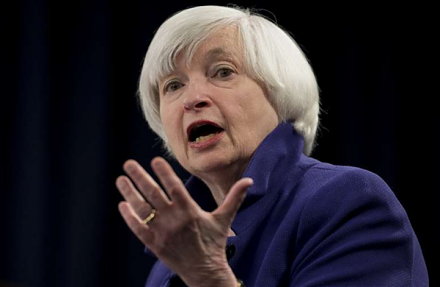
Quant Quake 2.0 shakes investor confidence with rampant stock market fears and doubts during the recent Fed Chair transition from Janet Yellen to Jerome Powell. This healthy fundamental recalibration indicates the recent fact that 96% of all S&P 500 stocks experience 20% drastic declines from their own 52-week high share prices. Key investor concerns relate to U.S. inflationary momentum and bond yield appreciation. As professional forecasters mull over the inexorable and mysterious trade-off between inflation and unemployment, the new Federal Reserve chairman tends to retain a hawkish monetary policy stance. These forecasters predict that the Federal Reserve may hike the interest rate at least 3 to 4 times this year. This neutral interest rate curtails U.S. inflation near full employment well within Powell's congressional dual mandate.
AQR money manager and founder Cliff Asness points out that the U.S. financial system remains robust with less leverage and fair valuation despite the recent stock market plunge in early-February 2018. Asness believes in his conservative implementation of quantitative fundamental strategies across the vast majority of his factor portfolios of stocks, bonds, commodities, and currencies.
His favorite value and momentum factor strategies resonate with Warren Buffett's long-term asset investment philosophy: *Price is what we pay, and value is what we get. We should be fearful when others are greedy, and we should be greedy when others are fearful.* In his recent letter to Berkshire Hathaway shareholders, Warren Buffett emphasizes that stock market corrections are often both normal and unpredictable. From a long-run perspective, the U.S. stock market sometimes goes *on sale*. Thus, Buffett suggests that it is important for investors to replenish their cash positions in order to take advantage of sporadic stock market corrections. When these corrections take place, the stock price often fall below the long-term equilibrium intrinsic value. Beyond conventional wisdom, greed is *good* and pays well in the tripartite form of capital gains, cash dividends, and share repurchases.
If any of our AYA Analytica financial health memos (FHM), blog posts, ebooks, newsletters, and notifications etc, or any other form of online content curation, involves potential copyright concerns, please feel free to contact us at service@ayafintech.network so that we can remove relevant content in response to any such request within a reasonable time frame.
2025-09-18 08:03:32 Thursday ET

Stock Synopsis: With a new Python program, we use, adapt, apply, and leverage each of the mainstream Gemini Gen AI models to conduct this comprehensive fund
2019-09-15 14:35:00 Sunday ET

U.S. Treasury officially designates China a key currency manipulator in the broader context of Sino-American trade dispute resolution. The U.S. Treasury cla
2020-08-26 10:33:00 Wednesday ET

Through purposeful leadership, senior managers inspire teams to reach heights of both innovation and profitability with great brand identity and customer lo
2023-12-07 07:22:00 Thursday ET
Economic policy incrementalism for better fiscal and monetary policy coordination Traditionally, fiscal and monetary policies were made incrementally. In
2018-02-01 07:38:00 Thursday ET

U.S. senators urge the Trump administration with a bipartisan proposal to prevent the International Monetary Fund (IMF) from bailing out several countries t
2018-08-09 16:36:00 Thursday ET

President Trump applies an increasingly bellicose stance toward the Iranian leader Hassan Rouhani as he rejects a global agreement to curb Iran's nuclea