
2018-12-18 10:38:00 Tue ET
treasury deficit debt employment inflation interest rate macrofinance fiscal stimulus economic growth fiscal budget public finance treasury bond treasury yield sovereign debt sovereign wealth fund tax cuts government expenditures
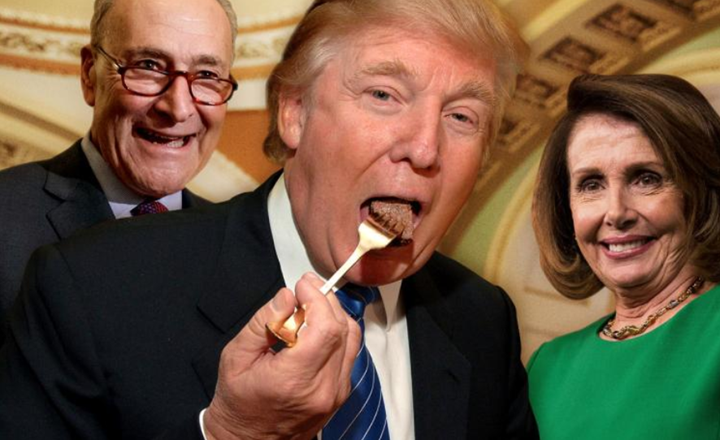
President Trump threatens to shut down the U.S. government in 2019 if Democrats refuse to help approve $5 billion public finance for the southern border wall. Trump hardens his demands for border wall finance when he discusses the topic with the top Senate and House Democratic whip leaders Nancy Pelosi and Chuck Schumer in an Oval Office confrontation after the mid-term elections. The open confrontation devolves into acrimony in light of the gulf between Trump and Democrats over U.S. public finance legislation as the president puts a possible compromise further out of reach.
President Trump confronts both Democratic congressional reps to emphasize his clear position that he would be proud to shut down the U.S. government for border security. However, the border security tax would inexorably exacerbate the current U.S. fiscal deficit and debt dilemma in addition to the $1.5 trillion tax cuts and $1 trillion infrastructure expenditures with $779 billion fiscal deficits as of August 2018.
President Trump deliberately transforms an initially-proposed private negotiation with Democratic congressional leaders into an open and bitter altercation over his signature presidential campaign promise of the southern border wall. When push comes to shove, compromise may be a better solution to bitter border wall disputes.
Clarification
As of Wednesday 19 December 2018, one of our Facebook friends, James Ross, provides the ingenious insight that the border wall can improve the U.S. domestic quality of health care, education, as well as public services for non-U.S. citizens. In this alternative light, the border wall tax of $5 billion becomes essential for overall domestic welfare in America. At any rate, we endeavor to cover both sides of the story as much as we can. Our blog viewers, readers, and fans etc can provide their constructive feedback to contribute to better content curation on our AYA fintech network platform.
If any of our AYA Analytica financial health memos (FHM), blog posts, ebooks, newsletters, and notifications etc, or any other form of online content curation, involves potential copyright concerns, please feel free to contact us at service@ayafintech.network so that we can remove relevant content in response to any such request within a reasonable time frame.
2018-07-27 10:35:00 Friday ET
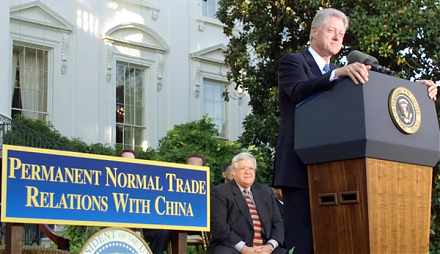
Admitting China to the World Trade Organization (WTO) and other international activities seems ineffective in imparting economic freedom and democracy to th
2017-12-23 10:40:00 Saturday ET

Despite having way more responsibility than anyone else, top business titans such as Warren Buffett, Charlie Munger, and Oprah Winfrey often step away from
2018-08-31 08:42:00 Friday ET

We share several famous inspirational stock market quotes by Warren Buffett, Peter Lynch, Benjamin Graham, Ben Franklin, Philip Fisher, and Michael Jensen.
2019-12-01 10:31:00 Sunday ET
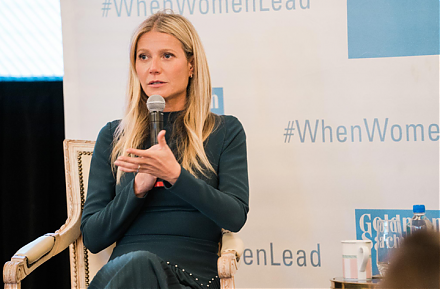
Goop Founder and CEO Gwyneth Paltrow serves as a great inspiration for female entrepreneurs. Paltrow designs Goop as an online newsletter, and this newslett
2019-08-12 07:30:00 Monday ET

Facebook reaches a $5 billion settlement with the Federal Trade Commission over Cambridge Analytica user privacy violations. The Federal Trade Commission (F
2019-01-10 17:31:00 Thursday ET

The recent Bristol-Myers Squibb acquisition of American Celgene is the $90 billion biggest biotech deal in history. The resultant biopharma goliath would be