
2018-09-17 12:40:00 Mon ET
stock market gold oil stock return s&p 500 asset market stabilization asset price fluctuations stocks bonds currencies commodities funds term spreads credit spreads fair value spreads asset investments

Nobel Laureate Robert Shiller's long-term stock market indicator points to a recent peak. His cyclically-adjusted P/E ratio (or CAPE) accounts for long-term corporate profitability and market valuation. CAPE has correctly helped anticipate the Black Monday 1987 stock market crash, the dotcom bubble collapse in the dawn of the new millennium, and the global financial crisis from 2008 to 2009.
As of September 2018, this metric gauges the U.S. stock market value at 33 times the average corporate income over the past decade. CAPE serves as a useful key economic indicator of U.S. stock market overvaluation at this stage of the business cycle. In fact, the current U.S. stock market capitalization well exceeds American real GDP economic output. It is often difficult to beat the market, whereas, it can be quite easy and imperative to save on capital income taxes and transaction costs.
Wharton finance professor Jeremy Siegel, however, disagrees with this simplistic CAPE analysis of U.S. stock market valuation. Even though U.S. stocks appear to be expensive, they remain good bargains in comparison with bonds in light of the small default risk premium. Relative valuation of stocks-versus-bonds continues to be favorable during the current Trump stock market rally in modern U.S. economic history.
If any of our AYA Analytica financial health memos (FHM), blog posts, ebooks, newsletters, and notifications etc, or any other form of online content curation, involves potential copyright concerns, please feel free to contact us at service@ayafintech.network so that we can remove relevant content in response to any such request within a reasonable time frame.
2019-07-27 17:37:00 Saturday ET

Capital gravitates toward key profitable mutual funds until the marginal asset return equilibrates near the core stock market benchmark. As Stanford finance
2019-06-13 10:26:00 Thursday ET

The Chinese Xi administration may choose to leverage its state dominance of rare-earth elements to better balance the current Sino-U.S. trade war. In recent
2019-05-01 09:27:00 Wednesday ET

Apple settles its 2-year intellectual property lawsuit with Qualcomm by agreeing to a multi-year patent license with royalty payments to the microchip maker
2018-07-13 09:41:00 Friday ET
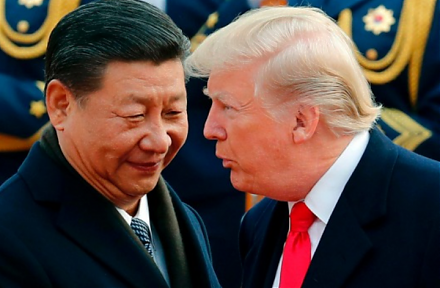
Yale economist Stephen Roach warns that America has much to lose from the current trade war with China for a few reasons. First, America is highly dependent
2019-10-21 10:35:00 Monday ET

American state attorneys general begin bipartisan antitrust investigations into the market power and corporate behavior of central tech titans such as Apple
2018-06-02 09:35:00 Saturday ET

The finance ministers of Britain, Canada, France, Germany, Italy, and Japan team up against U.S. President Donald Trump and Treasury Secretary Steven Mnuchi