
2019-09-03 14:29:00 Tue ET
technology antitrust competition bilateral trade free trade fair trade trade agreement trade surplus trade deficit multilateralism neoliberalism world trade organization regulation public utility current account compliance
Due to U.S. tariffs and other cloudy causes of economic policy uncertainty, Apple, Nintendo, and Samsung start to consider making tech products in Vietnam instead of China. The current exodus of foreign direct investment poses an imminent threat to the Chinese economy, employment, national income, and industrial production. The new economic forecasts suggest subpar 5.5%-6.3% Chinese real GDP growth.
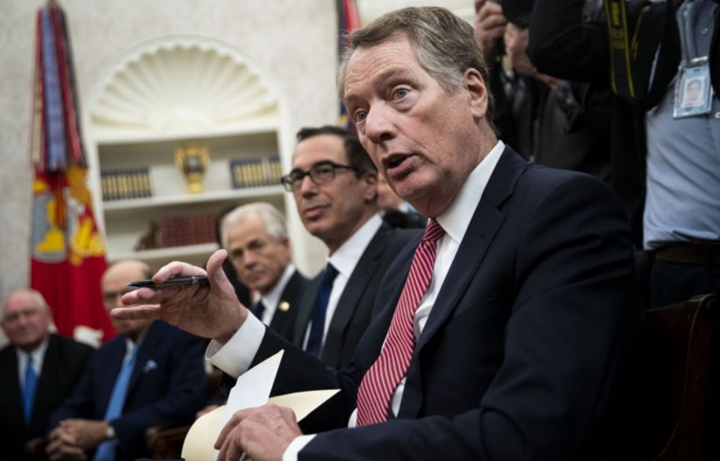
When U.S. trade envoy Robert Lighthizer and Treasury Secretary Steven Mnuchin return from Shanghai trade negotiations with little progress, President Trump adds a new 10% tariff on all the other $300 billion Chinese imports before the next round of Sino-American trade negotiations in mid-September 2019. The bellicose Trump administration accuses Chinese trade negotiators of trying to halt a major bilateral trade deal ahead of the U.S. presidential election in 2020.
As the Trump administration threatens with new tariffs in the next negotiations, the recent escalation narrows the path of least resistance to a major trade deal. Beijing and Washington harden their official trade positions, and political dynamism further complicates the chances of Sino-U.S. bilateral trade compromise. Later the Trump administration defers the 10% tariff on $300 billion Chinese imports to December 2019 (after the annual sales season from Halloween to Christmas).
If any of our AYA Analytica financial health memos (FHM), blog posts, ebooks, newsletters, and notifications etc, or any other form of online content curation, involves potential copyright concerns, please feel free to contact us at service@ayafintech.network so that we can remove relevant content in response to any such request within a reasonable time frame.
2019-12-25 19:46:00 Wednesday ET

Former White House chief economic advisor Nouriel Roubini discusses the major limits of central-bank-driven fiscal deficits. The International Monetary Fund
2023-01-09 10:31:00 Monday ET
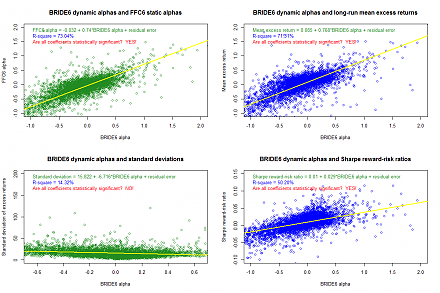
Response to USPTO fintech patent protection As of early-January 2023, the U.S. Patent and Trademark Office (USPTO) has approved our U.S. utility patent
2017-10-09 09:34:00 Monday ET
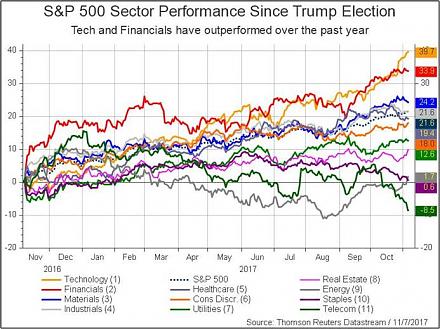
The current Trump stock market rally has been impressive from November 2016 to October 2017. S&P 500 has risen by 21.1% since the 2016 presidential elec
2018-06-03 07:35:00 Sunday ET
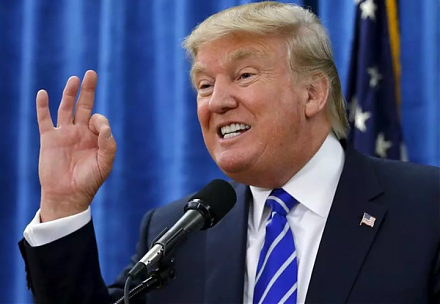
Several recent events explain why Trump may undermine multilateral world order. First, Trump withdraws the U.S. from the 12-nation Trans-Pacific Partnership
2020-11-01 11:21:00 Sunday ET
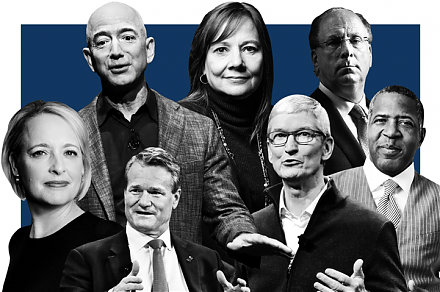
Artificial intelligence continues to push boundaries for several tech titans to sustain their central disruptive innovations, competitive moats, and first-m
2019-09-03 14:29:00 Tuesday ET
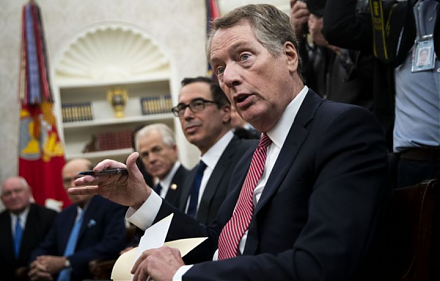
Due to U.S. tariffs and other cloudy causes of economic policy uncertainty, Apple, Nintendo, and Samsung start to consider making tech products in Vietnam i