
2018-10-05 10:38:00 Fri ET
stock market gold oil stock return s&p 500 asset market stabilization asset price fluctuations stocks bonds currencies commodities funds term spreads credit spreads fair value spreads asset investments

A 7-year $1.3 billion hedge fund manager Chelsea Brennan shares her investment advice. Her advice encompasses several steps toward better financial literacy and freedom. From better retirement to superior socioeconomic status, each investor should understand his or her multi-year investment goals. For financially free and secure retirement, many investors focus on steady cash dividends, whereas, other investors seek healthy capital gains. It is important to keep a multi-year perspective to strike a better balance between these investment goals.
Also, it is easier to optimize average asset returns against multiple investment risks via multiple index funds. Each smart investor needs to diversify across U.S. and international index ETFs in stocks, bonds, currencies, commodities, REITs, and mutual funds etc. In practice, diversification allows him or her to boost the Sharpe ratio from the U.S. stock market benchmark of 0.33-0.35 to 0.63-0.85. The Sharpe ratio often constitutes 10% average asset return as the numerator and 30% return volatility as the denominator for the U.S. stock market benchmark.
Multi-asset portfolio optimization boosts 10% average asset return to at least 15% and then reduces 30% return volatility to 20%. This dynamic asset allocation helps ensure a better reward-risk Sharpe ratio near 0.75 or the mid-point of the healthy target range.
If any of our AYA Analytica financial health memos (FHM), blog posts, ebooks, newsletters, and notifications etc, or any other form of online content curation, involves potential copyright concerns, please feel free to contact us at service@ayafintech.network so that we can remove relevant content in response to any such request within a reasonable time frame.
2018-02-11 07:30:00 Sunday ET

President Trump unveils his ambitious $1.5 trillion public infrastructure plan. Trump proposes offering $100 billion in federal incentives to encourage stat
2018-11-07 08:30:00 Wednesday ET

PwC releases a new study of top innovators worldwide as of November 2018. This study assesses the top 1,000 global companies that spend the most on R&D
2019-03-25 17:30:00 Monday ET
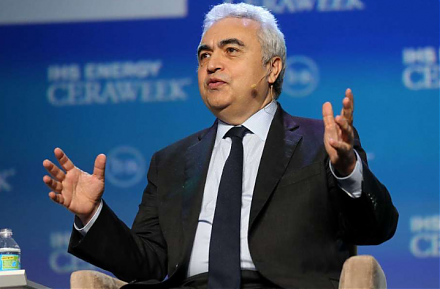
America seeks to advance the global energy dominance agenda by toppling Saudi Arabia as the top oil exporter by 2024. The International Energy Agency (IEA)
2018-05-27 08:33:00 Sunday ET

The Federal Reserve proposes softening the Volcker rule that prevents banks from placing risky bets on securities with deposit finance. As part of the po
2023-09-07 11:30:00 Thursday ET

Michael Woodford provides the theoretical foundations of monetary policy rules in ever more efficient financial markets. Michael Woodford (2003)
2019-03-29 12:28:00 Friday ET

Federal Reserve Chair Jerome Powell answers CBS News 60 Minutes questions about the recent U.S. economic outlook and interest rate cycle. Powell views the c