Taiwan Fund Inc. (The) Common Stock (NYSE:TWN)

Real-time price: | Most recent change:0.00%

Taiwan Fund, Inc., a closed-end, diversified management investment company with an investment objective of long-term capital appreciation through investment primarily in equity securities listed on the Taiwan Stock Exchange. The Company may also invest in debt securities and/or Republic of China securities through the use of trust funds established in the Republic of China....

+See More


Here we provide our AYA proprietary alpha stock signals for all premium members on our AYA fintech network platform. Specifically, a high Fama-French multi-factor dynamic conditional alpha suggests that the stock is likely to consistently outperform the broader stock market benchmarks such as S&P 500, Dow Jones, Nasdaq, Russell 3000, MSCI USA, and MSCI World etc. Since March 2023, our proprietary alpha stock signals retain U.S. Patent and Trademark Office (USPTO) fintech patent protection, approval, and accreditation for 20 years. Our homepage and blog articles provide more details on this proprietary alpha stock market investment model with robust long-term historical backtest evidence.

Sharpe-Lintner-Black CAPM alpha (Premium Members Only) Fama-French (1993) 3-factor alpha (Premium Members Only) Fama-French-Carhart 4-factor alpha (Premium Members Only) Fama-French (2015) 5-factor alpha (Premium Members Only) Fama-French-Carhart 6-factor alpha (Premium Members Only) Dynamic conditional 6-factor alpha (Premium Members Only) Last update: Saturday 4 April 2026

Blog+More

Goldman Sachs chief economist Jan Hatzius proposes designing a new Financial Conditions Index (FCI).

Chanel Holden

2018-07-19 18:38:00 Thursday ET

Goldman Sachs chief economist Jan Hatzius proposes designing a new Financial Conditions Index (FCI).

Goldman Sachs chief economist Jan Hatzius proposes designing a new Financial Conditions Index (FCI) to be a weighted-average of interest rates, exchange rat

+See More

Personal finance author William Danko shares 3 top secrets for better wealth creation.

Rose Prince

2018-12-01 11:37:00 Saturday ET

Personal finance author William Danko shares 3 top secrets for better wealth creation.

As the solo author of the books Millionaire Next Door and Richer Than Millionaire, William Danko shares 3 top secrets for *better wealth creation*. True pro

+See More

U.S. regulatory agencies may consider broader economic issues in their antitrust probe into Amazon, Apple, Facebook, and Google.

Joseph Corr

2019-07-03 11:35:00 Wednesday ET

U.S. regulatory agencies may consider broader economic issues in their antitrust probe into Amazon, Apple, Facebook, and Google.

U.S. regulatory agencies may consider broader economic issues in their antitrust probe into tech titans such as Amazon, Apple, Facebook, and Google etc. Hou

+See More

A small fraction of the population enjoys most capital and wealth creation.

Jacob Miramar

2017-03-15 08:46:00 Wednesday ET

A small fraction of the population enjoys most capital and wealth creation.

The heuristic rule of *accumulative advantage* suggests that a small fraction of the population enjoys a large proportion of both capital and wealth creatio

+See More

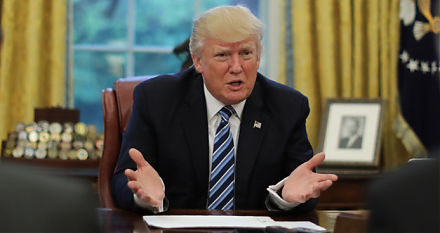
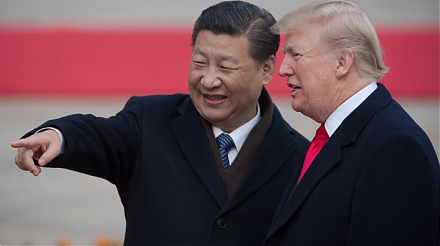
President Trump ramps up 25% tariffs on $200 billion Chinese imports soon after China backtracks on the Sino-U.S. trade agreement.

Rose Prince

2019-05-09 10:28:00 Thursday ET

President Trump ramps up 25% tariffs on $200 billion Chinese imports soon after China backtracks on the Sino-U.S. trade agreement.

President Trump ramps up 25% tariffs on $200 billion Chinese imports soon after China backtracks on the Sino-American trade agreement. U.S. trade envoy Robe

+See More

Michel De Vroey delves into the global history of macroeconomic theories from real business cycles to persistent monetary effects.

Laura Hermes

2023-02-07 08:26:00 Tuesday ET

Michel De Vroey delves into the global history of macroeconomic theories from real business cycles to persistent monetary effects.

Michel De Vroey delves into the global history of macroeconomic theories from real business cycles to persistent monetary effects. Michel De Vroey (2016)

+See More