Tortoise Acquisition Corp. (NYSE:SHLL)

Real-time price: | Most recent change:0.00%

Tortoise Acquisition Corp. is a blank check company. It aims to acquire one or more businesses and assets, via a merger, capital stock exchange, asset acquisition, stock purchase or reorganization. Tortoise Acquisition Corp. is based in New York, United States....

+See More


Here we provide our AYA proprietary alpha stock signals for all premium members on our AYA fintech network platform. Specifically, a high Fama-French multi-factor dynamic conditional alpha suggests that the stock is likely to consistently outperform the broader stock market benchmarks such as S&P 500, Dow Jones, Nasdaq, Russell 3000, MSCI USA, and MSCI World etc. Since March 2023, our proprietary alpha stock signals retain U.S. Patent and Trademark Office (USPTO) fintech patent protection, approval, and accreditation for 20 years. Our homepage and blog articles provide more details on this proprietary alpha stock market investment model with robust long-term historical backtest evidence.

Sharpe-Lintner-Black CAPM alpha (Premium Members Only) Fama-French (1993) 3-factor alpha (Premium Members Only) Fama-French-Carhart 4-factor alpha (Premium Members Only) Fama-French (2015) 5-factor alpha (Premium Members Only) Fama-French-Carhart 6-factor alpha (Premium Members Only) Dynamic conditional 6-factor alpha (Premium Members Only) Last update: Saturday 13 June 2026

Blog+More

Apple releases its September 2018 trifecta of smart phones or iPhone X sequels: iPhone Xs, iPhone Xs Max, and iPhone XR.

Jacob Miramar

2018-09-15 11:35:00 Saturday ET

Apple releases its September 2018 trifecta of smart phones or iPhone X sequels: iPhone Xs, iPhone Xs Max, and iPhone XR.

Apple releases its September 2018 trifecta of smart phones or iPhone X sequels: iPhone Xs, iPhone Xs Max, and iPhone XR. Both iPhone Xs and iPhone Xs Max ha

+See More

Timothy Geithner shares his reflections on the post-crisis macro financial stress tests for U.S. banks.

Fiona Sydney

2023-04-07 12:29:00 Friday ET

Timothy Geithner shares his reflections on the post-crisis macro financial stress tests for U.S. banks.

Timothy Geithner shares his reflections on the post-crisis macro financial stress tests for U.S. banks. Timothy Geithner (2014)   Macrofinanci

+See More

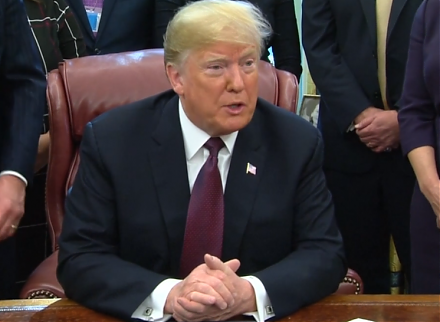
President Trump may reluctantly sign the congressional border wall deal in order to avert another U.S. government shutdown.

Apple Boston

2019-02-13 11:00:00 Wednesday ET

President Trump may reluctantly sign the congressional border wall deal in order to avert another U.S. government shutdown.

President Trump may reluctantly sign the congressional border wall deal in order to avert another U.S. government shutdown. With his executive power to decl

+See More

The Phillips curve becomes the Phillips cloud with no inexorable trade-off between inflation and unemployment.

Fiona Sydney

2019-08-02 17:39:00 Friday ET

The Phillips curve becomes the Phillips cloud with no inexorable trade-off between inflation and unemployment.

The Phillips curve becomes the Phillips cloud with no inexorable trade-off between inflation and unemployment. Stanford finance professor John Cochrane disa

+See More

The Economist highlights a trifecta of plausible explanations for better economic fortunes during the current Trump administration.

Chanel Holden

2018-08-27 09:35:00 Monday ET

The Economist highlights a trifecta of plausible explanations for better economic fortunes during the current Trump administration.

President Trump and his Republican senators and supporters praise the recent economic revival of most American counties. The Economist highlights a trifecta

+See More

Peter Schuck analyzes U.S. government failures and structural problems in light of both institutions and incentives.

Dan Rochefort

2023-04-28 16:38:00 Friday ET

Peter Schuck analyzes U.S. government failures and structural problems in light of both institutions and incentives.

Peter Schuck analyzes U.S. government failures and structural problems in light of both institutions and incentives. Peter Schuck (2015)   Why

+See More