Nicolet Bankshares Inc. Common Stock (NASDAQ:NCBS)

Real-time price: | Most recent change:0.00%

Nicolet Bankshares Inc. is a bank holding company for Nicolet National Bank. The company provides commercial and retail banking services for businesses and individuals primarily in northeast and central Wisconsin and the upper peninsula of Michigan. Nicolet Bankshares Inc. is headquartered in Green Bay, Wisconsin....

+See More


Here we provide our AYA proprietary alpha stock signals for all premium members on our AYA fintech network platform. Specifically, a high Fama-French multi-factor dynamic conditional alpha suggests that the stock is likely to consistently outperform the broader stock market benchmarks such as S&P 500, Dow Jones, Nasdaq, Russell 3000, MSCI USA, and MSCI World etc. Since March 2023, our proprietary alpha stock signals retain U.S. Patent and Trademark Office (USPTO) fintech patent protection, approval, and accreditation for 20 years. Our homepage and blog articles provide more details on this proprietary alpha stock market investment model with robust long-term historical backtest evidence.

Sharpe-Lintner-Black CAPM alpha (Premium Members Only) Fama-French (1993) 3-factor alpha (Premium Members Only) Fama-French-Carhart 4-factor alpha (Premium Members Only) Fama-French (2015) 5-factor alpha (Premium Members Only) Fama-French-Carhart 6-factor alpha (Premium Members Only) Dynamic conditional 6-factor alpha (Premium Members Only) Last update: Saturday 28 February 2026

Blog+More

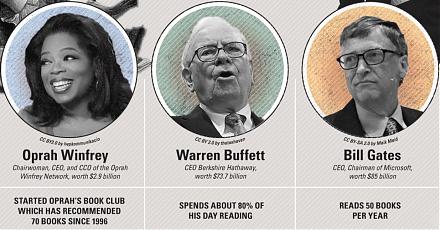
Business leaders often think from a systemic perspective, share bold visions, build great teams, and learn new business models.

Becky Berkman

2020-08-05 08:33:00 Wednesday ET

Business leaders often think from a systemic perspective, share bold visions, build great teams, and learn new business models.

Business leaders often think from a systemic perspective, share bold visions, build great teams, and learn new business models. Peter Senge (2006) &nb

+See More

The Economist suggests that the world has learned few lessons of the global financial crisis from 2008 to 2009.

Becky Berkman

2018-09-07 07:33:00 Friday ET

The Economist suggests that the world has learned few lessons of the global financial crisis from 2008 to 2009.

The Economist re-evaluates the realistic scenario that the world has learned few lessons of the global financial crisis from 2008 to 2009 over the past deca

+See More

Would you rather receive $1,000 each day for one month or a magic penny that doubles each day over the same month?

Laura Hermes

2017-04-07 15:34:00 Friday ET

Would you rather receive $1,000 each day for one month or a magic penny that doubles each day over the same month?

Would you rather receive $1,000 each day for one month or a magic penny that doubles each day over the same month? At first glance, this counterintuitive

+See More

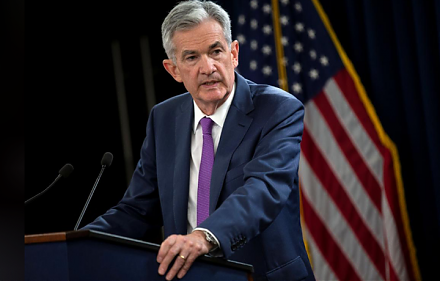
The new Fed chairman Jerome Powell faces a new challenge in the form of core CPI rate hikes toward 1.8%-2.1%.

Laura Hermes

2018-02-07 06:38:00 Wednesday ET

The new Fed chairman Jerome Powell faces a new challenge in the form of core CPI rate hikes toward 1.8%-2.1%.

The new Fed chairman Jerome Powell faces a new challenge in the form of both core CPI and CPI inflation rate hikes toward 1.8%-2.1% year-over-year with stro

+See More

Mario Draghi declares the ECB agreement on a thorny set of revisions to Basel 3.

Rose Prince

2017-11-25 06:34:00 Saturday ET

Mario Draghi declares the ECB agreement on a thorny set of revisions to Basel 3.

Mario Draghi, President of the European Central Bank, heads the international committee of financial supervisors and has declared their landmark agreement o

+See More

David Colander and Craig Freedman argue that economics went wrong when there was no neoclassical firewall between economic theories and policy reforms.

Becky Berkman

2023-11-28 11:35:00 Tuesday ET

David Colander and Craig Freedman argue that economics went wrong when there was no neoclassical firewall between economic theories and policy reforms.

David Colander and Craig Freedman argue that economics went wrong when there was no neoclassical firewall between economic theories and policy reforms. D

+See More