Barings Corporate Investors Common Stock (NYSE:MCI)

Real-time price: | Most recent change:0.00%

Barings Corporate Investors is a closed-end management investment company. The Trust's investment objective is to maintain a portfolio of securities providing a fixed yield and at the same time offering an opportunity for capital gains. Its portfolio includes public debt, public bank loans, cash and short-term investments, private/restricted equity, public equity and private debt. Barings Corporate Investors, formerly known as Babson Capital Corporate Investors, is based in SPRINGFIELD, United States....

+See More


Here we provide our AYA proprietary alpha stock signals for all premium members on our AYA fintech network platform. Specifically, a high Fama-French multi-factor dynamic conditional alpha suggests that the stock is likely to consistently outperform the broader stock market benchmarks such as S&P 500, Dow Jones, Nasdaq, Russell 3000, MSCI USA, and MSCI World etc. Since March 2023, our proprietary alpha stock signals retain U.S. Patent and Trademark Office (USPTO) fintech patent protection, approval, and accreditation for 20 years. Our homepage and blog articles provide more details on this proprietary alpha stock market investment model with robust long-term historical backtest evidence.

Sharpe-Lintner-Black CAPM alpha (Premium Members Only) Fama-French (1993) 3-factor alpha (Premium Members Only) Fama-French-Carhart 4-factor alpha (Premium Members Only) Fama-French (2015) 5-factor alpha (Premium Members Only) Fama-French-Carhart 6-factor alpha (Premium Members Only) Dynamic conditional 6-factor alpha (Premium Members Only) Last update: Saturday 11 April 2026

Blog+More

U.S. trading partners such as the European Union, Canada, China, Japan, Mexico, and Russia voice their concern at the WTO.

James Campbell

2018-07-05 13:40:00 Thursday ET

U.S. trading partners such as the European Union, Canada, China, Japan, Mexico, and Russia voice their concern at the WTO.

U.S. trading partners such as the European Union, Canada, China, Japan, Mexico, and Russia voice their concern at the World Trade Organization (WTO) in ligh

+See More

Modern themes and insights in behavioral finance (Part 1)

Laura Hermes

2022-02-05 09:26:00 Saturday ET

Modern themes and insights in behavioral finance (Part 1)

Modern themes and insights in behavioral finance   Shiller, R.J. (2003). From efficient markets theory to behavioral finance. Journal of Economi

+See More

State, society, and the narrow corridor to liberty

Joseph Corr

2023-09-28 08:26:00 Thursday ET

State, society, and the narrow corridor to liberty

Daron Acemoglu and James Robinson show a constant economic tussle between society and the state in the hot pursuit of liberty. Daron Acemoglu and James R

+See More

Congresswoman Alexandria Ocasio-Cortez proposes greater public debt finance with minimal tax increases for the Green New Deal.

James Campbell

2019-03-23 09:31:00 Saturday ET

Congresswoman Alexandria Ocasio-Cortez proposes greater public debt finance with minimal tax increases for the Green New Deal.

Congresswoman Alexandria Ocasio-Cortez proposes greater public debt finance with minimal tax increases for the Green New Deal. In accordance with the modern

+See More

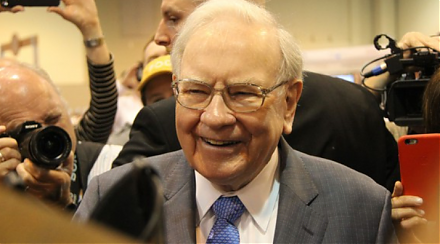
Warren Buffett shares his fresh economic insights and value investment strategies at the Berkshire Hathaway shareholder forum.

Daphne Basel

2018-05-05 07:33:00 Saturday ET

Warren Buffett shares his fresh economic insights and value investment strategies at the Berkshire Hathaway shareholder forum.

Warren Buffett shares his fresh economic insights and value investment strategies at the Berkshire Hathaway shareholder forum in May 2018 despite the new GA

+See More

Peter Schuck analyzes U.S. government failures and structural problems in light of both institutions and incentives.

Dan Rochefort

2023-04-28 16:38:00 Friday ET

Peter Schuck analyzes U.S. government failures and structural problems in light of both institutions and incentives.

Peter Schuck analyzes U.S. government failures and structural problems in light of both institutions and incentives. Peter Schuck (2015)   Why

+See More