Peabody Energy Corporation Common Stock (NYSE:BTU)

Real-time price: | Most recent change:0.00%

Peabody Energy Corporation is a coal company. It provides voice in advocating for sustainable mining, energy access and clean coal technologies. The company serves metallurgical and thermal coal customers primarily in Arizona, Colorado, New Mexico and Wyoming, Illinois, Indiana and Australia. Peabody Energy Corporation is based in St Louis, United States....

+See More


Here we provide our AYA proprietary alpha stock signals for all premium members on our AYA fintech network platform. Specifically, a high Fama-French multi-factor dynamic conditional alpha suggests that the stock is likely to consistently outperform the broader stock market benchmarks such as S&P 500, Dow Jones, Nasdaq, Russell 3000, MSCI USA, and MSCI World etc. Since March 2023, our proprietary alpha stock signals retain U.S. Patent and Trademark Office (USPTO) fintech patent protection, approval, and accreditation for 20 years. Our homepage and blog articles provide more details on this proprietary alpha stock market investment model with robust long-term historical backtest evidence.

Sharpe-Lintner-Black CAPM alpha (Premium Members Only) Fama-French (1993) 3-factor alpha (Premium Members Only) Fama-French-Carhart 4-factor alpha (Premium Members Only) Fama-French (2015) 5-factor alpha (Premium Members Only) Fama-French-Carhart 6-factor alpha (Premium Members Only) Dynamic conditional 6-factor alpha (Premium Members Only) Last update: Saturday 11 July 2026

Blog+More

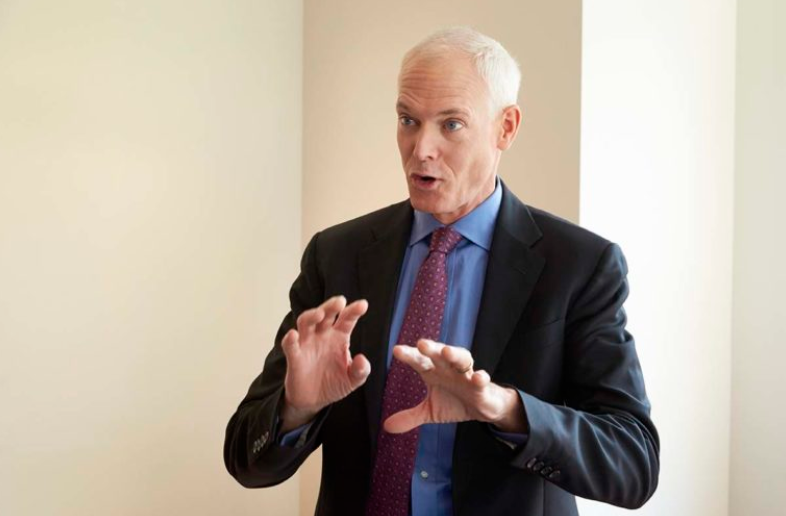
Business leaders often think from a systemic perspective, share bold visions, build great teams, and learn new business models.

Becky Berkman

2020-08-05 08:33:00 Wednesday ET

Business leaders often think from a systemic perspective, share bold visions, build great teams, and learn new business models.

Business leaders often think from a systemic perspective, share bold visions, build great teams, and learn new business models. Peter Senge (2006) &nb

+See More

Janet Yellen worries about U.S. government debt accumulation, expects new interest rate increases, and warns of the next economic recession.

Amy Hamilton

2018-11-05 10:40:00 Monday ET

Janet Yellen worries about U.S. government debt accumulation, expects new interest rate increases, and warns of the next economic recession.

Former Fed Chair Janet Yellen worries about U.S. government debt accumulation, expects new interest rate increases, and warns of the next economic recession

+See More

Former LSE Director Howard Davies shares his ingenious insights into the new Basel 4 accord.

Chanel Holden

2018-01-01 06:30:00 Monday ET

Former LSE Director Howard Davies shares his ingenious insights into the new Basel 4 accord.

As former chairman of the British Financial Services Authority and former director of the London School of Economics, Howard Davies shares his ingenious ins

+See More

Nobel Laureate Robert Shiller's long-term stock market indicator points to a recent peak.

Apple Boston

2018-09-17 12:40:00 Monday ET

Nobel Laureate Robert Shiller's long-term stock market indicator points to a recent peak.

Nobel Laureate Robert Shiller's long-term stock market indicator points to a recent peak. His cyclically-adjusted P/E ratio (or CAPE) accounts for long-

+See More

Geopolitical alignment often reshapes and reinforces asset market fragmentation in the broader context of financial deglobalization.

Olivia London

2025-07-01 13:35:00 Tuesday ET

Geopolitical alignment often reshapes and reinforces asset market fragmentation in the broader context of financial deglobalization.

In recent times, financial deglobalization and asset market fragmentation can cause profound public policy implications for trade, finance, and technology w

+See More

U.S. economic inequality increases to pre-Great-Depression levels.

Fiona Sydney

2019-02-17 14:40:00 Sunday ET

U.S. economic inequality increases to pre-Great-Depression levels.

U.S. economic inequality increases to pre-Great-Depression levels. U.C. Berkeley economics professor Gabriel Zucman empirically finds that the top 0.1% rich

+See More