
AU Optronics Corp., incorporated on August 12, 1996, is a thin-film-transistor liquid-crystal display (TFT-LCD) panel provider. The Company operates in two business segments: display business and solar business. Through Display business segment, the Company designs, develops, manufactures, assembles and markets flat panel displays and most of its products are TFT-LCD panels. Its panels are primarily used in televisions, monitors, mobile personal computers (PCs), mobile devices and commercial and other applications (such as displays for automobiles, industrial PCs, automated teller machines, point of sale terminals and pachinko machines). Through Solar business segment, the Company is capable of manufacturing upstream and midstream products, such as ingots, solar wafers and solar cells. ...
+See MoreSharpe-Lintner-Black CAPM alpha (Premium Members Only) Fama-French (1993) 3-factor alpha (Premium Members Only) Fama-French-Carhart 4-factor alpha (Premium Members Only) Fama-French (2015) 5-factor alpha (Premium Members Only) Fama-French-Carhart 6-factor alpha (Premium Members Only) Dynamic conditional 6-factor alpha (Premium Members Only) Last update: Saturday 17 October 2026
2019-03-09 12:43:00 Saturday ET

Pinterest files a $12 billion IPO due in mid-2019. This tech unicorn allows users to pin-and-browse images through its social media app and website. Pintere
2019-11-07 14:36:00 Thursday ET
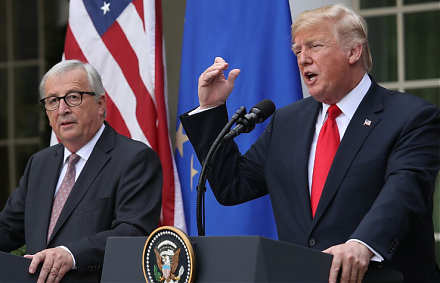
America expects to impose punitive tariffs on $7.5 billion European exports due to the recent WTO rule violation of illegal plane subsidies. World Trade Org
2016-11-09 00:00:00 Wednesday ET
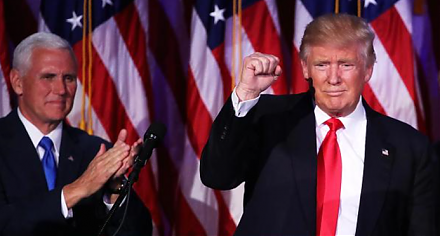
Universally dismissed as a vanity presidential candidate when he entered a field crowded with Republican talent, the former Democrat and former Independent
2019-04-27 16:41:00 Saturday ET

Tony Robbins suggests that one has to be able to make money during sleep hours in order to reach financial freedom. Most of our jobs and life experiences tr
2019-09-11 09:31:00 Wednesday ET

Central banks in India, Thailand, and New Zealand lower their interest rates in a defensive response to the Federal Reserve recent rate cut. The central ban
2019-06-13 10:26:00 Thursday ET

The Chinese Xi administration may choose to leverage its state dominance of rare-earth elements to better balance the current Sino-U.S. trade war. In recent
 Reports
 Metrics
 Events
 AI Stock Synopses