Atlas Corp. Common Shares (NYSE:ATCO)

Real-time price: | Most recent change:0.00%

Atlas Corp. is an asset manager which owns and operates the businesses in which it invests. The company's wholly-owned subsidiaries include Seaspan and APR. Seaspan is containership owner/operator while APR is in mobile power solutions as a lessor and operator. Atlas Corp., formerly known as Seaspan Corporation, is based in HONG KONG, China....

+See More


Here we provide our AYA proprietary alpha stock signals for all premium members on our AYA fintech network platform. Specifically, a high Fama-French multi-factor dynamic conditional alpha suggests that the stock is likely to consistently outperform the broader stock market benchmarks such as S&P 500, Dow Jones, Nasdaq, Russell 3000, MSCI USA, and MSCI World etc. Since March 2023, our proprietary alpha stock signals retain U.S. Patent and Trademark Office (USPTO) fintech patent protection, approval, and accreditation for 20 years. Our homepage and blog articles provide more details on this proprietary alpha stock market investment model with robust long-term historical backtest evidence.

Sharpe-Lintner-Black CAPM alpha (Premium Members Only) Fama-French (1993) 3-factor alpha (Premium Members Only) Fama-French-Carhart 4-factor alpha (Premium Members Only) Fama-French (2015) 5-factor alpha (Premium Members Only) Fama-French-Carhart 6-factor alpha (Premium Members Only) Dynamic conditional 6-factor alpha (Premium Members Only) Last update: Saturday 6 June 2026

Blog+More

Microsoft acquires GitHub, a software development platform that has been widely shared-and-used by 28 million programmers worldwide.

Joseph Corr

2018-06-04 08:38:00 Monday ET

Microsoft acquires GitHub, a software development platform that has been widely shared-and-used by 28 million programmers worldwide.

Microsoft acquires GitHub, a software development platform that has been widely shared-and-used by more than 28 million programmers worldwide. GitHub's

+See More

Harvard macrofinance professor Robert Barro sees no good reasons for the recent sudden reversal of U.S. monetary policy normalization.

Laura Hermes

2019-09-09 20:38:00 Monday ET

Harvard macrofinance professor Robert Barro sees no good reasons for the recent sudden reversal of U.S. monetary policy normalization.

Harvard macrofinance professor Robert Barro sees no good reasons for the recent sudden reversal of U.S. monetary policy normalization. As Federal Reserve Ch

+See More

Dodd-Frank rollback raises the asset threshold for systemic financial institutions from $50 billion to $250 billion.

Peter Prince

2018-05-21 07:39:00 Monday ET

Dodd-Frank rollback raises the asset threshold for systemic financial institutions from $50 billion to $250 billion.

Dodd-Frank rollback raises the asset threshold for systemically important financial institutions (SIFIs) from $50 billion to $250 billion. This legislative

+See More

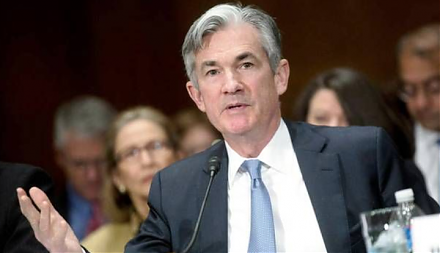
Fed Chair Jerome Powell increases the neutral interest rate to a range of 1.5% to 1.75% in his debut press conference.

Chanel Holden

2018-03-21 06:32:00 Wednesday ET

Fed Chair Jerome Powell increases the neutral interest rate to a range of 1.5% to 1.75% in his debut press conference.

Fed Chair Jerome Powell increases the neutral interest rate to a range of 1.5% to 1.75% in his debut post-FOMC press conference. The Federal Reserve raises

+See More

Incoming New York Fed President John Williams suggests that it is about time to end forward guidance.

Becky Berkman

2018-05-13 08:33:00 Sunday ET

Incoming New York Fed President John Williams suggests that it is about time to end forward guidance.

Incoming New York Fed President John Williams suggests that it is about time to end forward guidance in order to stop holding the financial market's han

+See More

Credit supply growth drives business cycle fluctuations and often sows the seeds of their own subsequent destruction.

Fiona Sydney

2018-04-26 07:37:00 Thursday ET

Credit supply growth drives business cycle fluctuations and often sows the seeds of their own subsequent destruction.

Credit supply growth drives business cycle fluctuations and often sows the seeds of their own subsequent destruction. The global financial crisis from 2008

+See More