
Apple's business primarily runs around its flagship iPhone. However, the Services portfolio that includes cloud services, App store, Apple Music, AppleCare, Apple Pay & licensing and other services which become the cash cow. Moreover, non-iPhone devices like Apple Watch and AirPod have gained significant traction. In fact, Apple dominates the Wearables and Hearables markets due to the growing adoption of Watch and AirPods. Solid uptake of Apple Watch also helps Apple to strengthen its presence in the personal health monitoring space. Apple also designs, manufactures and sells iPad, MacBookand HomePod. These devices are powered by software applications including iOS, macOS, watchOS and tvOS operating systems. Apple's other services include subscription-based Apple News, Apple Card, Apple Arcade, new Apple TV app, Apple TV channels and Apple TV, a new subscription service....
+See MoreSharpe-Lintner-Black CAPM alpha (2.26%) Fama-French (1993) 3-factor alpha (3.13%) Fama-French-Carhart 4-factor alpha (3.96%) Fama-French (2015) 5-factor alpha (4.89%) Fama-French-Carhart 6-factor alpha (5.68%) Dynamic conditional 6-factor alpha (11.21%) Last update: Saturday 17 October 2026
2018-03-05 07:34:00 Monday ET
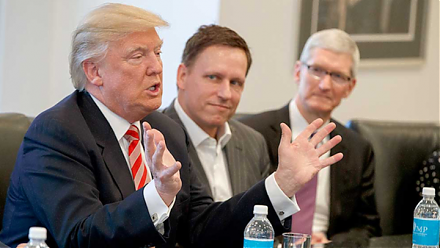
Peter Thiel shares his money views of President Trump, Facebook, Bitcoin, global finance, and trade etc. As an early technology adopter, Thiel invests in Fa
2020-06-10 10:35:00 Wednesday ET

Most lean enterprises should facilitate the dual transformation of both core assets with fresh cash flows and new growth options. Scott Anthony, Clark Gi
2018-10-13 10:44:00 Saturday ET

Dow Jones tumbles 3% or 831 points while NASDAQ tanks 4%, and this negative investor sentiment rips through most European and Asian stock markets in early-O
2019-08-22 11:35:00 Thursday ET

Fundamental factors often reflect macroeconomic innovations and so help inform better stock investment decisions. Nobel Laureate Eugene Fama and his long-ti
2022-10-05 08:24:00 Wednesday ET

Precautionary-motive and agency reasons for corporate cash management Bates, Kahle, and Stulz (JF 2009) empirically find that public firms have doubled t
2019-03-09 12:43:00 Saturday ET

Pinterest files a $12 billion IPO due in mid-2019. This tech unicorn allows users to pin-and-browse images through its social media app and website. Pintere
 Reports
 Metrics
 Events
 AI Stock Synopses