
AeroVironment, Inc. designs, develops, produces, operates a portfolio of products and services for government agencies, businesses and consumers. It operates through two segments: Unmanned Aircraft Systems, which focuses primarily on the design, development, production, support and operation of UAS and tactical missile systems that provide situational awareness, multi-band communications, force protection and other mission effects, and Efficient Energy Systems, which focuses primarily on the design, development, production, support and operation of electric energy systems. The Company supplies UAS, tactical missile systems and related services primarily to organizations within the United States Department of Defense. The Company also supplies charging systems and services for electric vehicles, and power cycling and test systems to commercial, consumer and government customers. It serves the U.S. Department of Defense, including the U.S. Army, Marine Corps, Special Operations Command, Air Force, and Navy....
+See More2018-08-25 12:33:00 Saturday ET
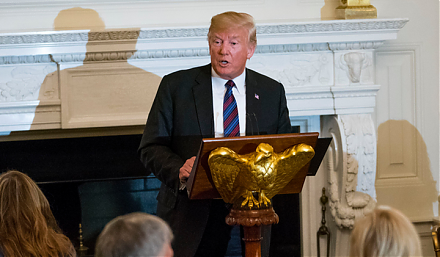
President Trump warns Google, Facebook, and Twitter that these tech titans now tread on troublesome territory. Specifically, Trump accuses Google of rigging
2023-04-21 12:39:00 Friday ET

Angus Deaton analyzes the correlation between health and wealth in light of the economic origins of inequality worldwide. Angus Deaton (2015)
2019-08-18 11:33:00 Sunday ET

House Judiciary Committee summons senior executive reps of the tech titans to assess online platforms and their market power. These companies are Facebook,
2019-01-11 10:33:00 Friday ET
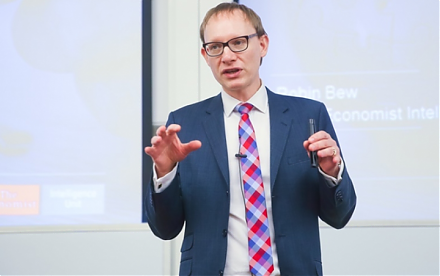
The Economist Intelligence Unit (EIU) continues to track major business risks in light of volatile stock markets, elections, and geopolitics. EIU monitors g
2018-06-17 10:35:00 Sunday ET

In the past decades, capital market liberalization and globalization have combined to connect global financial markets to allow an ocean of money to flow th
2023-06-07 10:27:00 Wednesday ET

Anat Admati and Martin Hellwig raise broad critical issues about bank capital regulation and asset market stabilization. Anat Admati and Martin Hellwig (