Home > Library > AYA macro ebook on the fundamental analysis of the global financial system March 2025
Author Dan Rochefort
Our fintech finbuzz analytic report shines light on the current global macro-financial outlook. As of Summer-Fall 2025, we delve into the fundamental analysis of core competitive advantages in the global financial system. In this fundamental analysis, the key actors include banks, insurers, and other non-bank financial intermediaries. We explain why and how financial technology effectively helps broaden the current scope of financial services worldwide, especially in a new cashless modern society. Through this analysis, we focus on the 5 primary pillars of financial stability policy: capital requirements, liquidity constraints, leverage limits, macro-prudential stress tests, and deposit insurance coverage rules.
Description:

We apply our rare unique lean-startup growth mindset with many iterative continuous improvements to our founder-driven online content generation. We read, curate, edit, refine, adapt, and improve long-form analytic reports on macro-finance, fiscal-monetary policy coordination, geopolitical alignment, trade, taxation, technology, and so forth from a wide variety of online outlets. Specifically, these online outlets span the International Monetary Fund (IMF); World Bank (WB); World Economic Forum (WEF); Bank for International Settlements (BIS); Harvard Business Review (HBR); The Economist; Standard & Poor, Moody’s, Fitch, and the other major credit rating agencies; Goldman Sachs, Morgan Stanley, JPMorgan Chase, Bank of America, and the other major investment banks on the Bloomberg terminal server. With our rare unique manual human content curation, we remake, reshape, and reinforce the final version of each analytic report to be our comprehensive fundamental analysis in light of the major economic moats, competitive advantages, network effects, scale economies, and information cascades in some specific strategic sectors such as generative artificial intelligence (Gen AI) large language models (LLM), graphics processing units (GPU), tensor processing units (TPU), application-specific integrative circuits (ASIC), electric vehicles (EV), autonomous robotaxis (AR), cloud services, telecoms, robots, drones, green energy infrastructure networks, next-gen medications and vaccines, healthcare services, alternative therapies, quantum computers, virtual reality (VR) headsets, and the metaverse. From the top-notch PhD financial economist’s perspective, this manual human content curation adds to this comprehensive fundamental analysis our unique worldviews, insights, expert views, opinions, judgments, and even personal experiences. In practice, we apply an eclectic style in our analysis. In economics, we integrate new classical monetarism, new Keynesianism, and supply-side structural reforms into our analysis. In world politics, we combine realism, liberalism, and constructivism into our analysis. Each unique school of thought provides many diverse, different, and complementary insights, expert views, opinions, judgments, perspectives, and so on. This eclectic style empowers stock market investors worldwide to mull over many fundamental forces, economic factors, and geopolitical risks in light of global peace and prosperity. Our analysis includes AYA proprietary alpha stock signals, macro-tech analytic reports, reviews, ebooks, essays, stock synopses, surveys, blog posts, and rare unique fintech research articles; podcasts, audio tunes, and narrative soundtracks etc; as well as short video clips, films, movies, and even photorealistic animations. With all these Herculean efforts over many years, we attempt to establish our rare unique thought leadership and industry authority in macro-finance, proprietary fintech patent research, asset return prediction, and global macro asset management worldwide.
With U.S. fintech patent approval, accreditation, and protection for 20 years, our AYA fintech network platform provides proprietary alpha stock signals and personal finance tools for stock market investors worldwide.
We build, design, and delve into our new and non-obvious proprietary algorithmic system for smart asset return prediction and fintech network platform automation. Unlike our fintech rivals and competitors who chose to keep their proprietary algorithms in a black box, we open the black box by providing the free and complete disclosure of our U.S. fintech patent publication. In this rare unique fashion, we help stock market investors ferret out informative alpha stock signals in order to enrich their own stock market investment portfolios. With no need to crunch data over an extensive period of time, our freemium members pick and choose their own alpha stock signals for profitable investment opportunities in the U.S. stock market.
Smart investors can consult our proprietary alpha stock signals to ferret out rare opportunities for transient stock market undervaluation. Our analytic reports help many stock market investors better understand global macro trends in trade, finance, technology, and so forth. Most investors can combine our proprietary alpha stock signals with broader and deeper macro financial knowledge to win in the stock market.
Through our proprietary alpha stock signals and personal finance tools, we can help stock market investors achieve their near-term and longer-term financial goals. High-quality stock market investment decisions can help investors attain the near-term goals of buying a smartphone, a car, a house, good health care, and many more. Also, these high-quality stock market investment decisions can further help investors attain the longer-term goals of saving for travel, passive income, retirement, self-employment, and college education for children. Our AYA fintech network platform empowers stock market investors through better social integration, education, and technology.
Our fintech finbuzz analytic report shines light on the current global macro-financial outlook. As of Summer-Fall 2025, we delve into the fundamental analysis of core competitive advantages in the global financial system. In this fundamental analysis, the key actors include banks, insurers, and other non-bank financial intermediaries. We explain why and how financial technology effectively helps broaden the current scope of financial services worldwide, especially in a new cashless modern society. Through this analysis, we focus on the 5 primary pillars of financial stability policy: capital requirements, liquidity constraints, leverage limits, macro-prudential stress tests, and deposit insurance coverage rules.
We delve into the mainstream public policy implications of financial deglobalization in recent years. The U.S. and its western allies impose some economic sanctions on global trade and finance in relation to China, Russia, Iran, and North Korea. In addition to these sanctions, hefty tariffs, embargoes, and foreign investment bans and restrictions further limit the macrofinancial clout of these countries. As the U.S. and its western allies cut off favorable trade relations with China, Russia, Iran, and North Korea, the current Russia-Ukraine war, the potential invasion of Taiwan by China, the relentless conflict between Israel and Hamas and the Palestinians, and several other geopolitical tensions exacerbate recent asset market fragmentation in the broader context of financial deglobalization. Even though the American dollar remains the dominant global reserve currency and global supply chains prove to be more resilient, global capital flows start to fragment in different directions in the particular context of financial deglobalization. The postwar world order of free trade continues to fall apart at a relatively slow and gradual pace.
The postwar global institutions that safeguard the old world order of free trade are either already defunct or deficient with a lack of longer-term credible commitments these days. The World Trade Organization (WTO) turns 30 in 2025, but continues to have spent more than 5 years in stasis due to western neglect. The World Bank seems to be caught between fighting world poverty and enriching the upper social echelon in new market economies with higher population dividends such as China, Brazil, India, Indonesia, and the Philippines. The International Monetary Fund (IMF) confronts its identity crisis and remains stuck in the middle between global financial stability and green finance in support of better climate risk management worldwide. The World Health Organization (WHO) now needs to cope with the post-pandemic public health risks and threats worldwide, such as new variants of the corona virus. In recent years, the U.N. security council fails to secure world peace and prosperity due to the Russia-Ukraine war in Eastern Europe, the relentless conflict between Israel and Iran, Hamas, and the Palestinians, as well as the recurrent flash points in the North Korean peninsula, Taiwan, South China Sea, and wider Pacific Ocean. The International Court of Justice attempts to weaponize the U.S. and its western allies by issuing arrest warrants for President Vladimir Putin and others who launch wars against humanity, but the Court has little jurisdiction over Russia and Ukraine in Eastern Europe, the Gaza Strip in Middle East, and the Pacific first island chain from the North Korean peninsula and Japan to Taiwan and the Philippines.
The resultant fragmentation of free markets in new democracies imposes a stealth tax on the global economy, in the form of higher inflation or lower purchasing power for each marginal dollar. Unfortunately, human history shows that deeper financial deglobalization may inadvertently worsen the current tilt toward secular stagnation worldwide. Today, a similar rupture seems all too imaginable. The return of Donald Trump to the White House, with his zero-sum worldview, would probably continue the gradual and recurrent erosion of global institutions, norms, and principles all in support of both free trade and democratic capitalism. The far-flung fear of a second wave of low-cost imports from China would likely accelerate this global trend. Any outright war between America and China over Taiwan, or between the NATO and Russia, would further cause an almighty collapse of the world trade system.
Nowadays, it is fashionable for economists to criticize free-market globalization as the root cause of social disparities in wealth and income worldwide, global financial imbalances, as well as climate change risks (even the increasingly hefty economic costs of rare extreme weather events). However, the free trade achievements from the 1990s to the early-2000s help mark the high point of liberal capitalism and then continue to be a rare, unique, and inimitable episode of human history. Through a free ride on the transition to new market economies, China, Brazil, India, Indonesia, and the Philippines integrated into the world economy. As a result, many hundreds of millions escaped poverty. Also, the current infant mortality rate worldwide is less than half what the rate was back in the 1990s, due to greater clean water and food. The proportion of global deaths due to inter-state wars and conflicts has hit a post-war low, less than a thousandth of 0.2% today, down from almost 40 times as high more than 50 years ago. Today, many leaders and politicians hope to replace the old Washington consensus on free trade and market capitalism. The Washington consensus depicts a world economy where poor countries enjoy capital spending booms to catch up on economic growth and employment with rich countries. Due to economic and non-economic risks and issues such as climate change, extreme weather, pandemic disease control, credit contagion, and nuclear proliferation etc, many leaders and politicians attempt to close the economic gap between rich and poor countries through alternative means of trade, finance, and technology.
Indeed, the postwar world order of free trade achieved a merry marriage between the U.S. peace principles and strategic interests. At the same time, this new liberal world order further brought real economic benefits to the rest of the world. In some parts of the world, however, poor residents continue to suffer from the World Bank and IMF’s inability to resolve the sovereign debt crisis after the Covid-19 pandemic years. Several middle-income countries such as India and Indonesia hope to trade their way to riches, but these countries end up trying to exploit free-trade loopholes and opportunities due to financial deglobalization and asset market fragmentation. In practice, the global economy should remain robust, resilient, and predictable in integrating most prior trade blocs and regions into the new world order of fair trade. In due course, the fair-trade integration helps ensure global peace and prosperity with the long prevalent American-driven institutions, norms, and principles in favor of free-market capitalism, democratization, and the lofty pursuit of a good life.
Our quantitative analysis accords with the standard approach to discounting-cash-flows (DCF) and free-cash-flows (FCF) corporate valuation.
This analytic report cannot constitute any form of financial advice, analyst opinion, recommendation, or endorsement. We refrain from engaging in financial advisory services, and we seek to offer our analytic insights into the latest economic trends, stock market topics, investment memes, and other financial issues. Our proprietary alpha investment algorithmic system helps enrich our AYA fintech network platform as a new social community for stock market investors: https://ayafintech.network.
We share and circulate these informative posts and essays with hyperlinks through our blogs, podcasts, emails, social media channels, and patent specifications. Our goal is to help promote better financial literacy, inclusion, and freedom of the global general public. While we make a conscious effort to optimize our global reach, this optimization retains our current focus on the American stock market.
This analytic report shares new economic insights, investment memes, and stock portfolio strategies through both blog posts and patent specifications on our AYA fintech network platform. AYA fintech network platform is every investor's social toolkit for profitable investment management. We can help empower stock market investors through technology, education, and social integration.
2019-12-04 14:35:00 Wednesday ET

Many billionaires choose to live below their means with frugal habits and lifestyles. Those people who consistently commit to saving more, spending less, an
2019-06-27 10:39:00 Thursday ET

Berkeley tax economists Gabriel Zucman and Emmanuel Saez find fresh insights into wealth inequality in America. Their latest estimates show that the top 0.1
2018-02-01 07:38:00 Thursday ET
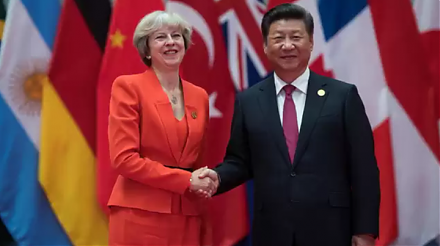
U.S. senators urge the Trump administration with a bipartisan proposal to prevent the International Monetary Fund (IMF) from bailing out several countries t
2025-10-11 14:33:00 Saturday ET
Stock Synopsis: With a new Python program, we use, adapt, apply, and leverage each of the mainstream Gemini Gen AI models to conduct this comprehensive fund
2019-09-03 14:29:00 Tuesday ET
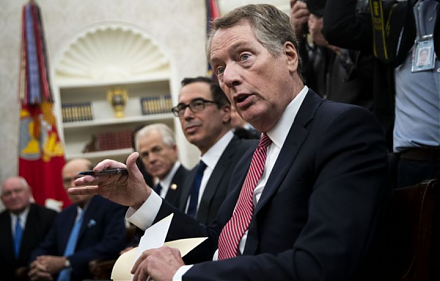
Due to U.S. tariffs and other cloudy causes of economic policy uncertainty, Apple, Nintendo, and Samsung start to consider making tech products in Vietnam i
2018-08-11 14:35:00 Saturday ET
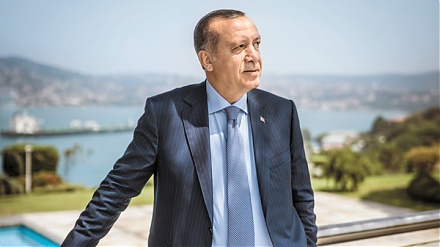
The Trump administration imposes 20%-50% tariffs on Turkish imports due to a recent spat over the detention of an American pastor, Andrew Brunson, in Turkey