
Home > Library > Econometric theory and evidence in practice
Author Andy Yeh Alpha
This book provides many useful mathematical exercises in graduate econometric theory and practice. Many quantitative exercises, examples, codes, and solutions draw from the collective wisdom of major econometric books by Greene, Hamilton, Hayashi, White, and Wooldridge etc. The reader can benefit from these solutions with many mathematical equations and notations to become familiar with the core curriculum for econometric theory and practice. The main topics cover (non)linear least squares theory, quasi-maximum likelihood estimation, minimax estimation, financial time-series econometric theory (ARMA-GARCH, ARMA-EGARCH, and ARMA-GJR-GARCH), generalized method of moments (GMM) with exogenous instrumental variables, panel data estimation with endogeneity and unobservable heterogeneity, binary response model estimation (i.e. probit and logit), multinomial response model estimation (conditional logit and Berry-Levinsohn-Pakes random-coefficients mixed logit), Tobit model estimation with corner solutions, Heckman sample selection model estimation, and so forth.
econometric theory jeffrey wooldridge lars hansen john cochrane james hamilton william greene least squares regression maximum likelihood estimation financial time-series arma garch gmm vector autogression endogeneity dynamic panel data estimation probit logit tobit multinomial response model estimation heckman sample selection model
Description:
This book provides many useful mathematical exercises in graduate econometric theory and practice. Many quantitative exercises, examples, codes, and solutions draw from the collective wisdom of major econometric books by Greene, Hamilton, Hayashi, White, and Wooldridge etc. The reader can benefit from these solutions with many mathematical equations and notations to become familiar with the core curriculum for econometric theory and practice. The main topics cover (non)linear least squares theory, quasi-maximum likelihood estimation, minimax estimation, financial time-series econometric theory (ARMA-GARCH, ARMA-EGARCH, and ARMA-GJR-GARCH), generalized method of moments (GMM) with exogenous instrumental variables, panel data estimation with endogeneity and unobservable heterogeneity, binary response model estimation (i.e. probit and logit), multinomial response model estimation (conditional logit and Berry-Levinsohn-Pakes random-coefficients mixed logit), Tobit model estimation with corner solutions, Heckman sample selection model estimation, and so forth.
This analytic ebook cannot constitute any form of financial advice, analyst opinion, recommendation, or endorsement. We refrain from engaging in financial advisory services, and we seek to offer our analytic insights into the latest economic trends, stock market topics, investment memes, and other financial issues. Our proprietary alpha investment algorithmic system helps enrich our AYA fintech network platform as a new social community for stock market investors: https://ayafintech.network.
We share and circulate these informative posts and essays with hyperlinks through our blogs, podcasts, emails, social media channels, and patent specifications. Our goal is to help promote better financial literacy, inclusion, and freedom of the global general public. While we make a conscious effort to optimize our global reach, this optimization retains our current focus on the American stock market.
This ebook shares new economic insights, investment memes, and stock portfolio strategies through both blog posts and patent specifications on our AYA fintech network platform. AYA fintech network platform is every investor's social toolkit for profitable investment management. We can help empower stock market investors through technology, education, and social integration.
2019-08-08 09:35:00 Thursday ET
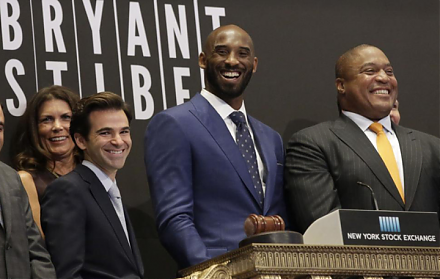
Kobe Bryant and several other star athletes have been smart savvy investors. In collaboration with former Web.com CEO Jeff Stibel, the NBA champion invests
2022-04-25 10:34:00 Monday ET

Corporate ownership governance theory and practice The genesis of modern corporate governance and ownership studies traces back to the seminal work
2018-08-05 12:34:00 Sunday ET
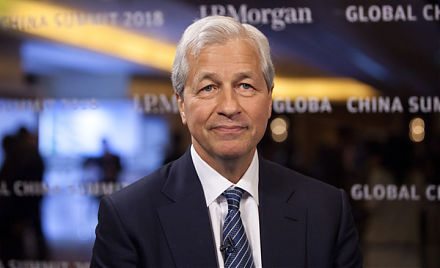
JPMorgan Chase CEO Jamie Dimon sees great potential for 10-year government bond yields to rise to 5% in contrast to the current 3% 10-year Treasury bond yie
2025-07-12 11:35:00 Saturday ET

Mitch Anthony explains why it is now more important for top sales leaders to apply social skills and emotional competences to fulfill customer needs, wants,
2020-07-05 11:31:00 Sunday ET

Business entrepreneurs dare to dream, remain true and authentic to themselves, and try to make a great social impact in the world. Alex Malley (2014)
2019-08-31 14:39:00 Saturday ET

AYA Analytica finbuzz podcast channel on YouTube August 2019 In this podcast, we discuss several topical issues as of August 2019: (1) Warren B