
2018-09-09 13:42:00 Sun ET
trust perseverance resilience empathy compassion passion purpose vision mission life metaphors seamless integration critical success factors personal finance entrepreneur inspiration grit

Warren Buffett shares his key insights into life, success, money, and interpersonal communication. Institutional money managers and retail investors can learn much from the collective wisdom of his wondrous quotes.
One cannot make a good deal with a bad person. It is better to hang out with people whose behaviors are better than ours. One should learn to read all day.
Good outcomes take time; so one cannot produce a baby in one month by making 9 women pregnant. It takes 20 years to build our reputation and only 5 minutes to ruin it. We only find out who is swimming with few clothes when the tide goes out.
It is unnecessary to accomplish extraordinary missions to get extraordinary results. We should be fearful when others are greedy, and we should be greedy when others are fearful. We can measure success by how many people love us.
We need to be confident enough that we will achieve fulfillment one day. When we are in the luckiest 1% of humanity, we owe a great deal to the rest of humanity to think about the other 99%. Price is what we pay, and value is what we get.
We need not be a rocket scientist to manage well personal finance, and investment is not a game where the smart guy beats the less smart one.
If any of our AYA Analytica financial health memos (FHM), blog posts, ebooks, newsletters, and notifications etc, or any other form of online content curation, involves potential copyright concerns, please feel free to contact us at service@ayafintech.network so that we can remove relevant content in response to any such request within a reasonable time frame.
2019-10-03 17:39:00 Thursday ET

President Trump indicates that he would consider an interim Sino-American trade deal in lieu of a full trade agreement. The Trump administration defers high
2018-07-05 13:40:00 Thursday ET
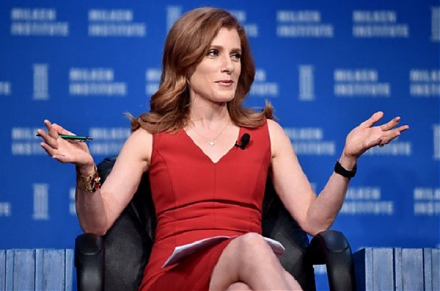
U.S. trading partners such as the European Union, Canada, China, Japan, Mexico, and Russia voice their concern at the World Trade Organization (WTO) in ligh
2019-03-03 10:39:00 Sunday ET

Tech companies seek to serve as quasi-financial intermediaries. Retail traders can list items for sale on eBay and then acquire these items economically on
2023-08-07 12:29:00 Monday ET

Oxford macro professor Stephen Nickell and his co-authors delve into the trade-off between inflation and unemployment in the dual mandate of price stability
2019-10-29 13:36:00 Tuesday ET
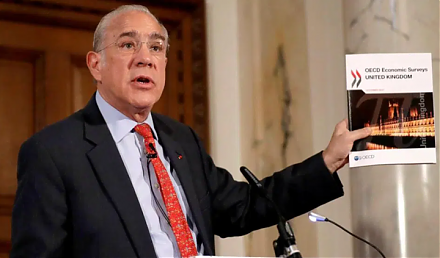
The OECD projects global growth to decline from 3.2% to 2.9% in the current fiscal year 2019-2020. This global economic growth projection represents the slo
2019-11-09 16:38:00 Saturday ET
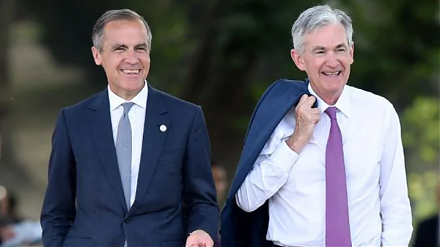
Federal Reserve Chairman Jerome Powell indicates that the central bank would resume Treasury purchases to avoid turmoil in money markets. Powell indicates t