
2018-11-15 12:35:00 Thu ET
stock market gold oil stock return s&p 500 asset market stabilization asset price fluctuations stocks bonds currencies commodities funds term spreads credit spreads fair value spreads asset investments

Warren Buffett approves Berkshire Hathaway to implement new meaningful stock repurchases. Buffett sends a positive signal to the stock market with the Berkshire $1 billion stock buyback. This stock buyback program involves $1 billion Berkshire Hathaway share repurchases as of 2018Q3 and thus boosts the share price almost 5% in early-November 2018. This program can continue into the final weeks of the current calendar year.
From July 2018 to November 2018, Berkshire has been an active net buyer of $24 billion U.S. stocks. This decision doubles the overall dollar volume in the first half of the current year. Until July 2018, Berkshire Hathaway would repurchase shares only if the stock price fell below 120% of its book value (about $152 per share as of October 2018). A recent amendment allows Warren Buffett and Charlie Munger to approve share repurchases if they believe that the stock price is lower than its intrinsic value. This amendment provides greater flexibility for new stock buyback programs and so results in meaningful share repurchases at Berkshire Hathaway. Warren Buffett points out that the intrinsic value of Berkshire Hathaway far exceeds its book value particularly in the property and casualty insurance businesses.
If any of our AYA Analytica financial health memos (FHM), blog posts, ebooks, newsletters, and notifications etc, or any other form of online content curation, involves potential copyright concerns, please feel free to contact us at service@ayafintech.network so that we can remove relevant content in response to any such request within a reasonable time frame.
2017-12-01 06:30:00 Friday ET

Dr Kai-Fu Lee praises China as the next epicenter of artificial intelligence, smart data analysis, and robotic automation. With prior IT careers at Apple, M
2018-11-23 09:39:00 Friday ET
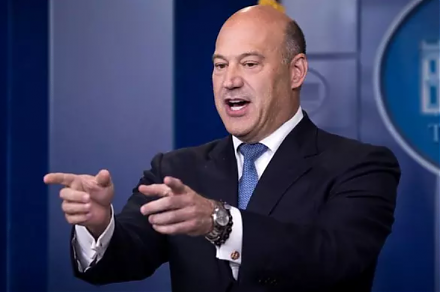
Former White House chief economic advisor Gary Cohn points out that there is no instant cure for the Sino-U.S. trade dilemma. After the U.S. midterm electio
2018-07-09 09:39:00 Monday ET
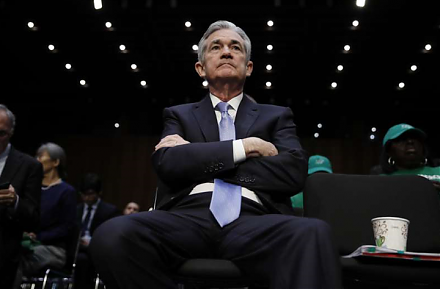
The Federal Reserve raises the interest rate again in mid-2018 in response to 2% inflation and wage growth. The current neutral interest rate hike neither b
2027-01-31 12:25:00 Sunday ET

In recent decades, many governments have chosen to run high fiscal deficits on top of sovereign debt mountains so that greater government intervention still
2018-08-17 11:45:00 Friday ET
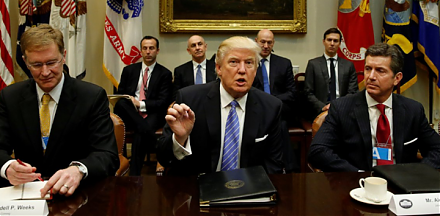
In accordance with the extant corporate disclosure rules and requirements, all U.S. public corporations have to report their balance sheets, income statemen
2018-03-19 10:37:00 Monday ET
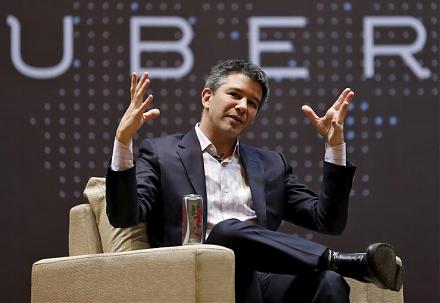
Uber's autonomous car causes the first known pedestrian fatality from a driverless vehicle and thus sets off the alarm bell for artificial intelligence.