
2017-03-21 09:37:00 Tue ET
technology antitrust competition bilateral trade free trade fair trade trade agreement trade surplus trade deficit multilateralism neoliberalism world trade organization regulation public utility current account compliance
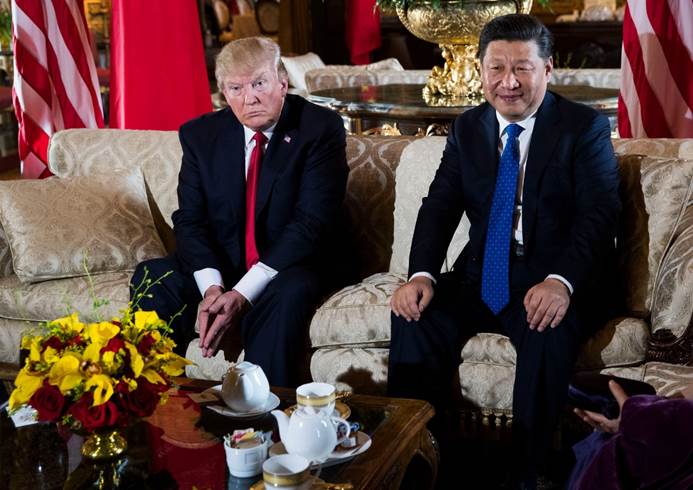
Trump and Xi meet in the most important summit on earth this year.
Trump has promised to retaliate against China's currency misalignment, steel trade practice, manipulative ownership of U.S. government bonds, and passive attitude toward the deterrence of North Korean nuclear threats, whereas, Xi serves as a pacifist to Trump's allegation of currency manipulation as the main reason for American $500 billion trade deficit.
The Trump stock market rally reveals that much economic policy uncertainty revolves around whether the Republican administration would impose a new punitive 45% tariff on Chinese imports to counteract the current trade imbalance between the world's most powerful economies.
Many political considerations such as the One-China policy and the anti-nuclear deterrence of North Korea come into play and affect the U.S.-China economic status quo.
Can the Trump administration's economic sanctions manifest in the form of punitive tariff and trade protectionism as quid pro quo for political concessions on the One-China policy and East Asian nuclear non-proliferation?
If any of our AYA Analytica financial health memos (FHM), blog posts, ebooks, newsletters, and notifications etc, or any other form of online content curation, involves potential copyright concerns, please feel free to contact us at service@ayafintech.network so that we can remove relevant content in response to any such request within a reasonable time frame.
2018-01-10 08:40:00 Wednesday ET
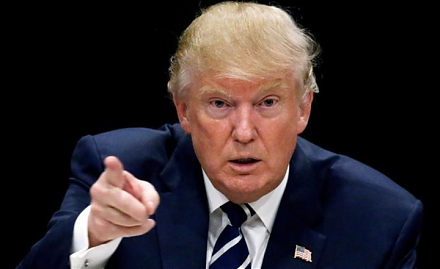
President Trump considers imposing retaliatory economic sanctions on Chinese products and services in direct response to China's theft and infringement
2019-11-19 09:33:00 Tuesday ET

American unemployment declines to the 50-year historical low level of 3.5% with moderate job growth. Despite a sharp slowdown in U.S. services and utilities
2018-05-11 09:37:00 Friday ET

OPEC countries have cut the global glut of oil production in recent years while the resultant oil price has surged from $30 to $78 per barrel from 2015 to 2
2023-08-28 08:26:00 Monday ET

Jared Diamond delves into how some societies fail, succeed, and revive in global human history. Jared Diamond (2004) Collapse: how societies
2020-09-11 10:22:00 Friday ET

AYA fintech network platform provides proprietary alpha stock signals and personal finance tools. In recent times, we have completed our fresh website up
2017-05-13 07:28:00 Saturday ET
America's Top 5 tech firms, Apple, Alphabet, Microsoft, Amazon, and Facebook have become the most valuable publicly listed companies in the world. These