
2017-01-27 17:19:00 Fri ET
trust perseverance resilience empathy compassion passion purpose vision mission life metaphors seamless integration critical success factors personal finance entrepreneur inspiration grit
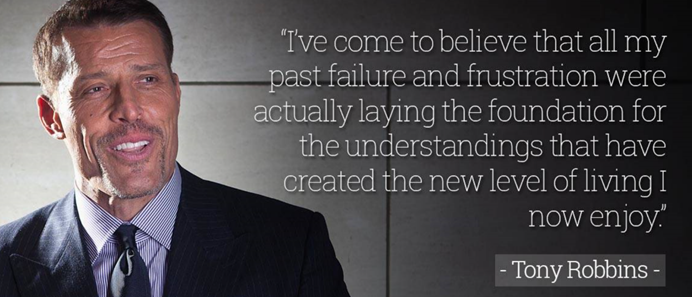
Tony Robbins explains in his latest book on personal finance that *patience* is the top secret to successful stock investment.
The stock market embeds and follows the long-term upward trend primarily due to inflation, productivity, and population growth although the stock market may experience short-term peaks and valleys along the great journey.
On balance, the most successful investors such as Warren Buffett and Peter Lynch pour money into the power of compound interest with dividend yields and capital gains that accrue on top of both principal and interest payments.
While the trend can be one's friend, the long-term upward stock market trend is his or her best friend forever.
After he interviews Wall Street's 50 best investors, Robbins concludes that it is important to remain patient as stock prices go through short-term mountaintops and valleys along the way.
As the typical investor diversifies his or her long-term stock investment portfolio across several asset classes such as stocks and bonds, he or she should buy-and-hold multiple stocks with robust quantitative fundamental long-term alpha signals rather than myopic technical trends.
If any of our AYA Analytica financial health memos (FHM), blog posts, ebooks, newsletters, and notifications etc, or any other form of online content curation, involves potential copyright concerns, please feel free to contact us at service@ayafintech.network so that we can remove relevant content in response to any such request within a reasonable time frame.
2019-08-26 11:30:00 Monday ET
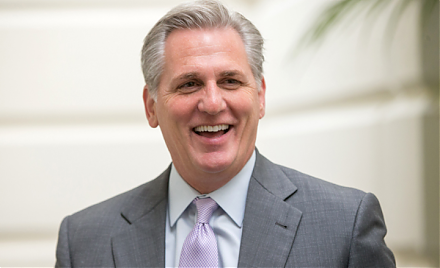
Partisanship matters more than the socioeconomic influence of the rich and elite interest groups. This new trend emerges from the recent empirical analysis
2019-02-17 14:40:00 Sunday ET

U.S. economic inequality increases to pre-Great-Depression levels. U.C. Berkeley economics professor Gabriel Zucman empirically finds that the top 0.1% rich
2025-02-02 11:28:00 Sunday ET
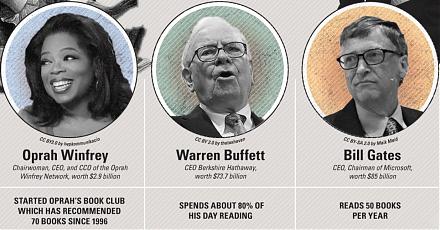
Our proprietary alpha investment model outperforms most stock market indexes from 2017 to 2025. Our proprietary alpha investment model outperforms the ma
2019-04-26 09:33:00 Friday ET
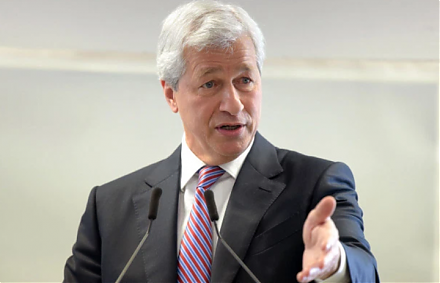
JPMorgan Chase CEO Jamie Dimon defends capitalism in his recent annual letter to shareholders. As Dimon explains here, socialism inevitably produces stagnat
2017-04-13 10:42:00 Thursday ET

President Donald Trump unveils the dramatic *tax overhaul proposal*. Through this tax plan, Trump replaces the current 7 income tax brackets with 3 leane
2019-08-20 07:33:00 Tuesday ET

The recent British pound depreciation is a big Brexit barometer. Britain appoints former London mayor and Foreign Secretary Boris Johnson as the prime minis