
2019-05-11 10:28:00 Sat ET
technology antitrust competition bilateral trade free trade fair trade trade agreement trade surplus trade deficit multilateralism neoliberalism world trade organization regulation public utility current account compliance
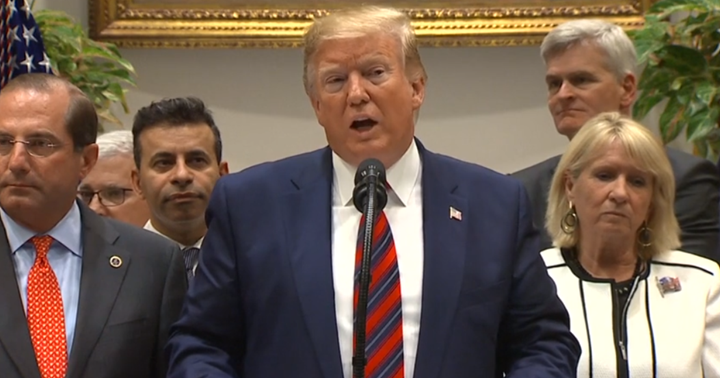
The Trump administration still expects to reach a Sino-U.S. trade agreement with a better mechanism for intellectual property protection and enforcement. President Trump emphasizes that there is no need for America to rush to reach a major trade deal with China. Also, there is no need for stock market investors to overreact to the recent Sino-U.S. trade war headlines. The Trump tariff hikes represent punitive penalties on the Chinese attempt to backtrack on prior mutual trade commitments. In response to the Trump tariffs, the Chinese Xi administration promises retaliation with necessary countermeasures.
As Reuters reports in recent times, China retracts key trade elements across all 7 chapters of the 150-page draft agreement and then rolls back promises to change Chinese rules to allay American concerns with respect to intellectual property theft, arbitrary tech transfer, and currency manipulation etc.
The Chinese Xi administration cannot yield to U.S. maximum pressure on matters of principle. As the key Chinese trade reps suggest, the bilateral trade procurement figures should be realistic, and both sides should balance the substantive text of a major trade deal. Furthermore, the Chinese trade negotiators emphasize that this delicate balance should uphold the sovereignty and dignity of the country.
If any of our AYA Analytica financial health memos (FHM), blog posts, ebooks, newsletters, and notifications etc, or any other form of online content curation, involves potential copyright concerns, please feel free to contact us at service@ayafintech.network so that we can remove relevant content in response to any such request within a reasonable time frame.
2019-06-23 08:30:00 Sunday ET

The financial crisis of 2008-2009 affects many millennials as they bear the primary costs of college tuition, residential demand, health care, and childcare
2018-01-10 08:40:00 Wednesday ET
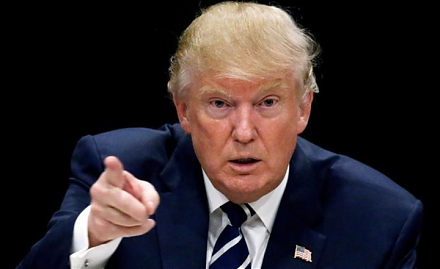
President Trump considers imposing retaliatory economic sanctions on Chinese products and services in direct response to China's theft and infringement
2019-09-09 20:38:00 Monday ET
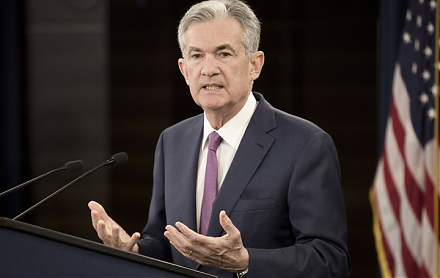
Harvard macrofinance professor Robert Barro sees no good reasons for the recent sudden reversal of U.S. monetary policy normalization. As Federal Reserve Ch
2018-11-15 12:35:00 Thursday ET

Warren Buffett approves Berkshire Hathaway to implement new meaningful stock repurchases. Buffett sends a positive signal to the stock market with the Berks
2025-10-08 11:34:00 Wednesday ET

Stock Synopsis: With a new Python program, we use, adapt, apply, and leverage each of the mainstream Gemini Gen AI models to conduct this comprehensive fund
2019-10-05 07:27:00 Saturday ET
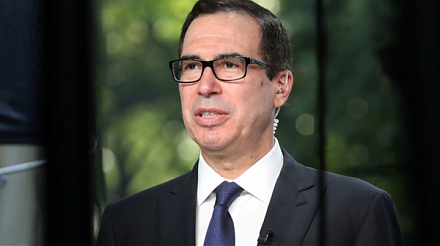
Treasury Secretary Steven Mnuchin indicates that there is a good conceptual trade agreement between China and the U.S. in regard to intellectual property pr